
If we are genuinely working at the edge of students’ knowhow, all the time – in the margin between what they can do pretty competently and what they really aren’t ready for yet – then we can’t possibly plan our lesson in any detail in advance. We only know where that margin is, in the moment, by noticing what they do well and what their errors are. So we need moment by moment planning.
And if we aren’t working in this space then we are working inefficiently: either boring them, or wasting their time and energy with things they can already do; or talking about things beyond what they are yet capable of tackling. We need moment by moment planning.
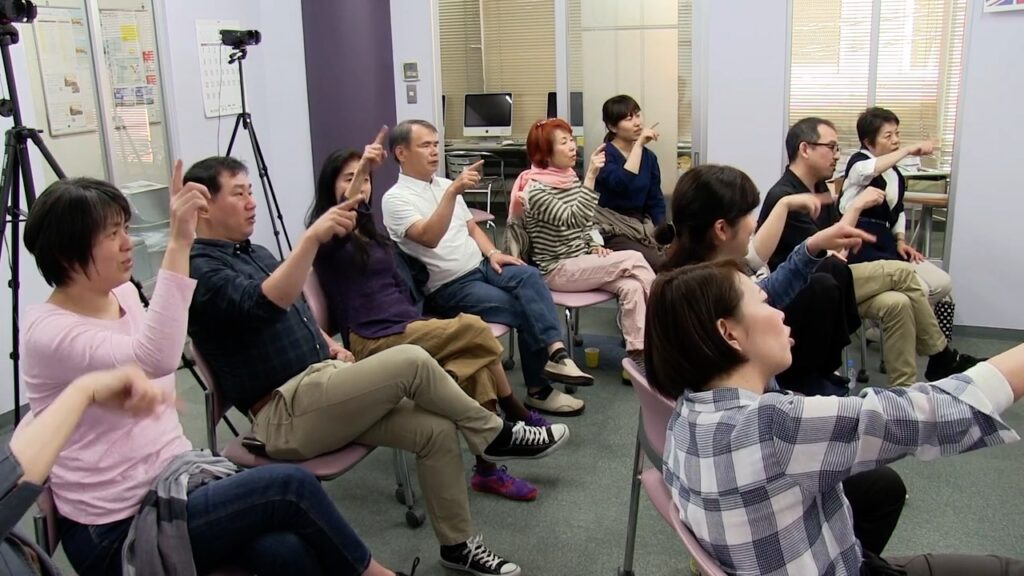
So we never go into a class with a detailed plan. We may have an idea of the broad direction that we should take and which parts of the language the class should be expanding into, but this can only ever be a provisional idea, and we only know what to do in the next moment, in response to what the students did in the last one. Becoming a great teacher means becoming a great improviser.
That means rather than preparing our class we must prepare ourselves. So that we are ready to respond to whatever comes. And the best way to do that is to ‘post-prepare’ – that is to reflect after each lesson on what happened; which opportunities to provoke awarenesses we seized and which we fumbled; invent new possible techniques and solutions; build hypotheses about what different students might need. Even better is to share these reflections with colleagues and listen to their own reflections.
And we need to keep our focus on what is our proper role as teachers, which is to work on the people in our classes, so that they, in turn, can work on the language.
As Caleb Gattegno said
‘I’m a teacher of people not a teacher of language.’
Caleb Gattegno