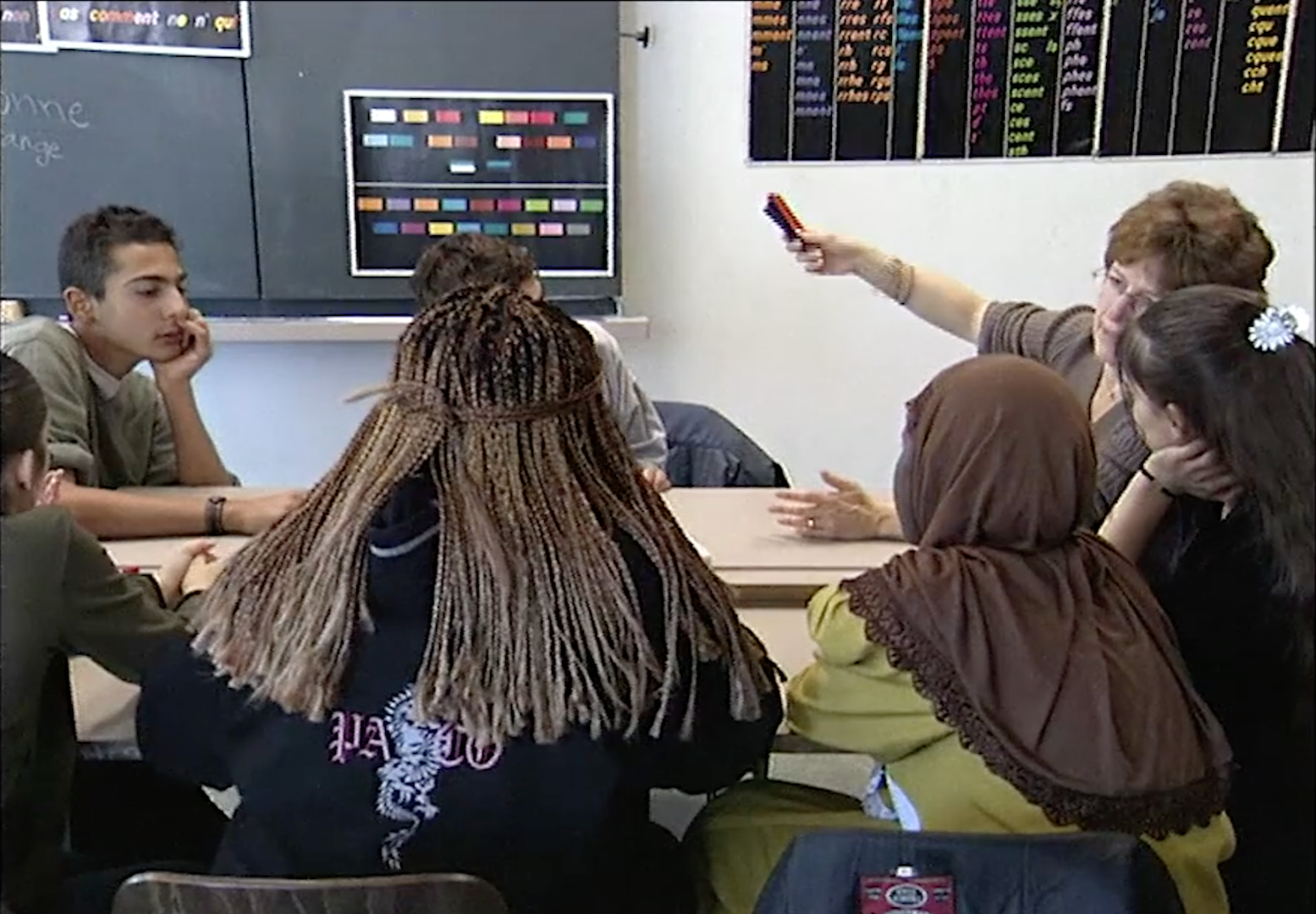
The series of films on this page come from an English lesson given at Hiroshima International University in October 2025. The students were studying subjects related to medicine and English is a ‘required’ course for them. The University term in Japan starts in April, so this lesson was from the second semester. This means that the students had worked with the teacher, Don Cherry, for some months.
(more…)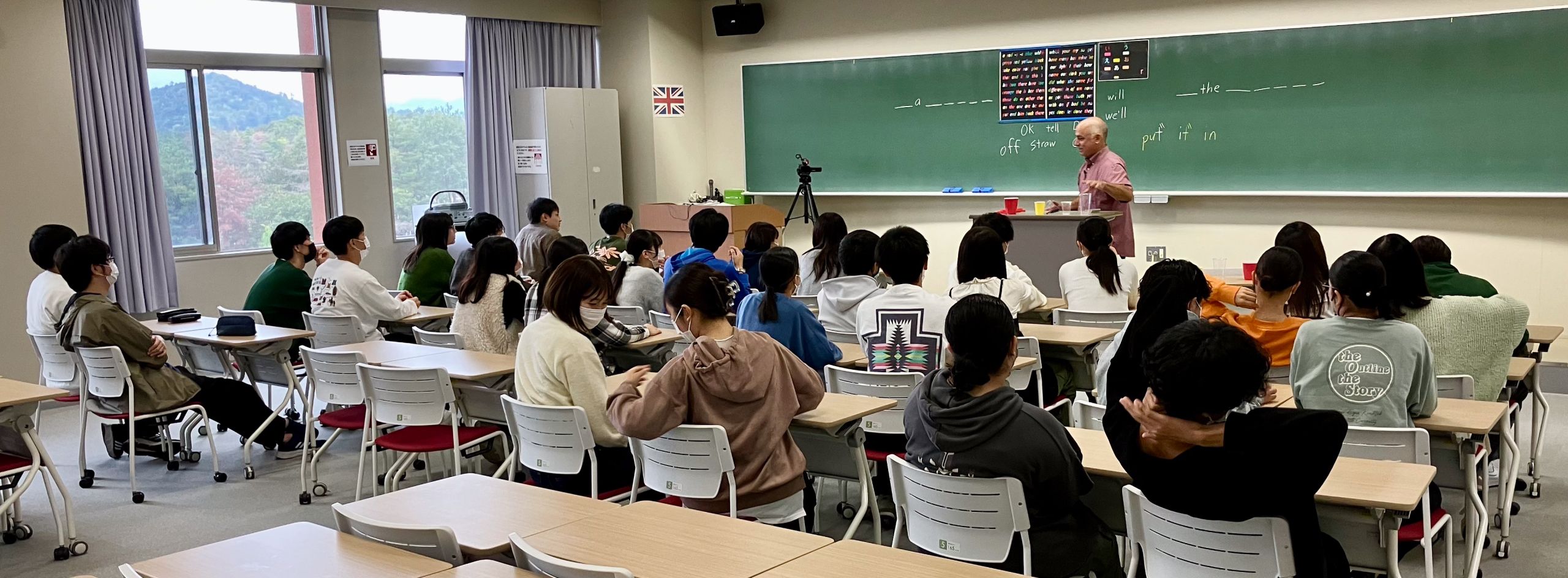
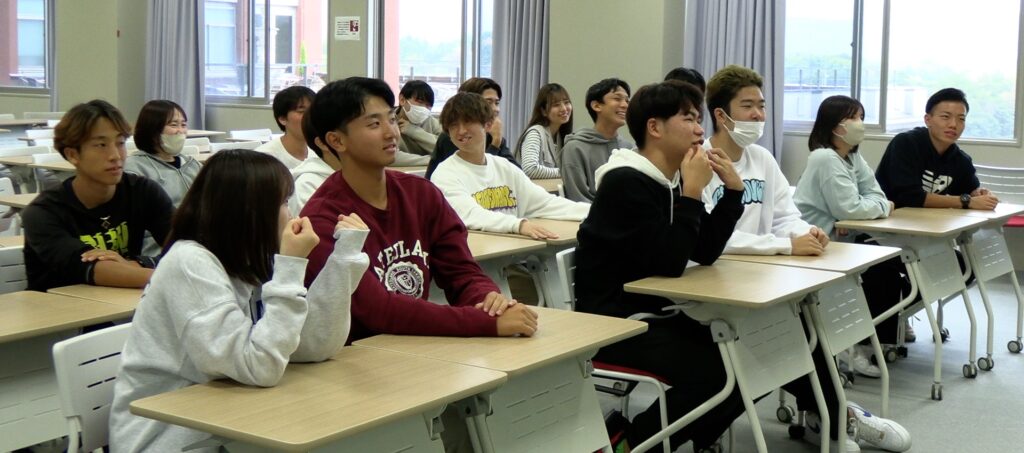
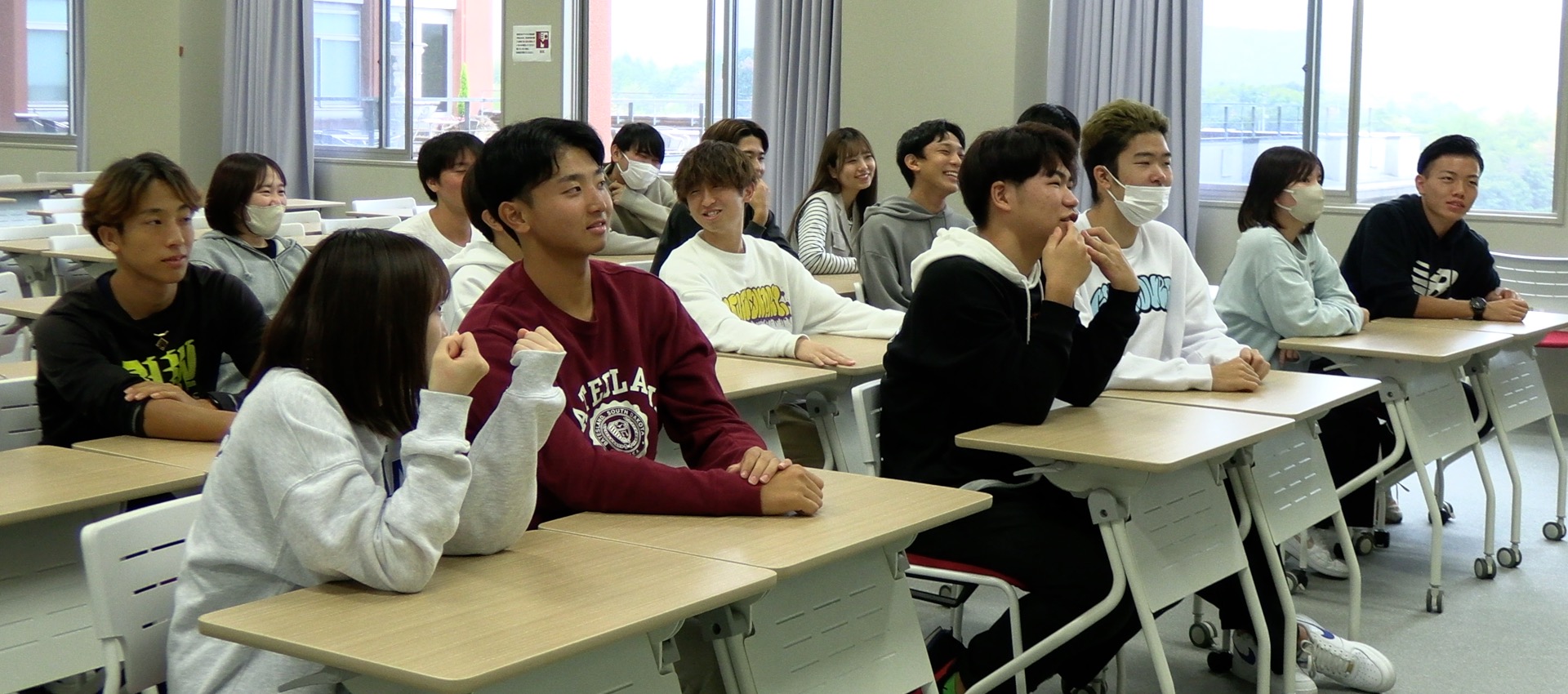
In this project we’ll video six English classes given by teacher Don Cherry at Hiroshima International University. Don has been teaching English in Japan for over 30 years using the Silent Way and is expert at teaching in this kind of environment. We’ll be documenting more of the techniques he uses through this project. Check out our previous project with Don from 2023 here.
Filming starts late October 2025. Assembling the footage, translating the interviews and editing will start in late November once filming is complete and we expect the first videos to be published in January 2026.
We’ll be posting updates on this page as the project progresses, so watch this space!
Your fingers are an invaluable tool you can use to help improve students’ speaking.
You can use them to help students correct their grammar, word order, word choice, pronunciation, connected speech, word groupings etc. In fact every aspect of speaking a foreign language.
(more…)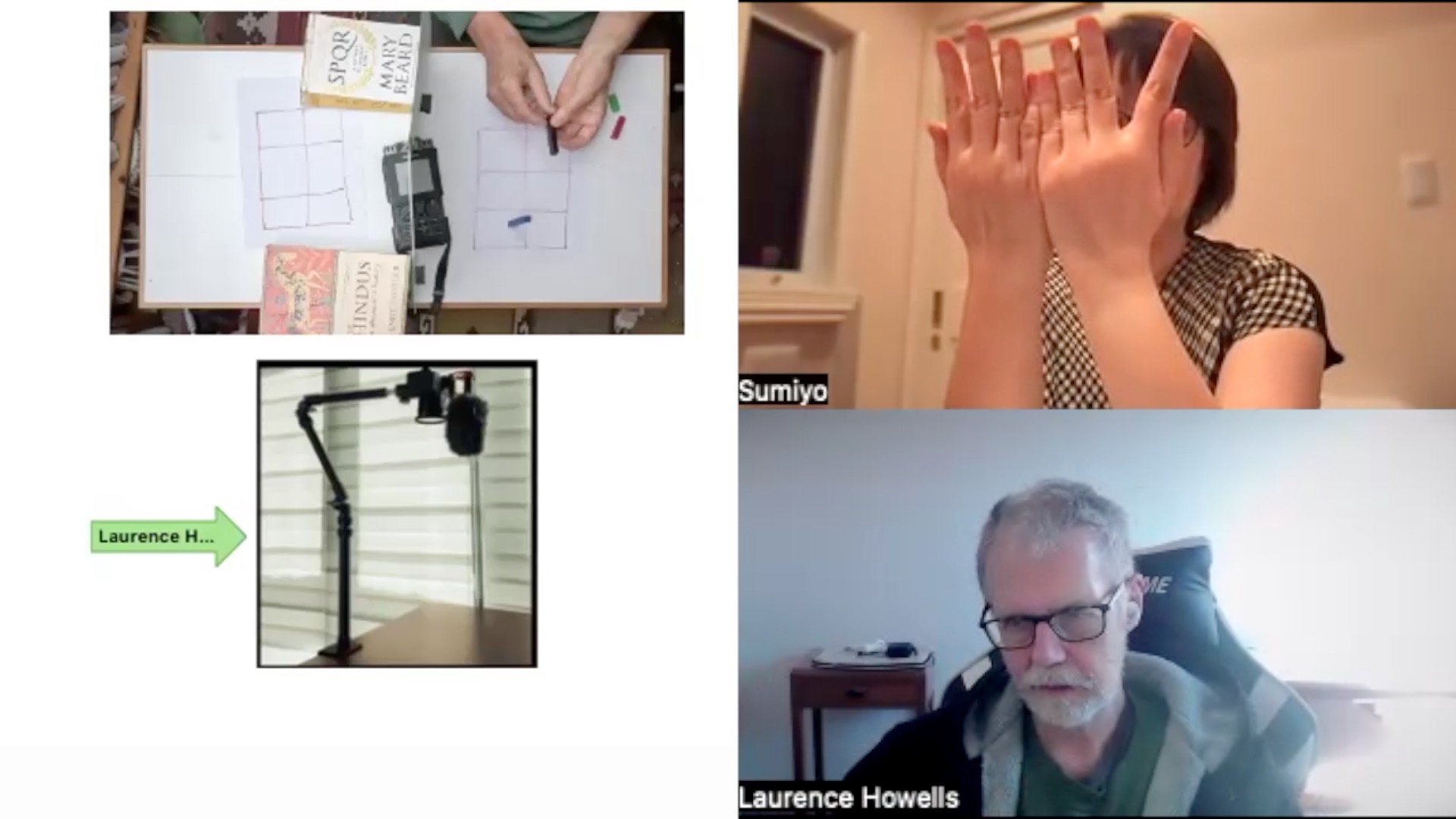
Watch this video to see how one teacher works with students from all kinds of backgrounds at all kinds of levels to develop their Spanish using the Silent Way. With thanks to Cesar Farfan for this video.
Hello there! It’s been almost 3 years since I found about Silent Way and I have to say it has made a huge difference in both my students’ Spanish learning and my effectiveness as a teacher. I hope you enjoy this sample of my recent work.
Cesar Farfan
This project aims to develop the materials and the skills to use them to teach spoken Catalan to beginners using the Silent way. It’s a collaboration between two native speakers of the language and the silentway.online team.
(more…)
This series of short videos come from an interview with Roslyn Young who shares her 50 years of experience in the language classroom. Use them as stimulus for your own reflection on your own teaching and learning and think about how to apply the ideas Ros shares in your own work.
The Silent Way isn’t the tools or techniques that we use. It is an approach that puts learning first and what we do as teachers second: in other words we ‘subordinate teaching to learning’.
The tools and techniques are useful for implementing the approach efficiently in many classroom situations. But they are just tools and techniques: they aren’t essential to the approach.
(more…)
The key to English pronunciation is mastering the small, indistinct, low energy sounds that are so common in normal speech. These sounds transform how students’ English sounds and they are the key to understanding normal speech. This article introduces a video showing some of the tools and techniques we use to teach these sounds.
(more…)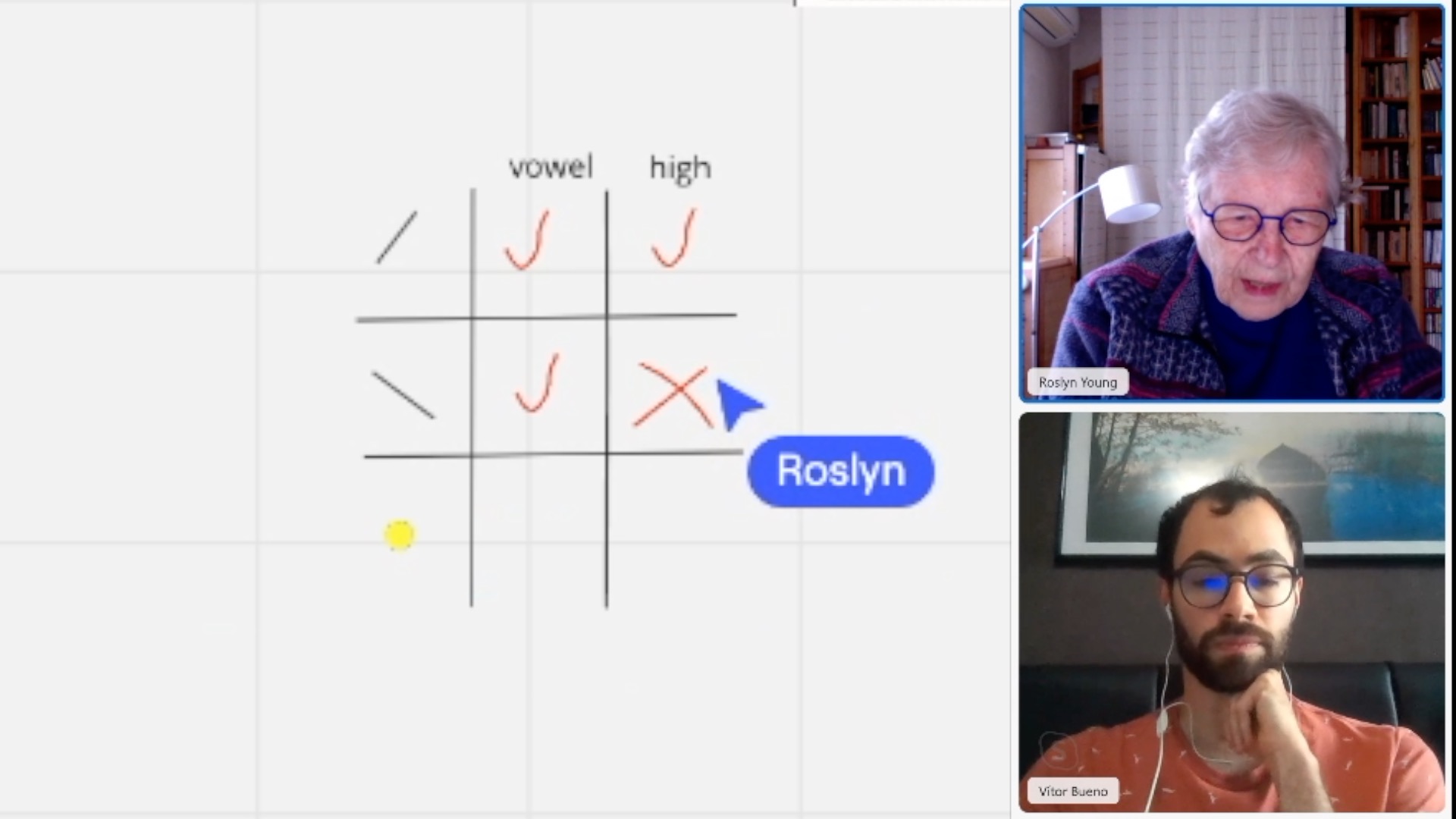
In this article Caleb Gattegno described the Silent Way with a general audience in mind.
The Silent Way, Caleb Gattegno, In: Oller JW and Richard-Amato (1983) Methods that Work, Rowley, Mass pp 72-88
This article analyses a particular Class Conversation from a real lesson. The purpose of this analysis is to show how the Class Conversation approach enables intermediate students to improve their speaking skills. The content of the lesson is provided entirely by the students – the teacher’s role is to make sure that each sentence is corrected and then practised. Sometimes the teacher also needs to prompt students to go deeper or to keep the conversation going.
(more…)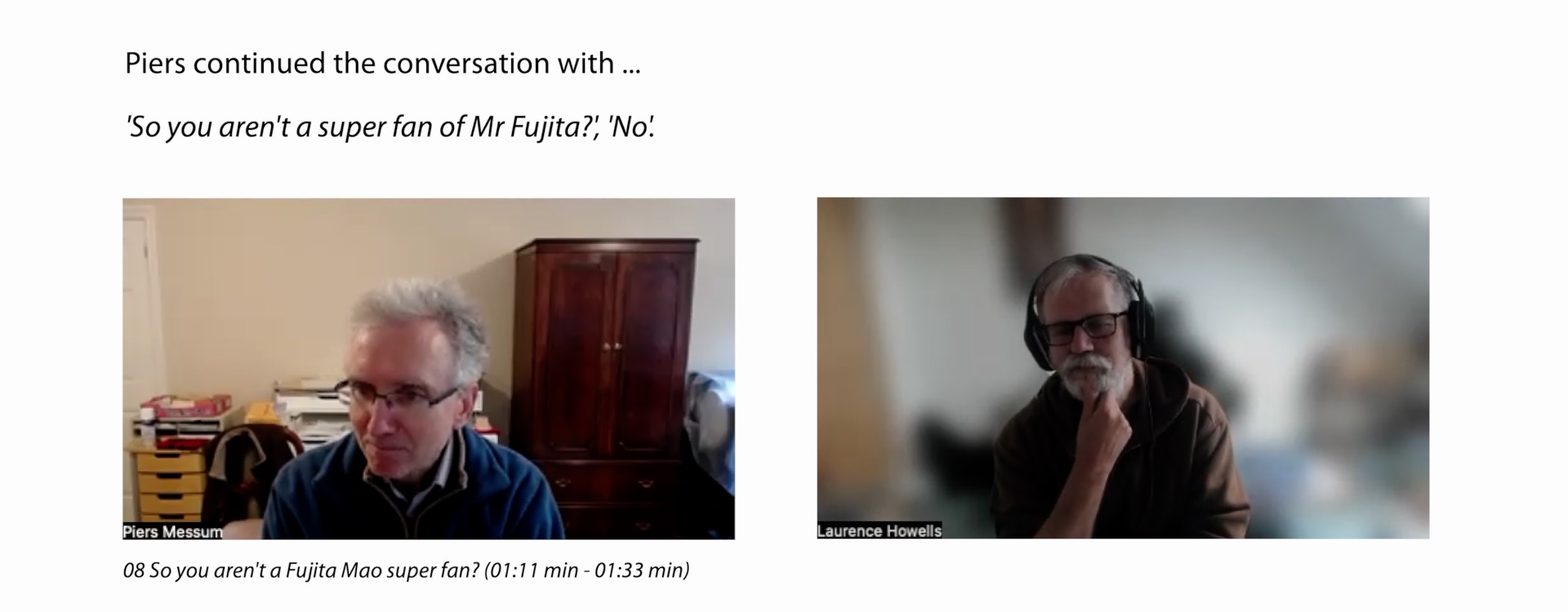
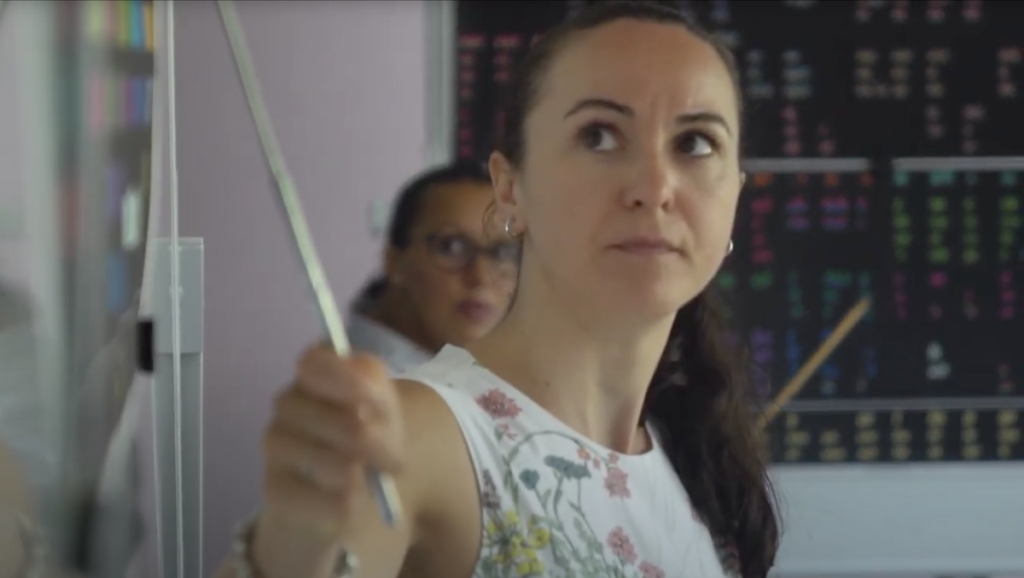
Don Cherry has been teaching English in Japan for over 30 years using the Silent Way. This film is part of a project to document some of the techniques (both language building and classroom management) that he uses to teach his students at Hiroshima International University.
All the students were 18-year-old Japanese students, and on health related courses like pharmacy or physiotherapy etc. There were around 30 students in each of the classes we filmed. English is a required course as part of their university studies. All the students had already had at least 6 years of learning English at school. Filmed during October 2023 at Hiroshima International University.
In this lesson the students had to instruct Don to take the steps to play a CD in the CD player. The lesson builds from the very simplest elements, step-by-step until they have to give the full set of instructions required. The lesson also included work on pronunciation, rhythm, word order, prepositions etc – in other words many of the things that make English ‘English’. The class was one of Don’s regular classes and had worked with him over about 6 months, having had 18 or 19 weekly 90 minute lessons.
For intermediate students we use Class Conversations or ‘Tell me’ classes to help them improve their skills. The learning in these classes lies in the work that is done by the student on each sentence. Sometimes this work is very quick; sometimes it takes a bit longer.
Read this article to see video of the process of a student working on a language from intial idea of what he wanted to say, to final version said correctly and well.
(more…)
Practice is necessary to learn a skill, whether physical or mental. For us, neither repetition nor rote learning is practice. We use practice to speak about activities which require the presence of the doer. Repetition can take place even while the person executing a movement is mentally absent from what he is doing, thinking about something quite different.
(more…)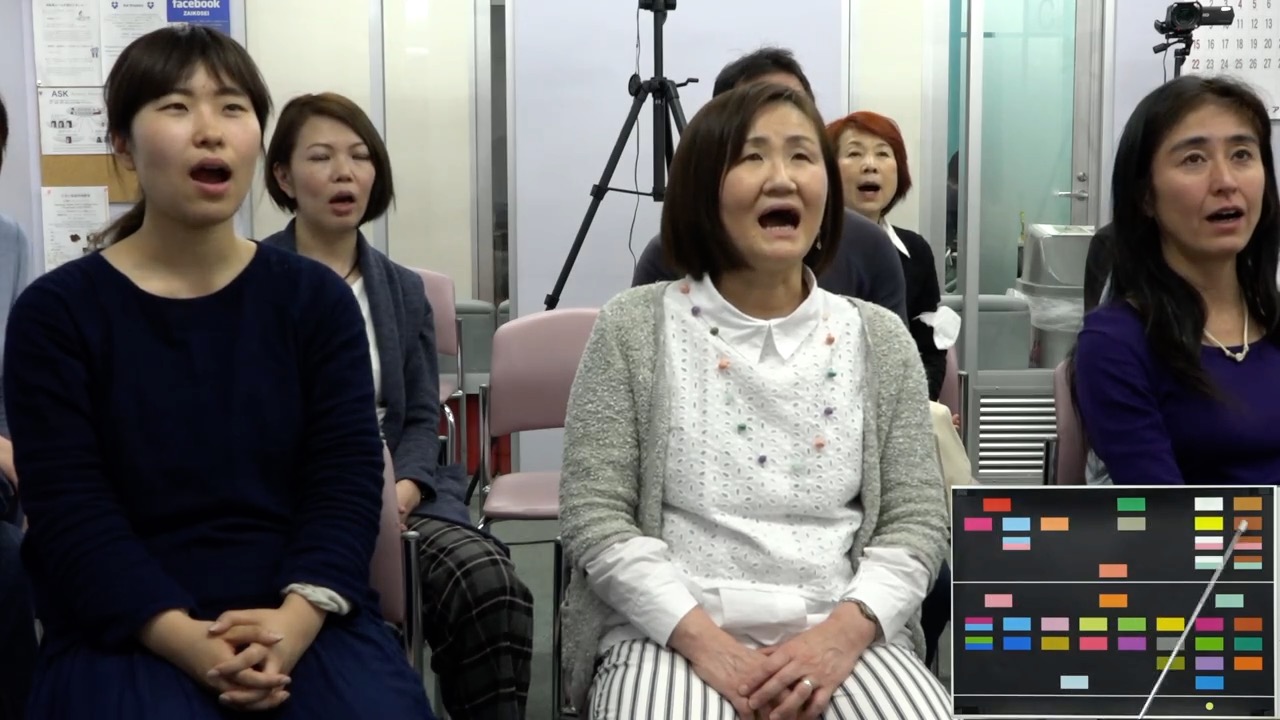
aleb Gattegno talks about the inner ‘movements’ that underlie the grammar of a language and that the grammar of a language has really become part of a student when changes in the situation causes a change in the words he uses.
(more…)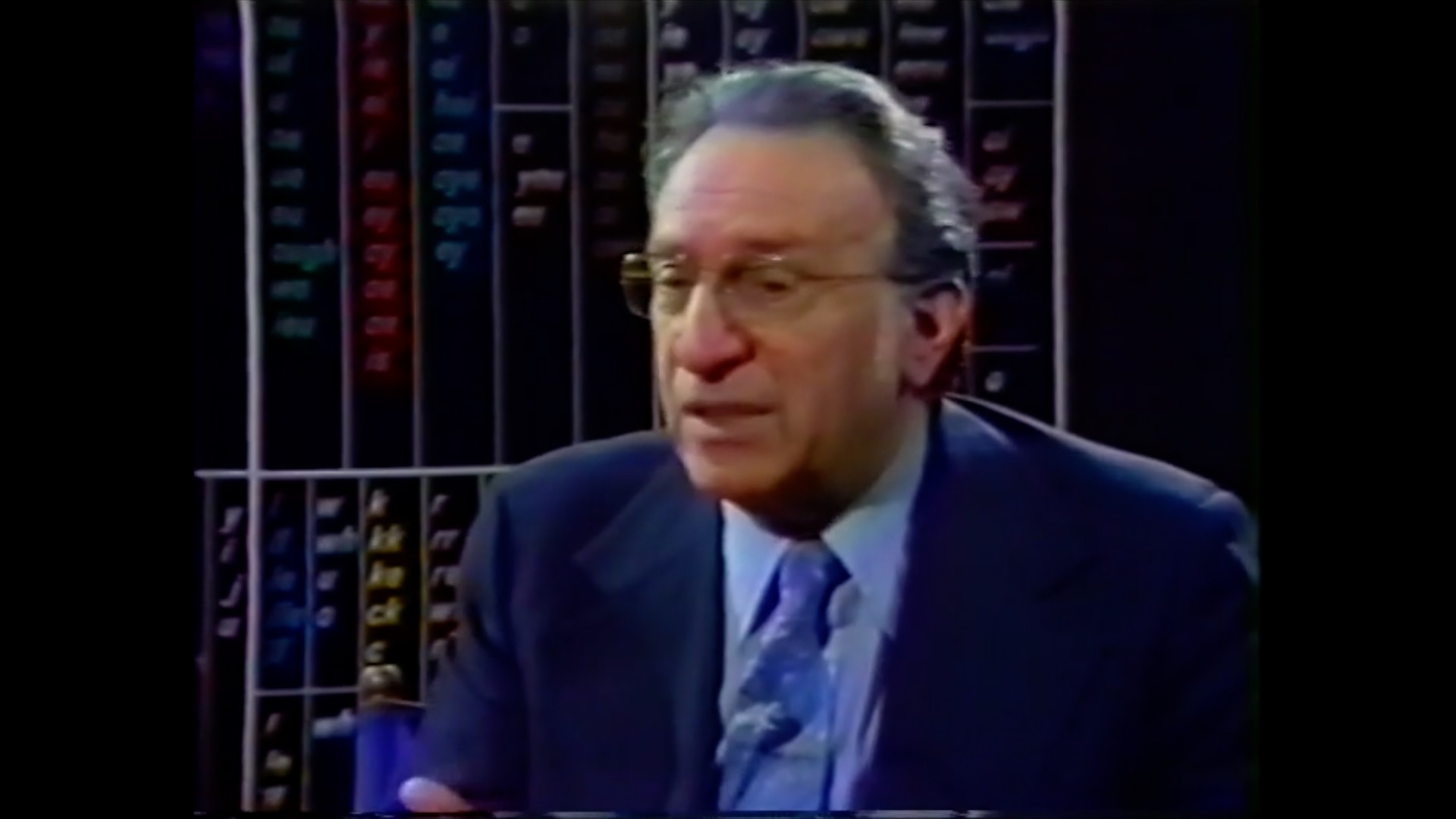
A student is working towards the sentence “A black rod and two green ones and a yellow one and a brown one.” You can see the “Aha!” moment at 2 min 56 secs when he becomes aware of the significance of ‘ones’. And afterwards, he can do something he could’t do before … albeit it probably needs practice.
(more…)
The class is working on the sentence “What are these called in English?” notice how the teacher helps them to say this sentence with an English melody, with just a gesture of his hand. The melody is as much a part of sounding English as are individual sounds, stress, words and grammar.
(more…)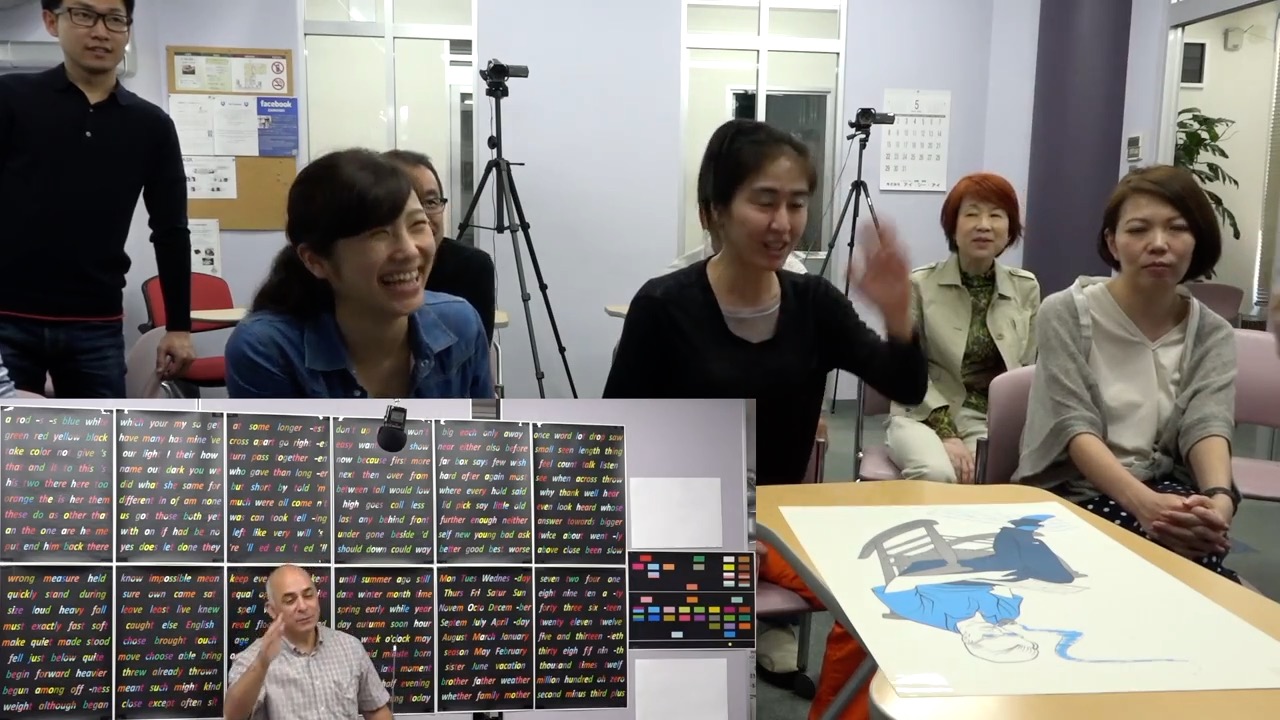

In this video Don Cherry talks about why he teaches silently. The video gives an example of his work with a class of some twenty five 18-year-old Japanese University students, and includes one student’s reaction. The lesson this video was taken from was the first time these particular students had worked with Don.
(more…)
This series of four videos illustrates how a teacher (Yoko Yasuda of Silent Way Tokyo) used an image to help two intermediate students develop their skills in Japanese. The video series includes commentary from Roslyn Young and reflections from one of the students.
(more…)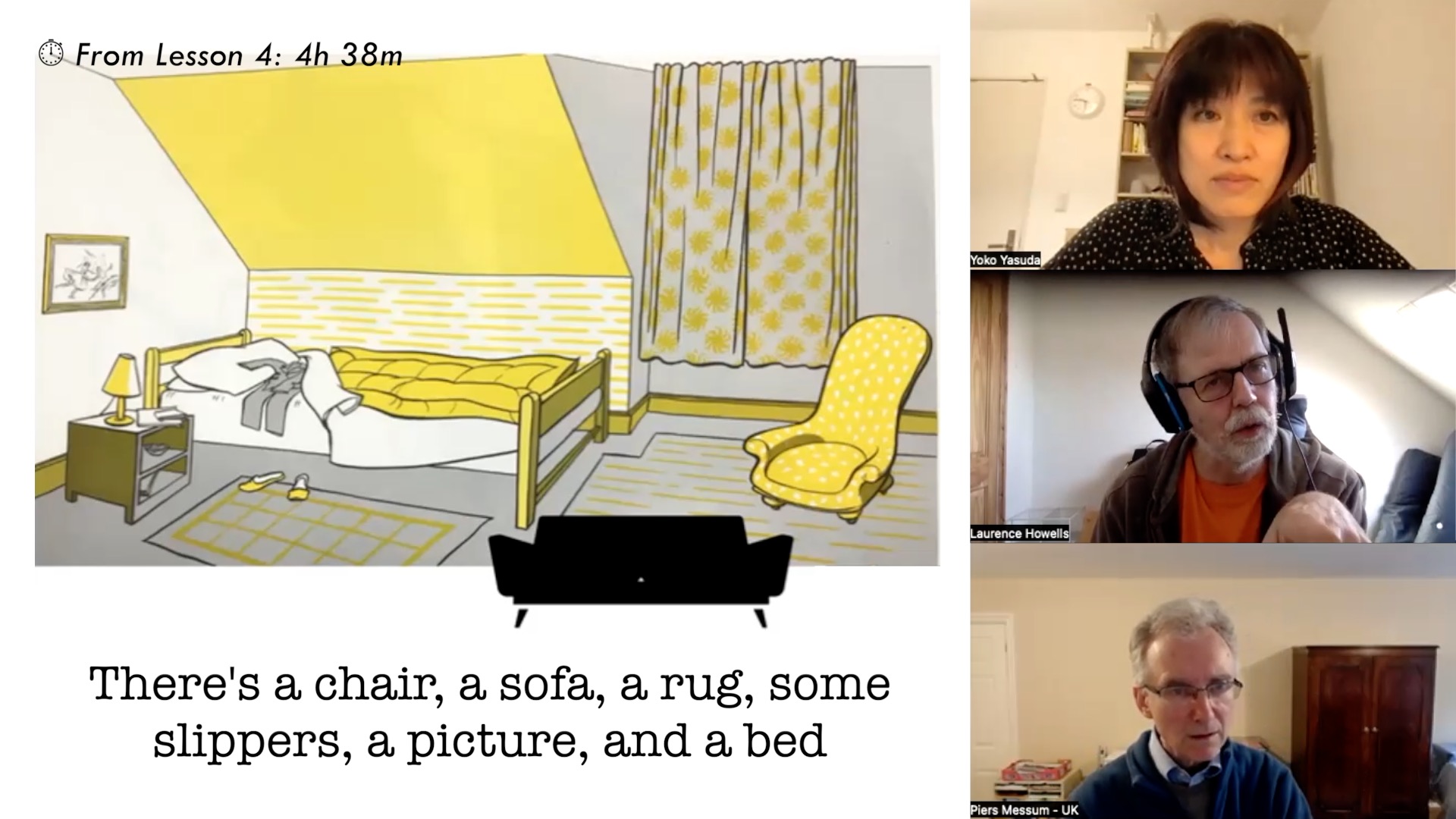
Check out this film to find out more about the Class conversation technique.
The film explains the technique and then summarizes the ‘story’ that emerged from the conversation between two intermediate students of Japanese. The film deliberately doesn’t show the process of rectification that the students worked on sentence by sentence, since the aim of this film is to show how a coherent story is created by the students in this kind of class.
(more…)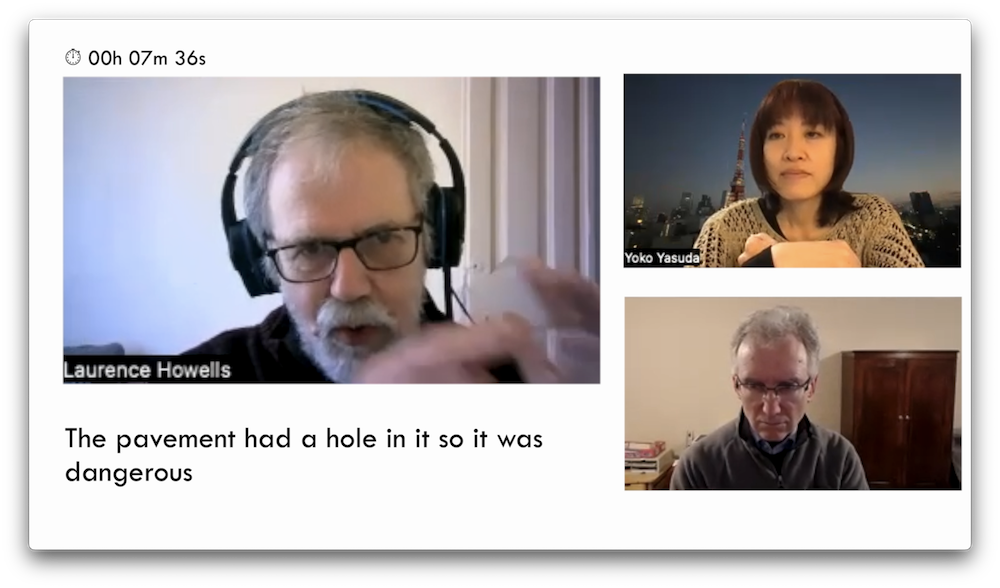
When we teach intermediate or advanced students one-to-one we use a ‘tell me’ class, instead of a Class Conversation. The student is invited to tell the teacher about something. At first, students may need to be prompted with a topic to talk about. Later, students often have something that they want to talk about. And the teacher can encourage them in this by saying something like ‘What would you like to tell me about today?’
(more…)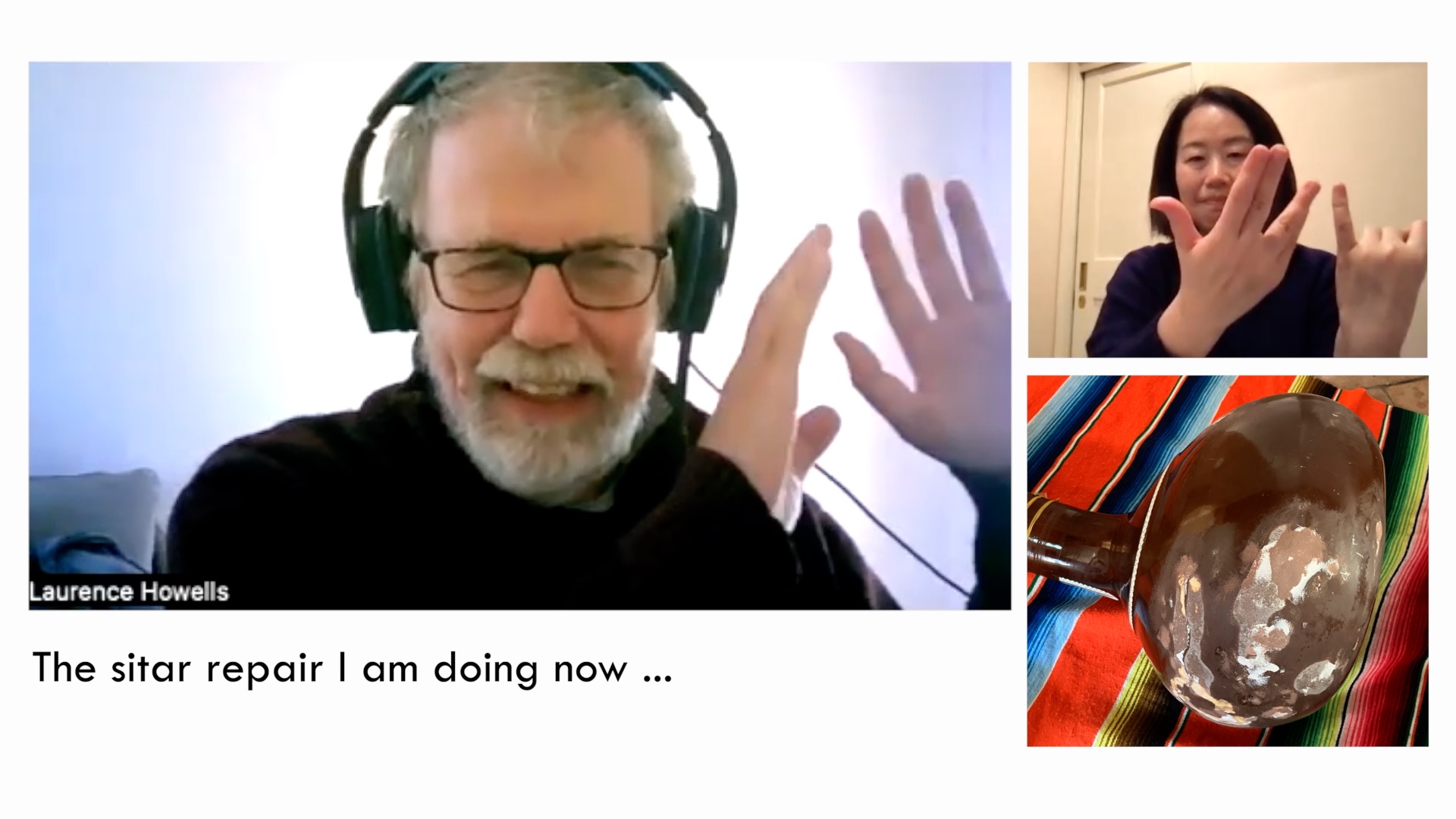
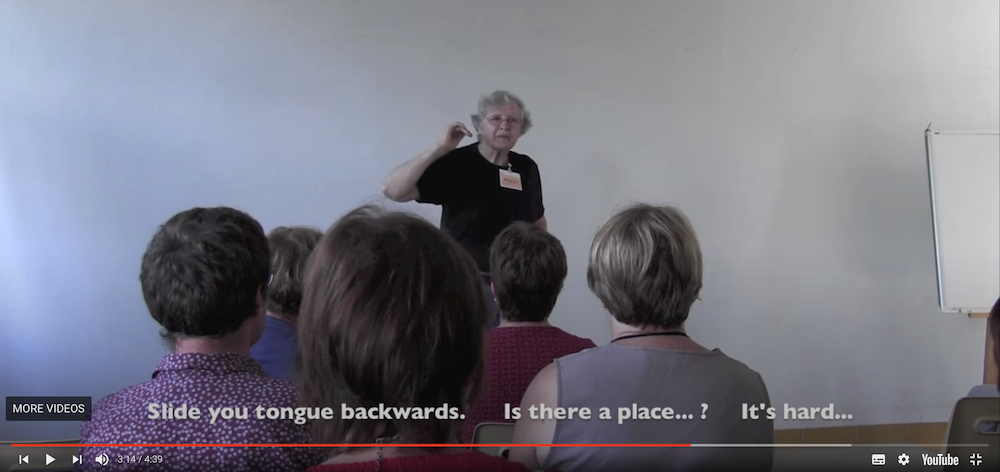
These short videos come from a workshop with French speakers held in Besançon and taught by Roslyn Young. They illustrate how to start teaching English Pronunciation using the articulatory approach.
The French neuroscientist Professor Stanislas Dehaene sets out ‘four pillars of learning’ – attention, active engagement, error feedback and consolidation – in his recent book How we learn: The new science of education and the brain. This article examines how what a Silent Way teacher does relates to Dehaene’s four pillars.
(more…)
To find out more about the principles behind the Silent Way follow the links on this website or click here for a pre-published extract from ‘Teaching English the Silent Way’ by Roslyn Young, 2020
Every language has its own unique verb system, sometimes more elaborate, sometimes less, which is a key functional part of the language. Students need to master how the forms of verbs change to talk about different situations.
For some of these languages we have created special charts that the teacher can use to help the students get familiar with the whole system.
(more…)
We distinguish three types of words:
The diagram summaries how these three types of vocabulary grow for students as they progress.
(more…)
With thanks to Nadia Ivanova here are the sound-colour rectangle chart for Russian and the Fidel (spelling) chart.


Learning to write and read in any language requires us to associate graphic symbols with the sequences of sounds used in speech. And, whilst some languages have more difficult writing systems than others, the skills involved in reading and writing are essentially the same no matter what language we are learning.
(more…)
Dans l’approche Silent Way, nous donnons la priorité au développement des compétences des apprenants en matière de prononciation et d’utilisation du vocabulaire fonctionnel. Il est essentiel de développer ces compétences dès le début du cours, car il s’agit des bases sur lesquelles repose tout le reste de la langue. Nous donnons également la priorité à la langue parlée sur la langue écrite.
Ces priorités signifient qu’un cours Silent Way suit un trajet très différent des autres cours de langue. Au début, nous prenons le temps de travailler sur ces bases, jusqu’à ce que les apprenants aient acquis une certaine aisance dans chaque aspect, avant de construire un nouvel apprentissage sur les compétences qu’ils possèdent maintenant.
(more…)
This series of short films tracks the progress of one student learning Japanese through an online course for beginners provided by Silent Way Tokyo. The main purpose of these films is to show the student’s progress over time, but the films also include the student’s commentary and reflections on the experience.
(more…)
A short introductory course in Mandarin was given as part of a workshop for teachers which took place at the end of October 2021 in Ardeche, France. The participants worked on the sounds of Mandarin using a chart which has a number of interesting features. It uses graphics to suggest the type of articulation for the consonants and it includes symbols for the tones. The chart’s arrangement is designed to help the teacher make students aware of the possible structures for syllables in Mandarin.
(more…)
Roslyn Young and Piers Messum are working on a new book Teaching English the Silent Way. They have kindly made two Chapters available in advance of the rest of the book:
This extract includes perspectives on the Silent Way from a student and from teachers including examples from their experiences learning and teaching using the Silent Way.
(more…)

The translation into Japanese of Caleb Gattegno’s key text on the Silent Way, published in translation by Duo Flumina. You can get a copy by clicking here.
This video series is essential viewing if you are teaching more advanced students. The series shows how to work with a class conversation to develop students’ abilities to express themselves. The fims have subtitles into English and commentary in English. We will be producing versions for francophones shortly.
Click here to view the series
This series analyses of a six-day intensive English course given in Tokyo, by Don Cherry, in 2012. If you are planning to use the Silent Way in your teaching, this series of videos provides a unique insight into how Don Cherry worked in 2012 and why he did some of the things he did. You should reflect on what you see and adapt it to your own practice. But don’t slavishly follow what Don did! He, himself, would stress that how he works now has evolved from what you see in these videos.
Click here to follow the series.
This booklet contains examples of the kinds of sentences that students work on in the early parts of a Silent Way course. If you are starting out as a Silent Way teacher, these examples will be useful inspiration for the thousands and thousands of sentences that can be made using only the words on the first few charts. You can download a copy here.

In this book, Roslyn Young sets out both the theoretical basis on which the Silent Way approach is built and the practicalities of teaching English step-by-step using the Silent Way.
(more…)
Caleb Gattegno wrote this book in 1976 updating his earlier book on this topic published in 1963. This is essential reading for anyone who is interested in teaching using the Silent Way.
Any teacher needs to think carefully about how her students learn and adapt what she does accordingly. Without a sound theory of learning she is rudderless.
(more…)
This article sets out what Caleb Gattegno learnt through his thirty years of experience, from 1954 until 1983, developing Silent Way materials.
(more…)
This page gives you access to some of the key documents and resources needed to explore the Ideas behind the Silent Way and its practical application. We’ll keep this page up-to-date as new resources become available.
A fuller bibliography containing a wider range of material is available here.
(more…)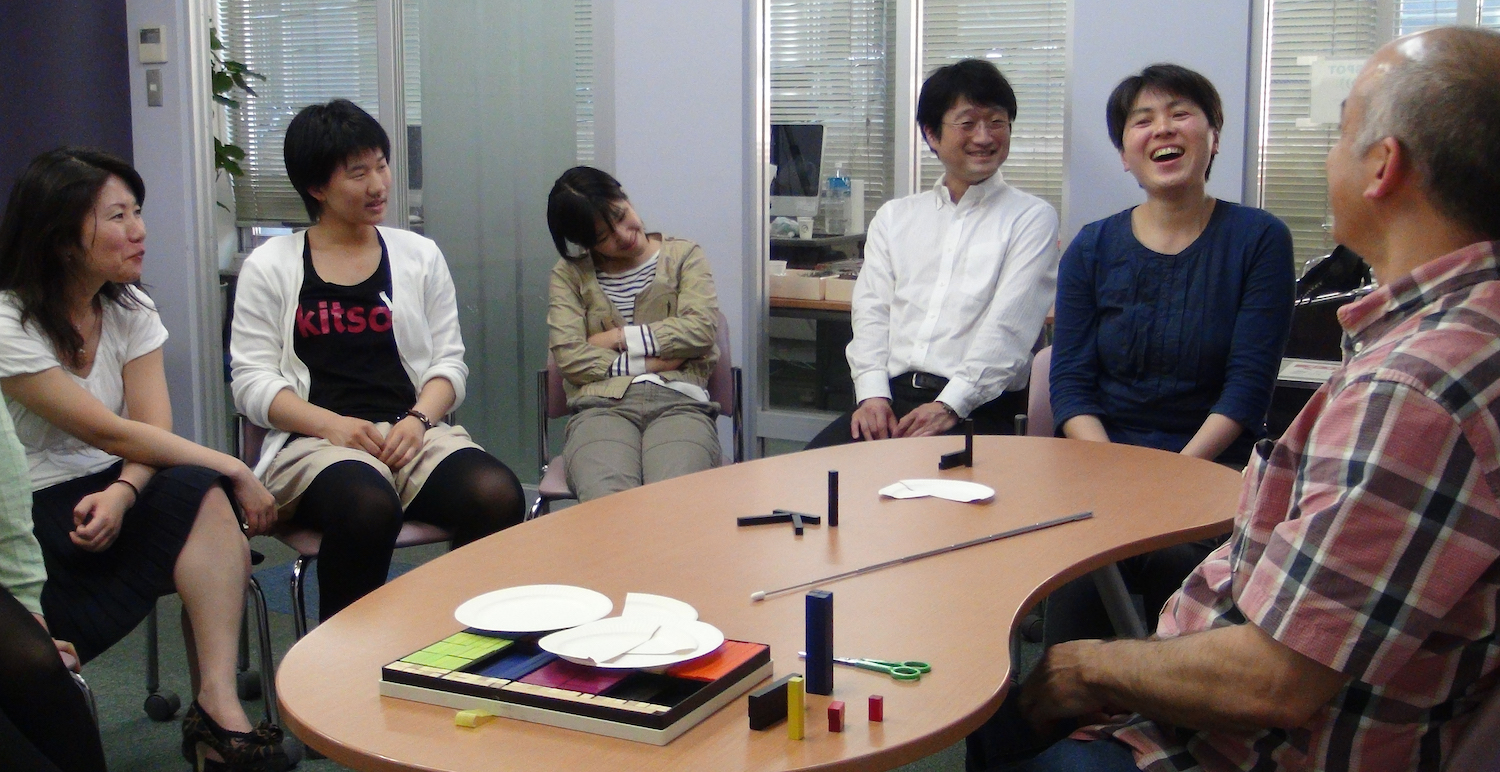
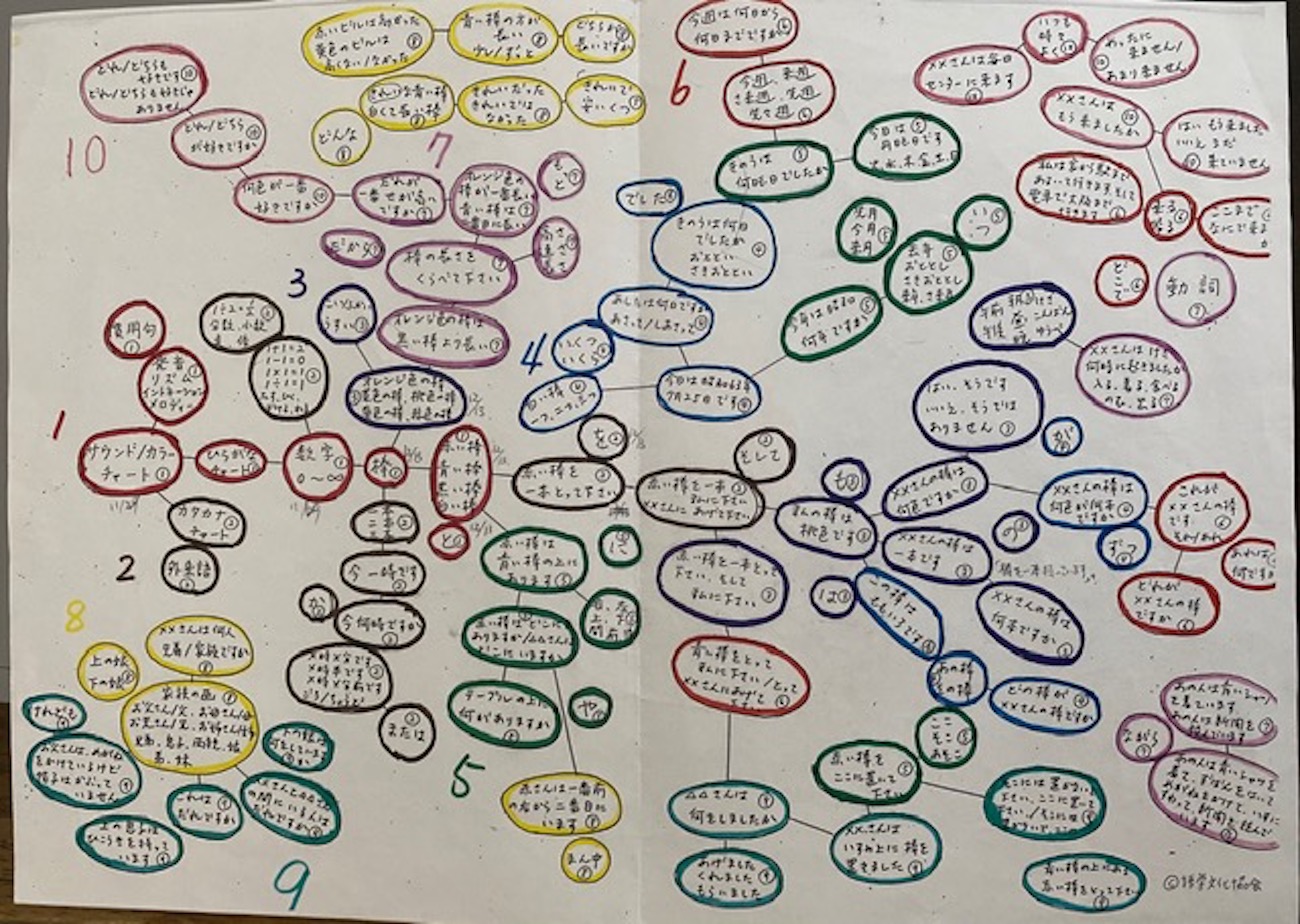
This diagram represents the Japanese language from the perspective of a teacher. Each bubble contains an aspect of Japanese and the connections show how new aspects depend on or grow from previously-worked-on ones. It also shows what a teacher would expect to work on, and give sufficient time for practice on, in a beginners course of around 60 hours.
(more…)
In the Silent Way we prioritise developing students’ skills in pronunciation and in using the functional vocabulary. It’s crucial to develop facility in these things early in a course because these are the fundamentals on which everything else in the language depends. We also prioritise spoken over written language.
These priorities mean that a Silent Way course follows a very different sequence from other language courses. We take time at the beginning on these basics, working until the students have gained facility in each aspect, before building new learning on the skills they now have.
(more…)

Tigrinya is a Semitic language commonly spoken in Eritrea and in northern Ethiopia’s Tigray Region. It is also spoken by the global diaspora of these regions. These prototypes—a Fidel (spelling chart)—were created by Ben Renggli for his own learning and have not been properly tested with students.
(more…)

These prototypes—a sound-colour rectangle chart and a Fidel (spelling chart)—were created by Ben Renggli for his own learning and have not been properly tested with students.
(more…)

These prototypes—a sound-colour rectangle chart and a Fidel (spelling chart)—were created by Ben Renggli for his own learning and have not been properly tested with students.
(more…)

These prototypes—a sound-colour rectangle chart and a Fidel (spelling chart)—were created by Ben Renggli for his own learning and have not been properly tested with students.
(more…)

These prototypes—a sound-colour rectangle chart, a Fidel (spelling chart), word chart 1 (see above) and numbers chart—were created by Ben Renggli for his own learning and have not been properly tested with students.
(more…)

These charts were created by Andrew Weiler in 1984, with Caleb Gattegno’s permission. They are only a partial set of charts, nevertheless they would form a great start for anyone wanting to pick up this project.
(more…)

Caleb Gattegno produced a set of charts for German and there are printed copies of these charts available. However, they could do with some updating and improving—for example, to bring them up to the standard of the charts currently available from Pronunciation Science for English and French and to make digital copies available.
(more…)
Since there are ten thousand languages or more on earth and only a score so far have been given a form suitable for Silent Way teaching, many people will need to be involved in spelling out the actual contents of the word charts which are needed to transmit the spirit of more languages.
Caleb Gattegno, Making Silent Way Materials: An invitation for teamwork, Newsletter XIII No1 1983
Over the years, sound-colour rectangle charts, Spelling charts (Fidels) and word charts have been produced for many languages. Some have been professionally produced, published, developed and maintained—eg for English, French and Japanese. Others are prototypes, prepared by individuals for their own interest or local use. All of them involve the creators in a substantial amount of intensive work. This archive therefore aims to store and share the materials that have been created—no matter what their state of development is.
We hope that others who become interested in the languages concerned will build from what is here and collaborate to develop these resources.
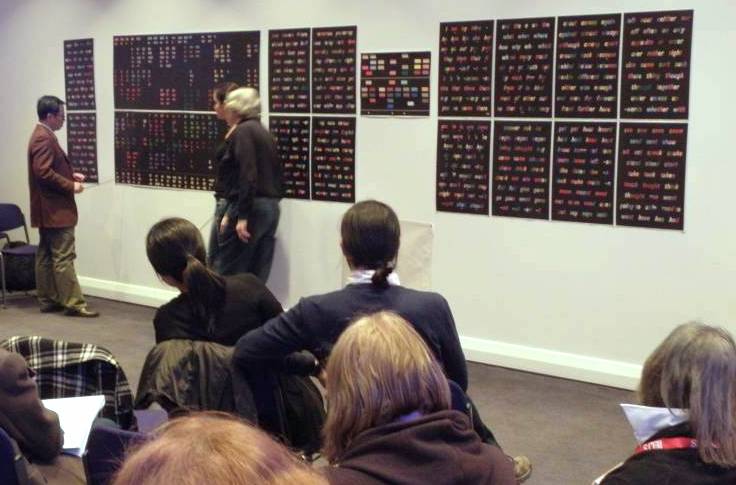

This post describes some experimental work from 2019 on creating Silent Way materials for Hindi. Here’s what Laurence Howells has to say about the project:
“I started this project for two reasons:
This film explores some of the work of ‘Classes de français‘ a Silent Way school in Tokyo, Japan and sets out some of the ways that the school teaches using the Silent Way.
(more…)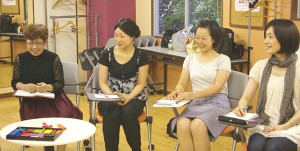
This film shows how a Silent Way teacher works. We’ve sampled every two hours of a week-long intensive English class that teacher Don Cherry gave in Tokyo in 2016 to give you a unique insight into this way of working.
You’ll see how a Silent Way teacher works and some of the reasons why we work this way, including:
You can watch the film with commentary either in English, French or Japanese.
(more…)
In these three videos Roslyn Young teaches some English students how to pronounce French vowels using the techniques of the Silent Way. The techniques illustrated here – sensitisation to the student’s mouth, experimentation and feedback, the use of a wall chart to unambiguously identify sounds – would apply to teaching the pronunciation of any language though, of course, every language has its own unique sound system.
(more…)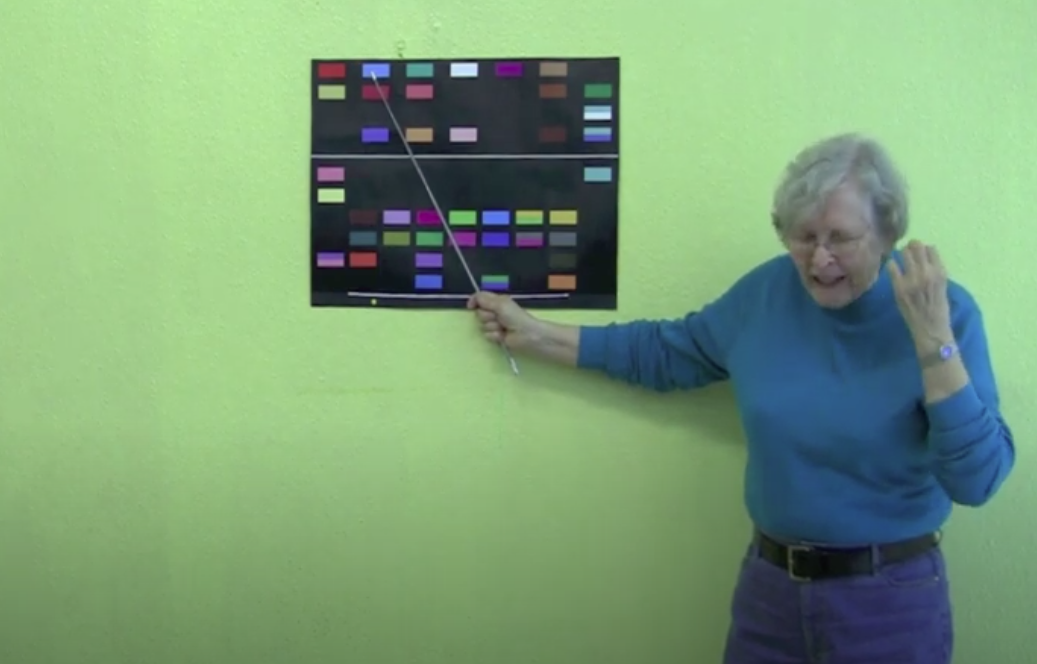
Presentation of the Silent Way educational approach for teaching foreign languages. Produced by Actualis, Paris in 2019.

A short piece showcasing the work of Southern Connecticut State University professor Luisa Piemontese as she uses the Silent Way for teaching students foreign languages. Luisa talks about using the Silent Way to teach Spanish to students in the USA.
(more…)
A conversation between Roslyn Young and Piers Messum about Caleb Gattegno’s Silent Way approach to teaching foreign languages. In this series of 15 videos Roslyn and Piers discuss the theory and practice of teaching using the Silent Way.
(more…)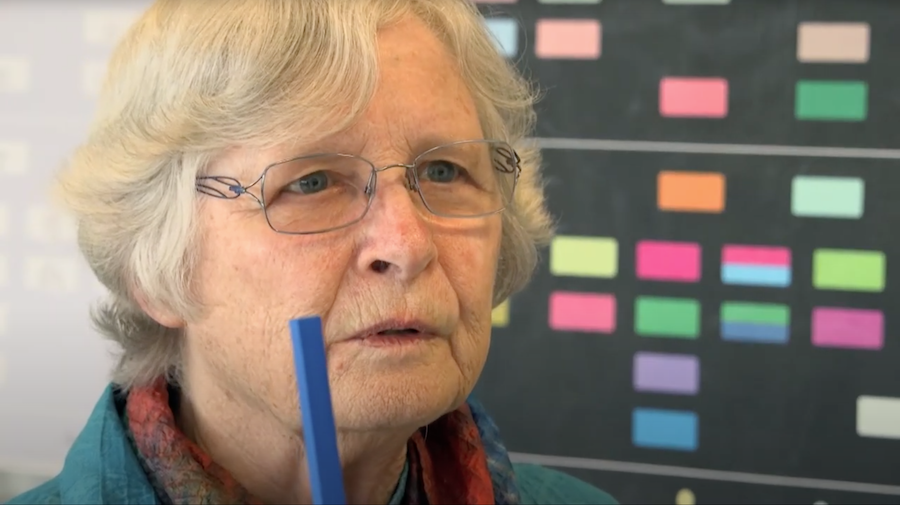
Pronouncing a language is a motor skill. And it is one of the most difficult motor skills to teach–neither the teacher nor students can see the movements required. Mostly, trying to copy what the teacher says doesn’t work very well. Much better is for the students to experiment with guided coaching from the teacher.
(more…)
If the teacher is silent (though she is not mute), she neither models pronunciation, nor tells the student what to say. Rather, she coaches them toward the correct use of the language. Silence means the teacher can easily keep the students at the frontier between what they have mastered and what they don’t yet know. Silence puts the teacher and their students in their proper roles—they are working on the language, we are coaching them.
(more…)
The Silent Way tools give a comprehensive view of the sounds of the language, its grammar through the function words, and the relationship between sounds and spellings. This means that these tools can be used to help the students learn how to say anything that they want to express, or to describe any situation that the teacher or the students or real life presents.
All these tools, displayed in the walls of the classroom, and referred to continually by the teacher and students using pointers, means that students get familiar with how to use all the sounds of the language and all of its grammar to express anything they want and need to.
(more…)
Cuisenaire rods – small wood or plastic blocks of various colours and lengths – are very useful for teaching students how the language expresses relationships of time, space, personal relationships; and to get them to performing actions, giving instructions and making requests.
Because they are easily manipulable, an infinite variety of situations can be created.
(more…)
A simple wall picture forms a focal point that gathers the class’ attention. The teacher and the students can point to items in the picture and practise the relevant vocabulary and create sentences about the situation they see in the picture once they have a secure foothold in pronunciation and the functional vocabulary.
(more…)
A telescopic metal pointer is one of the most important instruments in the teacher’s arsenal. It allows her to base her teaching consciously and deliberately on the mental powers of the students. Using the pointer with the other physical tools, the teacher can choose the precise level of her intervention—sound, word, phrase, sentence, intonation or melody—and link these together into a coherent whole.
(more…)
The Silent Way Word charts present the function words of the language: the prepositions, pronouns, conjunctions and certain adverbs and adjectives and what is necessary for expressing verb forms. These roughly 400 words allow the speaker to express their thoughts, to describe human relations and to situate what he is talking about in space and in time.
(more…)
The spelling chart shows the relationship between sounds and spellings using the same colours as on the sound-colour chart. For most languages this relationship is not straightforward, and this is particularly so for a language like English. Teacher and students can explore this relationship by pointing on the chart. That way students gradually get familiar with the patterns.
(more…)
Every language has its own repertoire of sounds. If students are to learn good pronunciation they need to know how to produce the full set of sounds that that language uses. And since students will potentially encounter any of these sounds in any word or sentence they come across, working on all these sounds early on in a course is a good idea. Doing this work early reduces the risk of students building bad habits of pronunciation.
(more…)
Learning to do something is a series of small steps. We start by realising that there is something to learn – something we can’t yet do. Then we experiment. Once we have worked out what we need to do we practise to achieve mastery and then what we have learnt is available for us to build other skills upon.
(more…)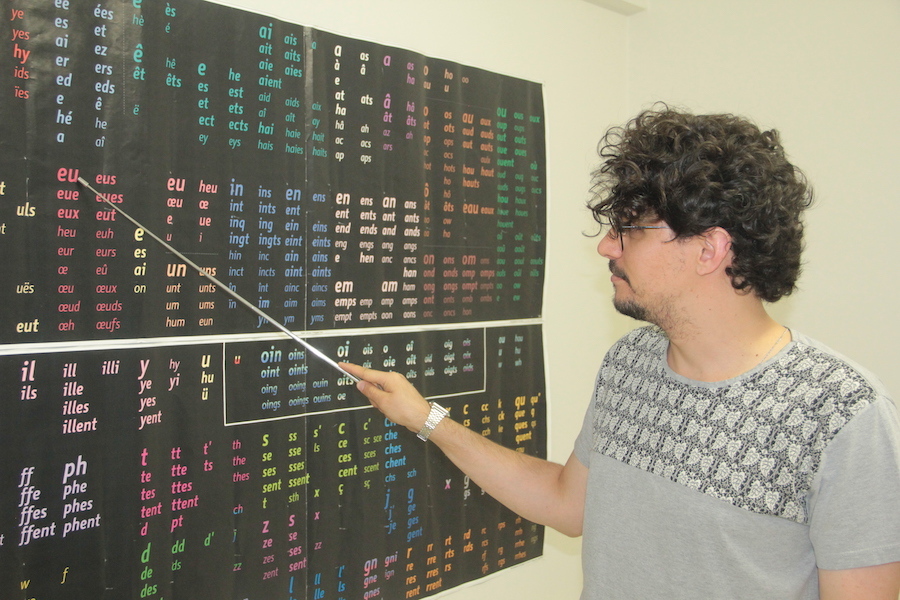
Scott Thornbury speaks about the fact that the most motivating thing in a language classroom is if you can get the people in the room interested in each other and talking to each other. An idea central to the technique of the Class Conversation used in Silent Way classes once students have some of the language.
(more…)
The teacher finds out that the class isn’t certain how many syllables there are in the word ‘January’ and then works with them on sounds, rhythm until they can put the word together so it starts to sound English.
(more…)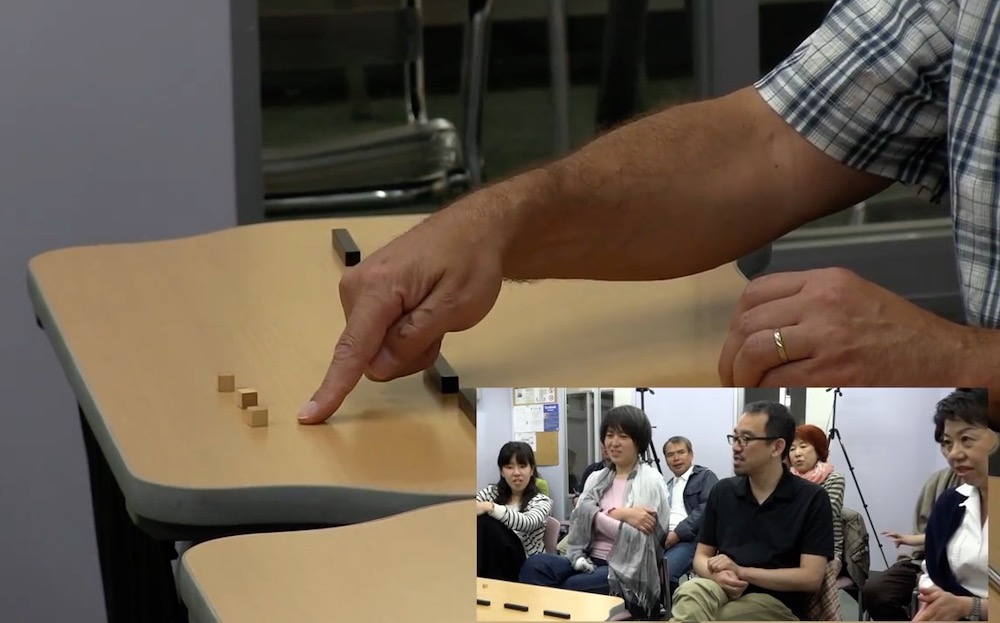
Dr Gattegno asks the delegates at a seminar to explore the idea that our native language must be the most foreign of all languages. And yet, as babies we all learnt that language.
(more…)
In the Silent Way we use familiarity not memorisation, minimising the need for memorisation calling on students natural power of retention for what they have made familiar. That is why we use wall charts to hold the key elements of the language – pronunciation, functional vocabulary, the relationship between sounds and spellings. This video shows that at work for French verb conjugations.
(more…)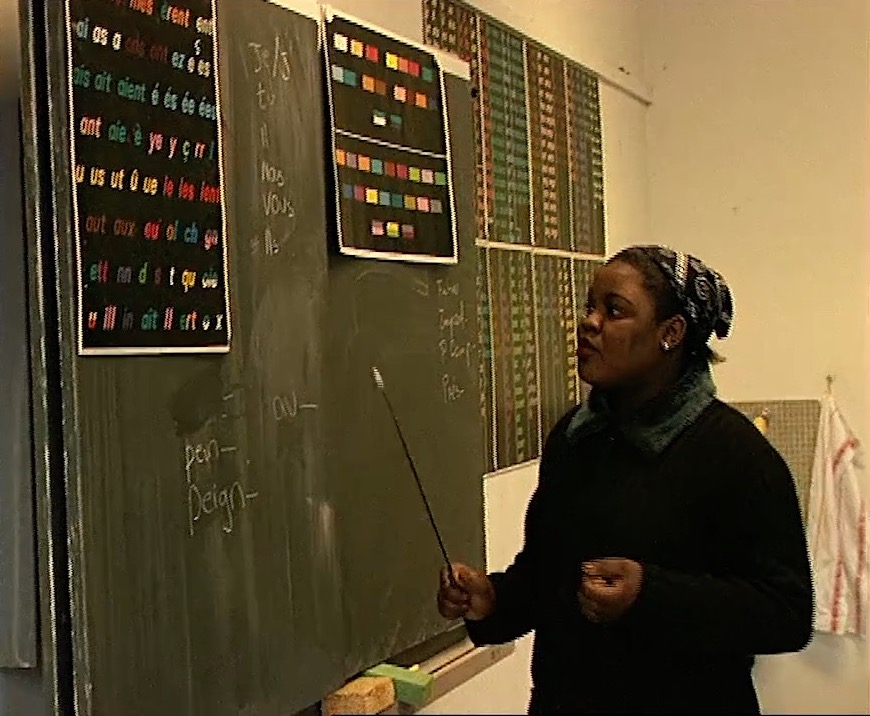
Dr Gattegno talks about the need for teachers to become as sensitive as possible to the ‘linguist in the students’ in this short film: ‘I operate on the invisible‘. This reflects the fact that whatever anyone says in any language ultimately comes from within themselves – an inner urge or need to express something.
(more…)
Watch how the teacher worked with the class on a new word – purple – which they needed. Because he has already done a lot of work on the sounds and rhythms of English he can quickly and silently enable them to know how this would should be pronounced in a pronunciation micro-lesson.
(more…)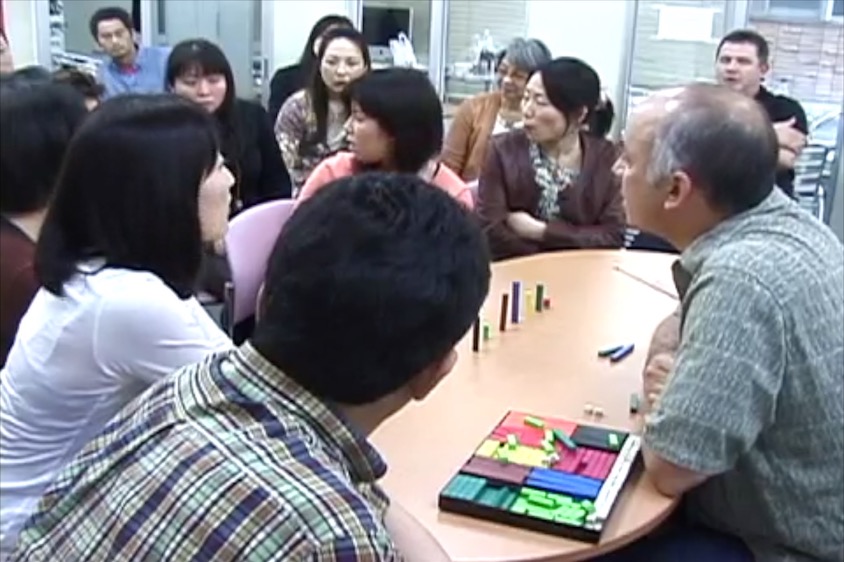
Dr Gattegno explains why counting and the numerals are introduced early in the Silent Way. They give great practice in pronunciation and rhythm and the ability to say long utterances. And for most languages students can quite quickly get to say very large numbers independently – a morale booster.
(more…)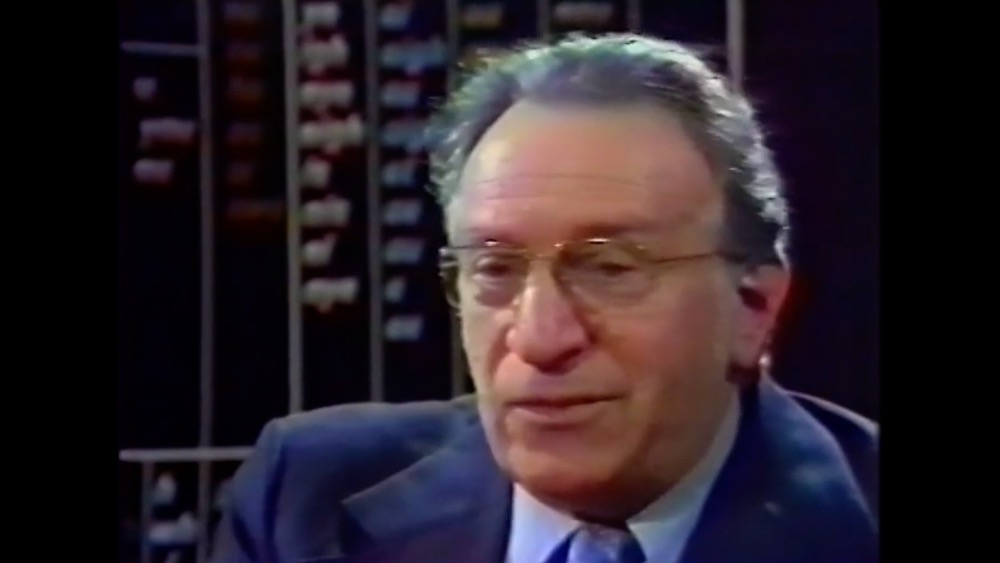
These are the perfect tools to start the class learning about time, and how the foreign language expresses different shades of meaning through tenses and its other arbitrary conventions. But beware! Keep it real!
(more…)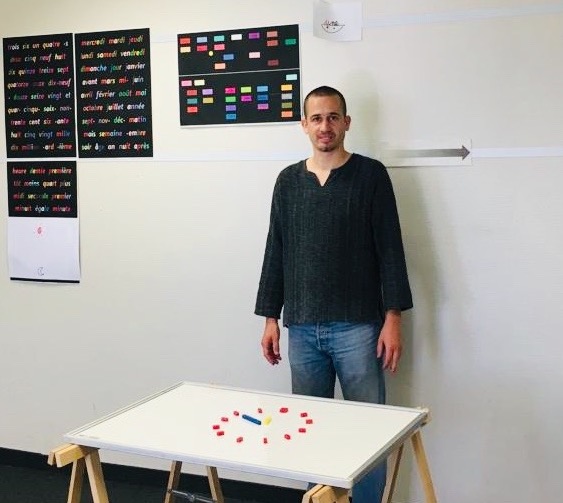
Native speakers know what ‘sounds right’ and what ‘sounds wrong’ in their language without thought and without ‘rules’. How do they acquire this certainty? Our students have to gradually build their own ‘mental models’ of the language from scratch, with all its idiosyncrasies, arbitrariness and difference from their own native language.
(more…)
A mistake might just be a slip—even natives make mistakes sometimes—but it often tells us that a student hasn’t learned something, or hasn’t fully automated something yet. This is vital information for us. The energy to say something is there, and we know the student can’t yet quite say it correctly: the ground is fertile for them to learn. Importantly, everyone else in the class can learn something at the same time.
(more…)
The Silent Way was developed through the observations and classroom experimentation of Caleb Gattegno who created the first tools and techniques in the 1960’s, and this process has been continued over the last 60 years by practising teachers.
YouTube channel: https://www.youtube.com/channel/UC-ZAS7ksWJrKKLnZR_qskYw
Contact us: info@silentway.online
Contributors: Laurence Howells, Cédric Lefebvre, Piers Messum, Roslyn Young
© silentway.online 2020 – Published with the agreement of Education Solutions Worldwide Inc
The class is working on the sentence “Take one of the straws out of the cup”. The teacher uses his fingers to help them group the words correctly in the way an English speaker would. English natives expect to hear words in groups like this, with this kind of rhythm so they can extract the meaning from the stream of speech. This is a key technique in the Silent Way approach.
(more…)
There are negative consequences for our students if we accept their errors in the belief that communication should take precedence over accuracy. Without feedback on errors, on the grounds that they have communicated despite these errors, then many students assume that what they said was correct and start to make these errors habitual.
(more…)
What things will students find most difficult to learn by themselves? And what things do they need more of our help to learn? For example, for most people good pronunciation is almost impossible to acquire without skilled help. So we should prioritise this from day one of a course.
(more…)
In this video the students experience the differences between ‘I am going to go …’ and ‘I am going …’ and ‘I have gone …’ and ‘I went …’; learning to associate these experiences and these words; and practising how to say their sentences with the right emphasis, rhythm and melody.
(more…)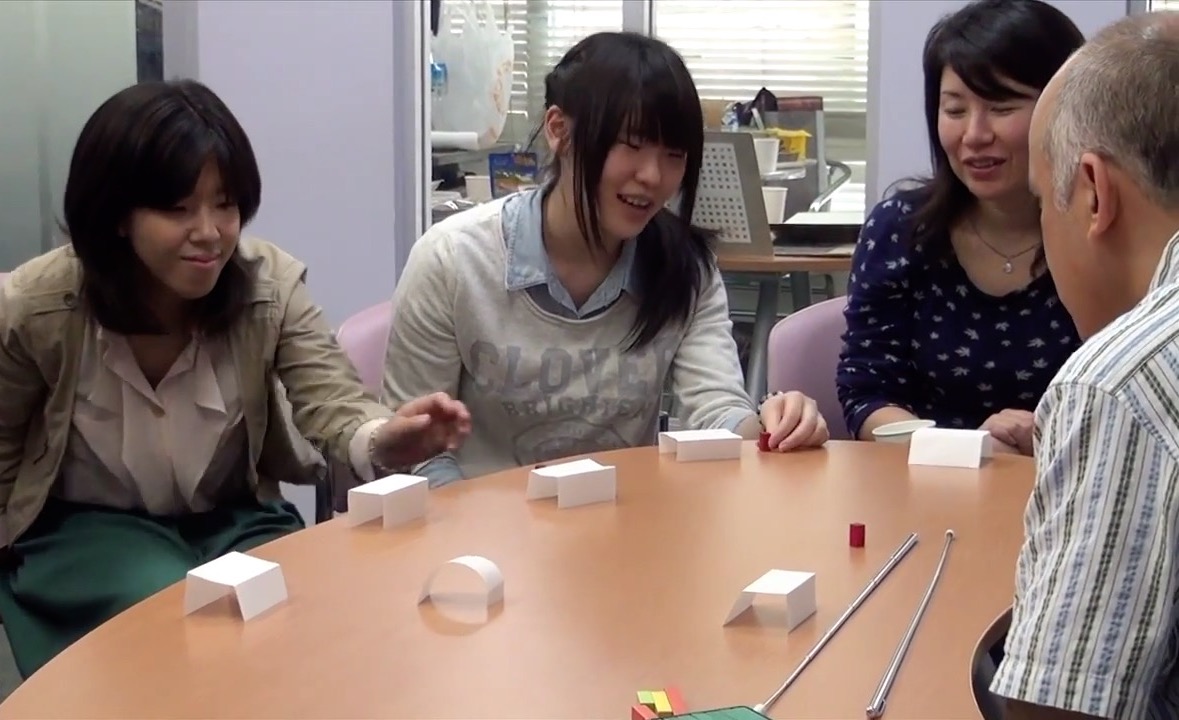
If we are to speak a foreign language well, we need to learn what ‘inward experiences’ speakers of a foreign language associate with what language – words or grammar. Different linguistic forms reflect different inner ‘states’ or ‘climates’ depending on what the speaker knows or thinks or feels about the situation they are talking about.
(more…)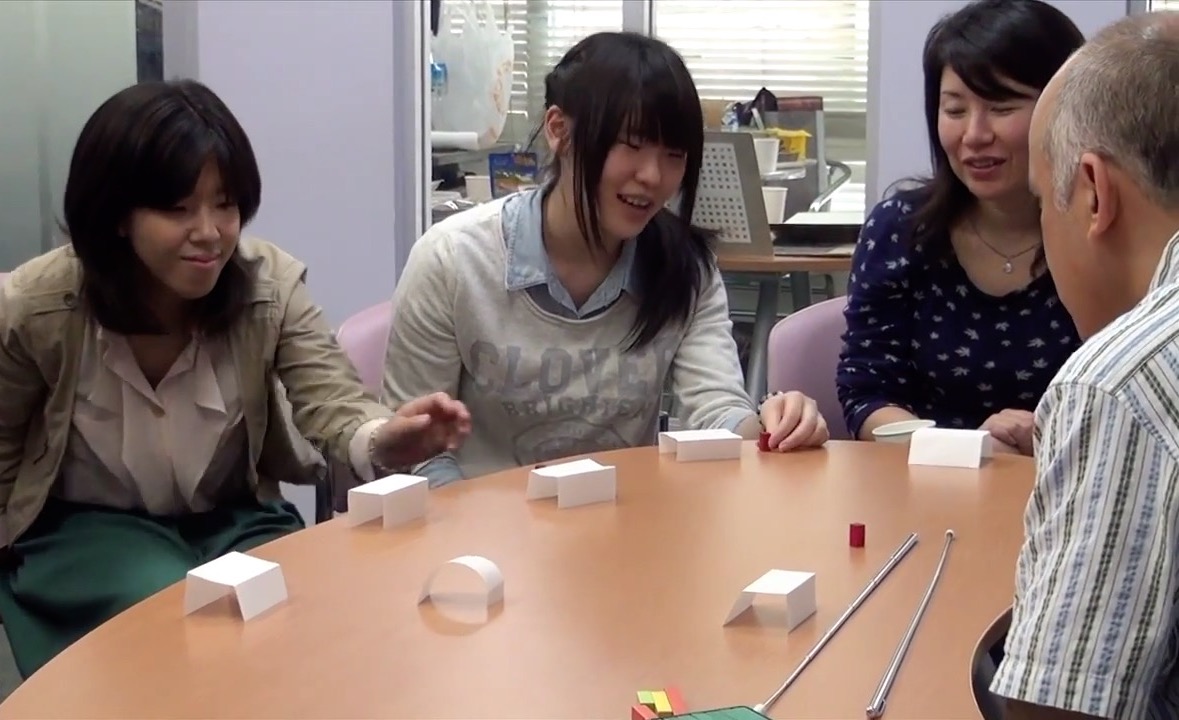
Once we understand what someone requires to do to learn a skill – trial & error, and practise – then what the teacher should do becomes very different. For good teaching there needs to be a fast-acting, double feedback loop in the classroom: the students learn about the language ; the teacher learns from the students.
(more…)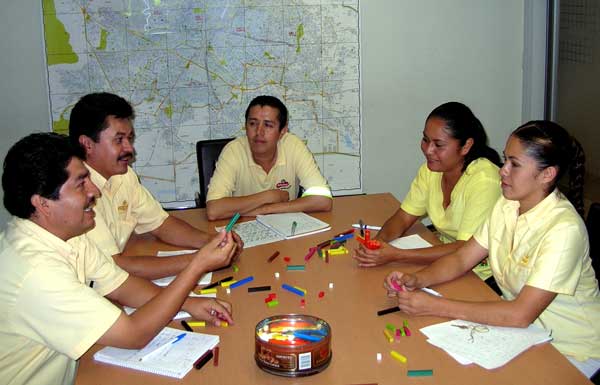
If we are genuinely working at the edge of students’ knowhow, all the time – in the margin between what they can do pretty competently and what they really aren’t ready for yet – then we can’t possibly plan our lesson in any detail in advance. We only know where that margin is, in the moment, by noticing what they do well and what their errors are. So we need moment by moment planning.
(more…)
No one is aware of the foundations on which their native language is built, but these deep habits are built on these foundations. And these things all work in combination to make the language easy to speak for natives. So as teachers we need to uncover the foundations of the language, and then find ways of teaching them.
(more…)
The first step to sounding native is sounding different. Once we make different sounds then we can pay attention to what we did different with our muscles and repeat the experience. This way we start to escape the grip of our native speech. It’s then a matter of trial and error, feedback and practice to home in on exactly what natives do.
(more…)
‘What a native speaker would do’ sets the standard towards which our teaching should aim. We aspire that our students, over time, should be able to behave as native speakers would in every aspect of the foreign language —pronunciation, rhythm, grammar, intonation, vocabulary etc.
(more…)
Memorisation costs us a lot of time and energy and is unreliable. We forget so easily! On the other hand, there are some things that we remember perfectly. We can recognise places; find our way back home ; get back on our skis after a break; hum a lullaby from childhood.
(more…)
You can acquire a house by signing a cheque. But languages are learnt, so you have to give yourself the time and the experiences that the task requires. And you have to be ready to transform yourself: one day you know no Spanish … another day some months later you can describe what you did at the weekend in Spanish. What happened in the meantime?
(more…)
Just think about it! When babies start learning their native language they have limited control over their breath and muscles, and they don’t even know that there is such a thing as language. And (thank goodness) no one teaches them: they do it all by themselves.
(more…)
We focus on the parts of the language which are difficult for students to learn for themselves: its pronunciation and the use of its functional vocabulary to express temporal, spatial and personal relationships. Gattegno called these the ‘spirit of the language’. Once you have the ‘spirit of the language’, then the rest comes easily through use.
(more…)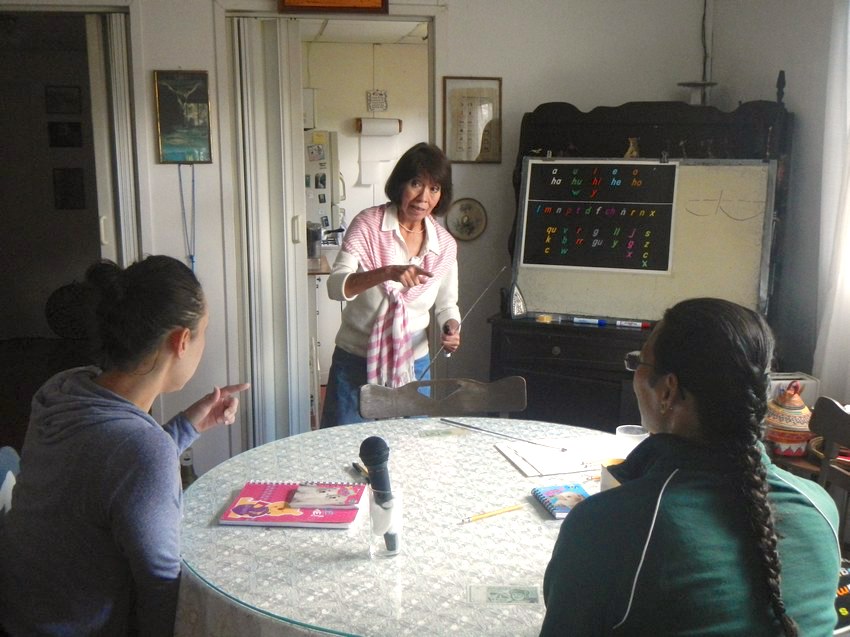
Pronunciation can’t be mastered straight away. Students have to practise over a period to be able to use their muscles in new ways, and they need continuous feedback and guidance so that they gradually sound more and more native. Any part of any lesson can become a pronunciation micro-lesson: we work on pronunciation whenever it is needed.
(more…)
For foreign language beginners we start with pronunciation because the students need this skill for everything they will ever say, and because it is one of the most difficult things for them to learn on their own. We then quickly start working with Cuisenaire rods, gradually introducing new language to describe the situations we make for students.
(more…)
Gesture and pointing are central to our teaching because they permit us to provide new language and to correct students’ attempts, silently and efficiently. So much of our running the class and getting students to talk and giving feedback is better done non-verbally by pointing, gesture, facial expression and mime.
(more…)
The grammar of a language – how the words fit together, how the language expresses relationships of time, space, personal relationships etc – is not a matter of rules. Native-speakers simply know ‘what sounds right’. And there is no particular reason why one language uses one way of expressing these things and another a different way.
(more…)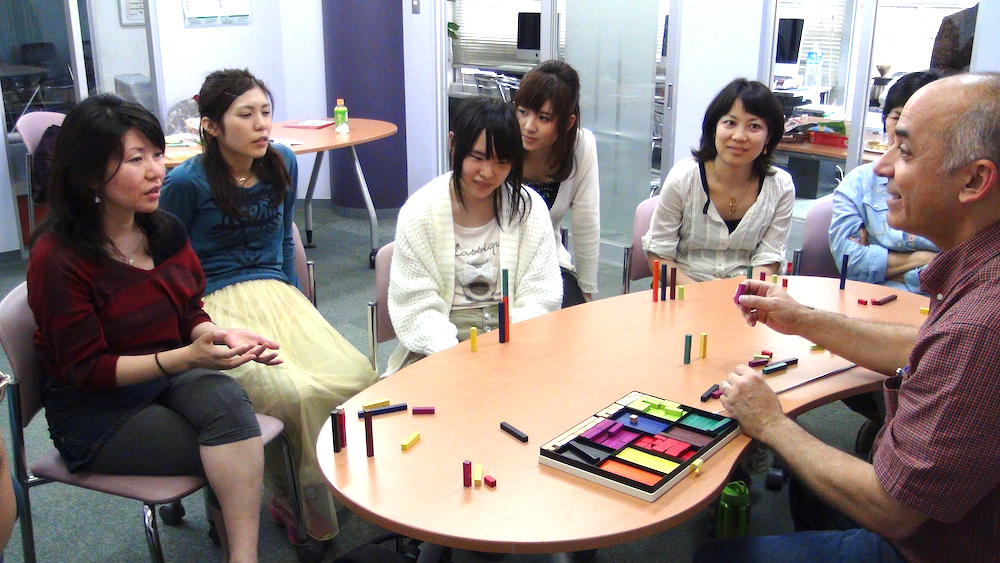
In the Silent Way of teaching the teacher keeps the students present to the task of learning the language; makes them aware of things that they need to learn; ensures that they correct their pronunciation and grammar; and keeps them moving, sentence by sentence, from the things they can do towards what they can’t yet do.
While the students learn the language, the teacher also learns – at every step of the way – how to teach guided by the students’ potential for learning, and, by the actual learning of each individual student.
We call this way of working ‘teaching subordinated to learning’ rather than the other way round ie ‘learning subordinated to teaching’. The latter, all too common when teachers see themselves as the source of knowledge and instruction rather than the enabler of students’ learning.
(more…)
It’s always better, at every level, to learn together with other students and practice the whole process of expressing yourself in a foreign language: from your thoughts through to using your muscles to make the foreign sounds of foreign words in the foreign sentences you need to express your idea. And everyone learns from everyone else in the class: a mistake is a gift to the class.
(more…)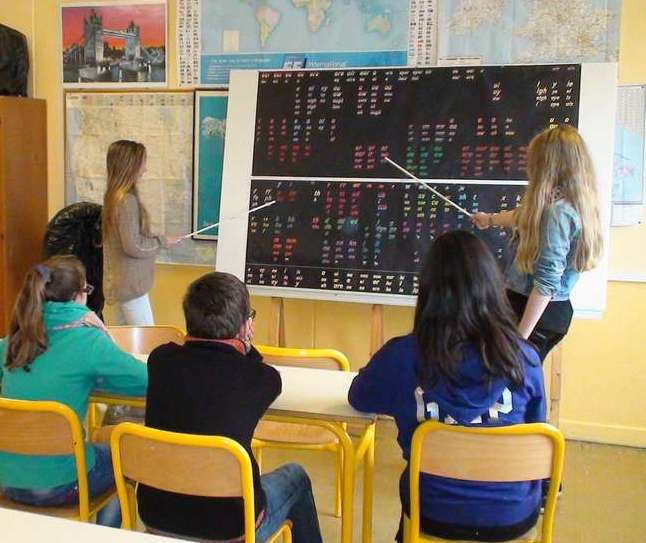
We focus on teaching our students how to use the functional vocabulary of a language. With a tiny vocabulary of not much more than 400 words (at least for a language like English) we can explore every aspect of pronunciation and virtually all the grammar of language. Once they have mastered how the language ‘works’ then they can pick up whatever else they need by use and exposure.
(more…)
A class is working on the sentence “He put his beer on the table”. The teacher enables the students to link the words together. Notice how the words “He put his” are linked together so that they sound like “He pu tis”, because this is how English-speaking people would say it.
And notice the economy of means the teacher uses to achieve this result, without any words or explanations.
(more…)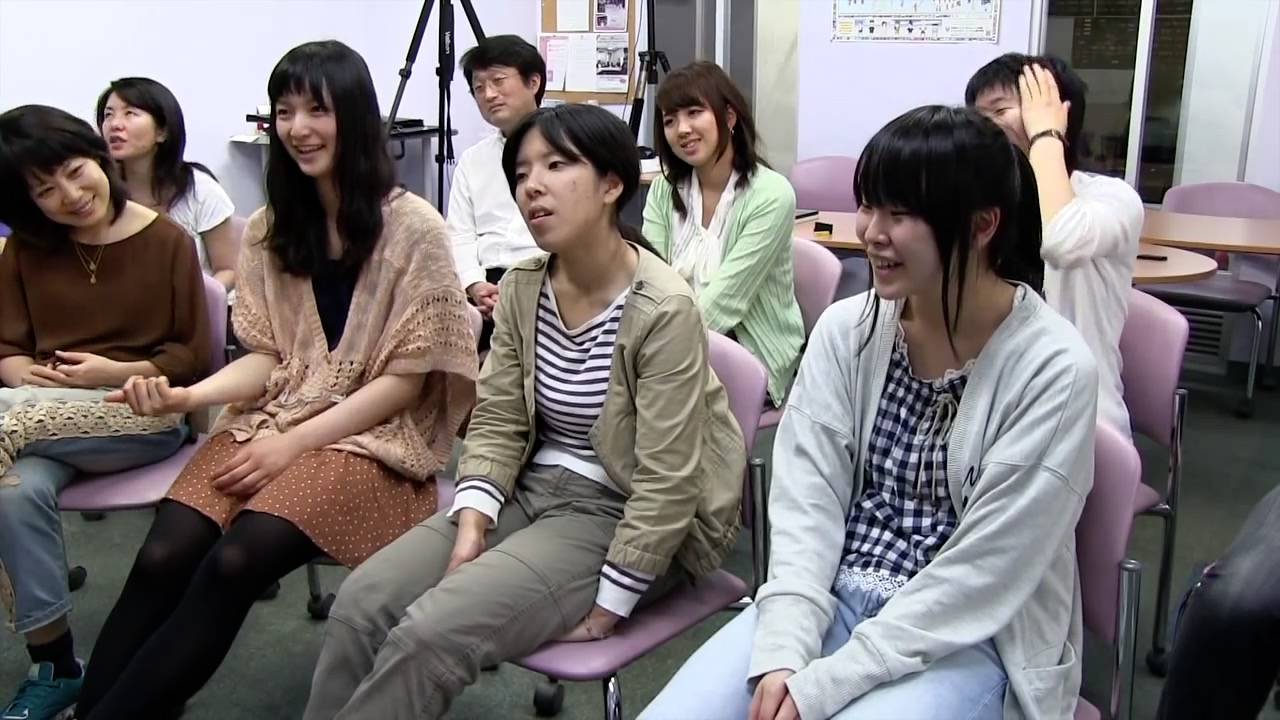
Caleb Gattegno talks about working in the space between what students know how to do and what they don’t. This is the most efficient place to teach.
(more…)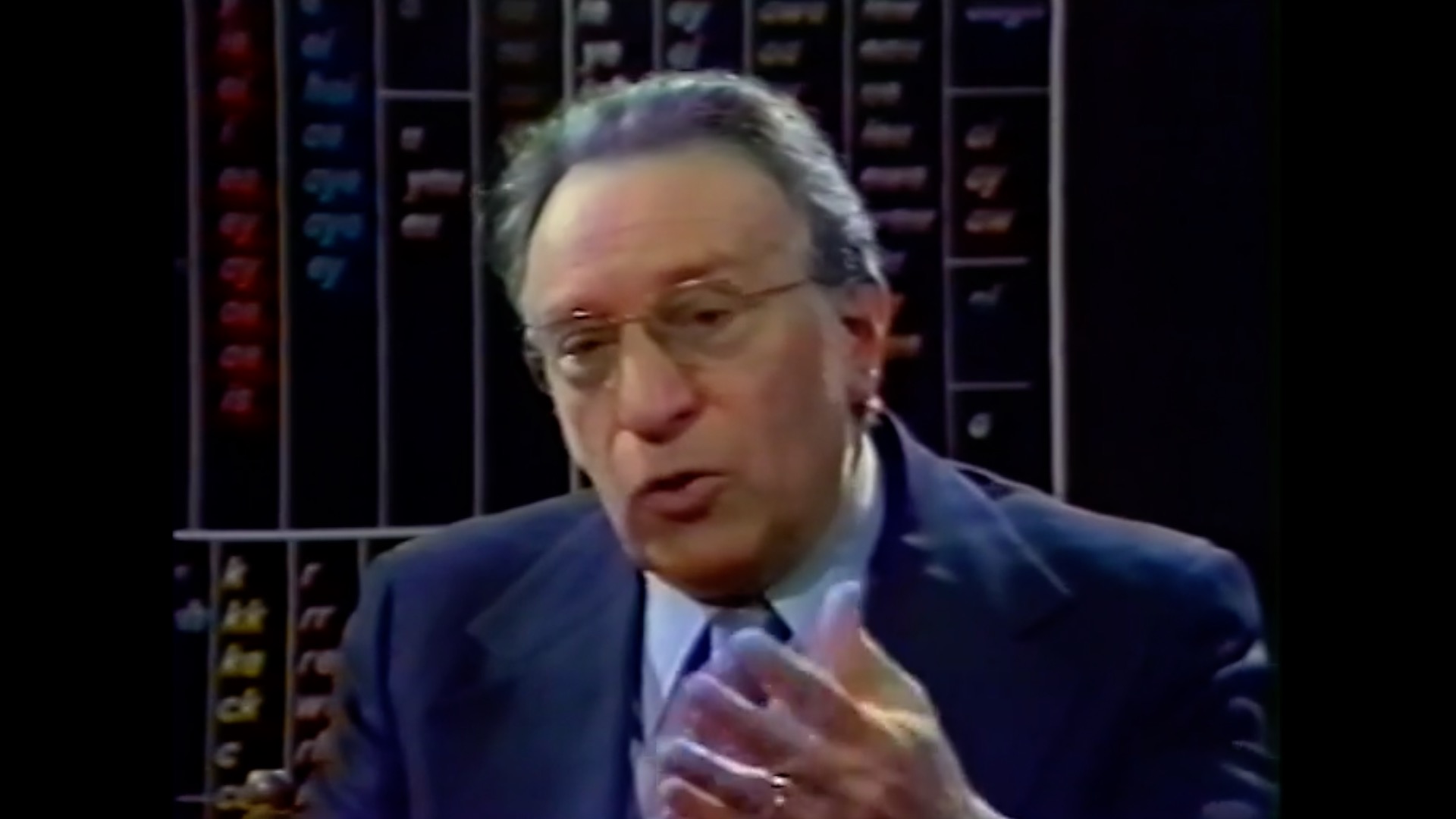
If we teach silently then the students are the ones responsible for doing the work. Silence frees the teacher to better observe the students. And if the teacher stays silent then the students can’t try to copy the short-lived memory of a sequence of sounds without really working to ‘own’ the unfamiliar actions required. But silence doesn’t mean the teacher says absolutely nothing.
(more…)
Since language is for people to express themselves, once students have some of the language we mostly use class conversations to teach languages: someone starts off the conversation with something they want to say; and then others respond. In between these exchanges, the teacher gets the students to correct themselves. And then the class picks up the conversation again.
(more…)
The number system is a great way to practise a lot of language skills with a tiny vocabulary and with no doubt about meaning. For example, in French, you only need 22 words to get to 99 and just two more to get to 999,999. So practising numbers is a great example of ‘much language with little vocabulary’.
(more…)
Speaking a language is a skill just like wood turning or playing a sport or taking photographs and can’t be mastered by being told about them. Teaching language as an academic subject is misguided and inefficient. Students need experience of using the language and feedback and guidance about the most fruitful ways to improve.
(more…)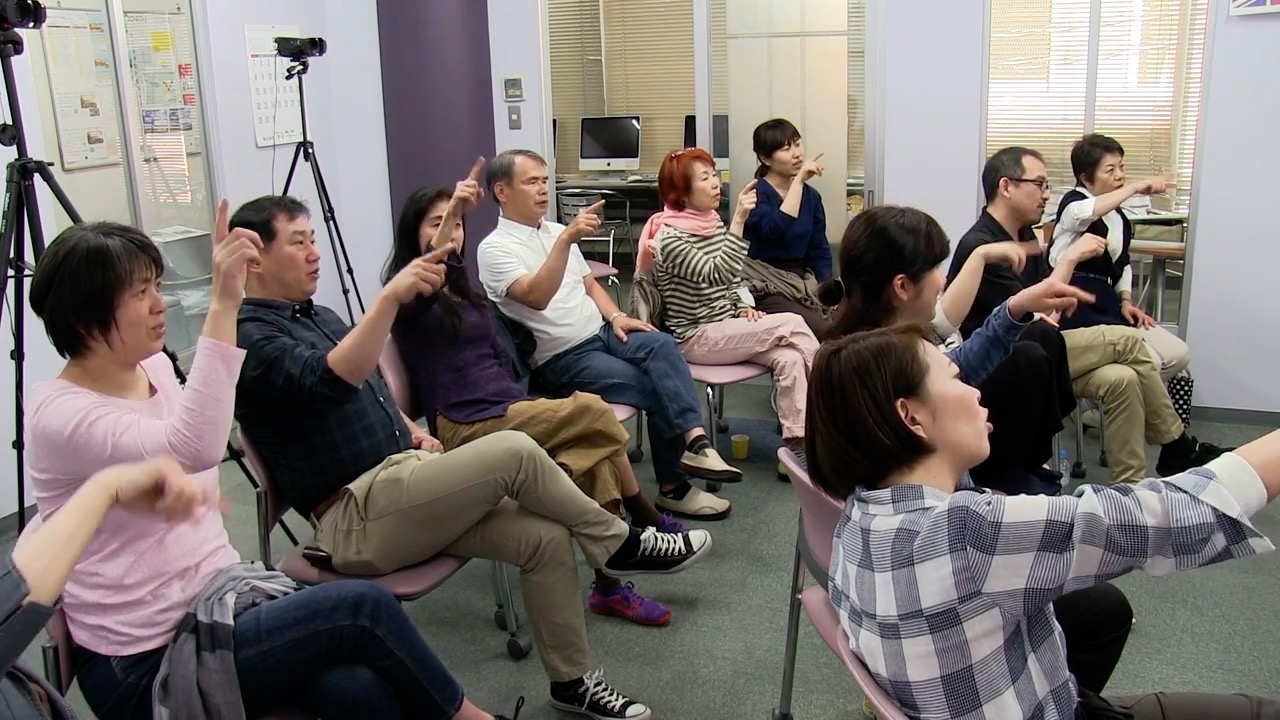
How do we know what students need to work on in the language they’re learning? After all there’s not much point in us teaching them things they already know. And there’s not much point in us teaching them things that they don’t need for what they want to express. The first is inefficient and a waste of your time. The second isn’t particularly relevant, or at least not relevant to them right now. We need ‘precision teaching’.
(more…)
When is the best time to give feedback to students? It’s now, while whatever the impetus was for the student to make their sentence in the first place is still in everyone’s mind, and the taste of the sentence is still in their mouth and the sound they made is still ringing in everyone’s ears. If we wait, then no one will recall exactly what was said, nor what pronunciation mistake was made, nor what the context was for the sentence. Furthermore, once the moment has passed, no one will care any more.
(more…)
One of the characteristics of learning is the need for the students to be present to what they are doing, to be ‘with it’. No one can learn without being focussed on the task at hand.
(more…)
We get to be good at doing something through practice and sleep. Both are necessary: if we don’t do the work, i.e. focussed practice, then nothing happens. But in sleep our practice is consolidated and integrated, resulting in improved performance at whatever it is we are working on. These effects are true across the whole range of human skill development from language to athletics. And they are cumulative, with newly-learned skills building on, strengthening and refashioning more established ones.
(more…)
A student says a sentence. There’s something to be worked on: a word is missing, there’s one too many words, or they are in the wrong order; the verb tense is wrong, or there’s a possible contraction; there’s a pronunciation problem. You can use your fingers as a tool to help the student work on his mistake. We call this ‘finger correction’.
(more…)
Silence puts the teacher and their students in their proper roles—they are working on the language, we are coaching them.
If we stay silent then the students have to turn their attention inward: to their muscles when they are working on pronunciation; and to their mental model of the language when they are working on words and grammar.
Silence also guards against teacher explanations and lectures, makes sure that the students do most of the talking: they are the ones who need to practice the language.
(more…)
Teachers have to practise being a teacher as much as students have to practise a language. We have to subordinate everything that we do to the students’ learning. It’s a terrible temptation for teachers to talk and explain and lecture. But this talk doesn’t really help people learn to speak a language.
(more…)
If you use your muscles like a French person, you will sound French. If you use your muscles like a Japanese, you will sound a Japanese. In fact, pronunciation is about training in posture and movement. But we can train the muscles of our mouths and breathing to move in different ways.
(more…)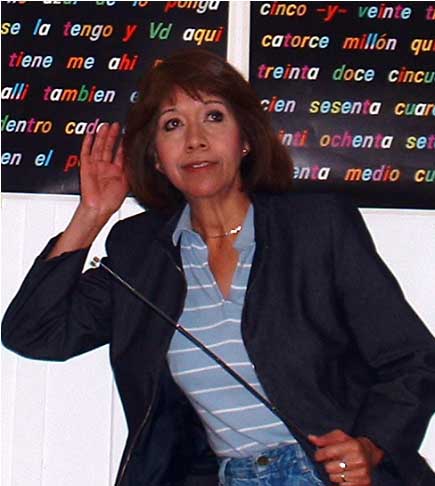
The function ‘words’ are the items which generate the grammar of a language. In English they are in fact mostly words whereas in many languages they are more often things like endings or other parts of words. They are what carries meanings for things like spatial, temporal, numerical and personal relationships.
(more…)
Each language has its own standard position and state for the lips and the tongue; different languages use the breath differently; and, for some languages the general level of tension in the muscles of the face is high, whilst for others it is more relaxed. (called its ‘Articulatory Setting’)
When we try to speak another language, we cannot do it well without adopting a new setting, and growing a new set of habits
(more…)
Unfortunately, we cannot rely on our ear when we start listening to a foreign language. The way we listen to speech is so well-attuned to our native language, and functions so automatically, that it is difficult for us to pick up the new foreign sounds we hear or to distinguish between similar sounds that native speakers of that language perceive as completely different.
(more…)
In our classes, students are asked to express whatever they are moved to say, from the trivial to the profound. They are asked to be truthful, and to talk about their lives, their feelings and their opinions in the foreign language: in short, to build the connection between what they want to say and the language that is needed to say it.
Of course, beginners cannot do this, so we use objects in the room (often Cuisenaire rods) to create situations that the students can become involved in and learn to talk about. As their language develops, their interests and lives, and soon their inner lives, become the focus of the class. The teacher helps them to find the language they need to express their intent.
(more…)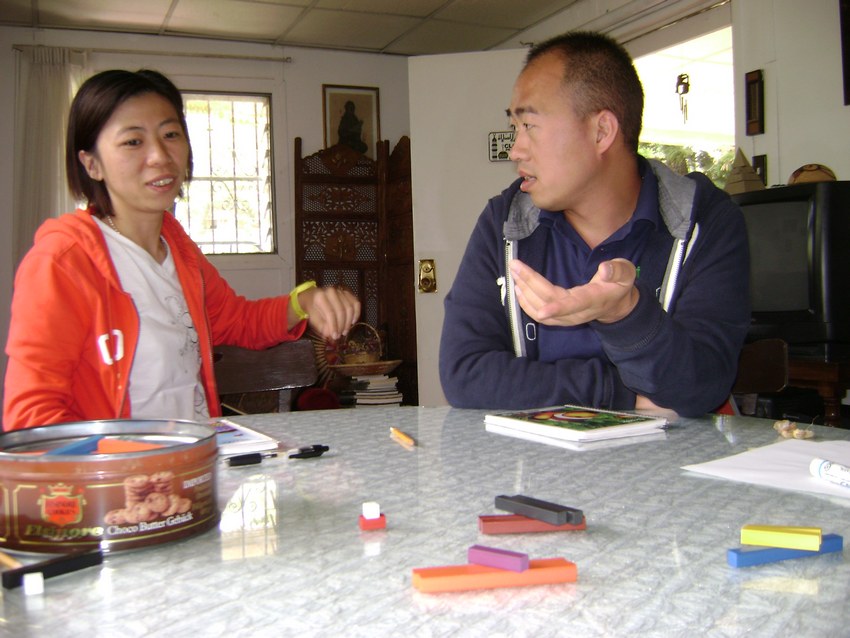
Learning starts with someone becoming aware that there is something to learn, or change, or improve: that there is a difference between their performance and what they are aspiring to, or could aspire to.
It is these tiny moments of awareness that kickstart the process of learning. Without these moments of awareness there is no reason or drive for anyone to do the work required. It is the teacher’s job to provoke these awarenesses in his/her students: they are the necessary requirement for learning to take place. Once students have noticed that there is something to learn, then the teacher’s job becomes slightly different: to encourage and guide such experimentation and then provide precise feedback.
(more…)
Details are important, but seeing the whole as well as the parts – the details in the context of the larger picture makes a huge difference to our learning. For example, chemists use the periodic table to show all the elements and how they relate together. We can do the same for language. And that’s one of the reasons why we use charts like the above in our classrooms.
(more…)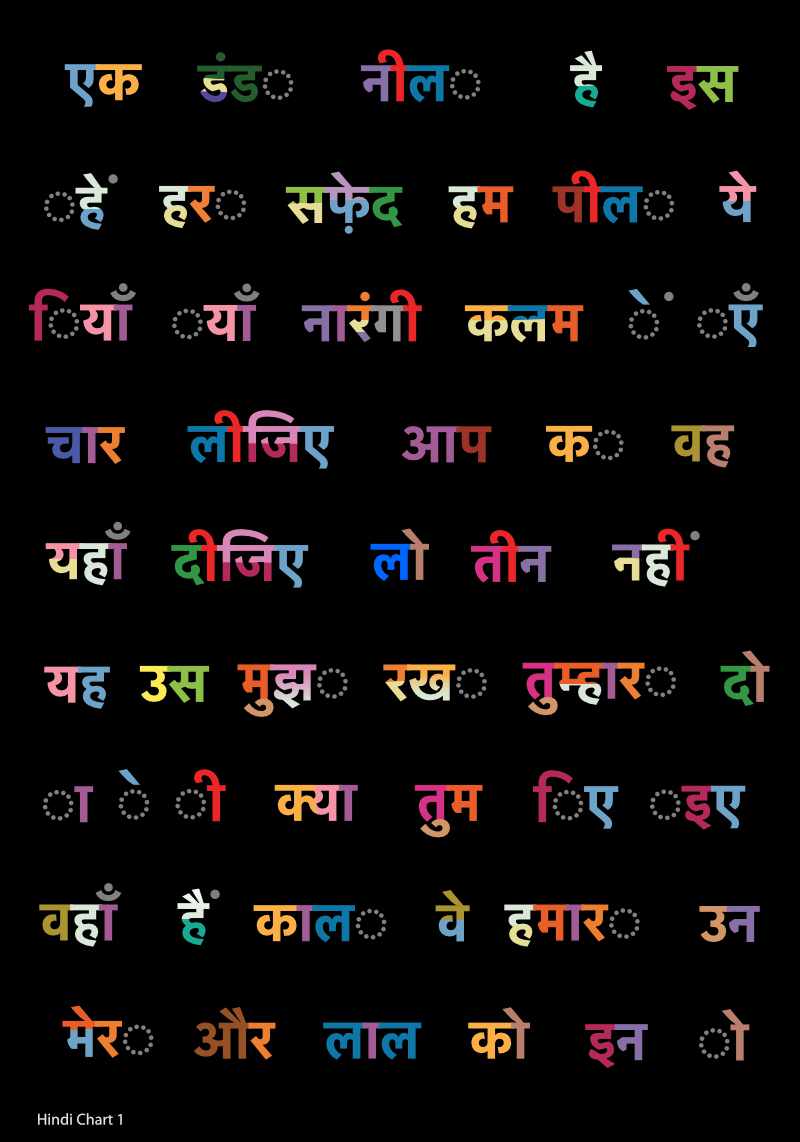
Learning starts when we become aware that there is something to learn: until then we’re not likely to learn or change. And awareness requires us to be present to our situation or task.
Speaking a language is a skill like riding a bicycle or playing a sport and we learn it by doing: trying things out, getting feedback to tell us what we need to work on, and practice, lots of meaningful practice.

Mistakes are a gift to the class because everyone else learns from watching someone find their own route to a correct and well-spoken sentence. But students need feedback, now, not after even a few minutes. If feedback is delayed, no one will recall exactly what happened and the chance for learning will have been lost.
Skill or expertise accumulates in a spiral, alternating between experimentation and consolidation. We can only take in so much at any one time and once our minds are ‘full’, charged with experiences, then we need to let sleep do its work.
Students’ time with us is precious, so we need precision teaching working in the margin between what they can do and what they aren’t yet ready for. Otherwise we waste their time, or we ask the impossible of them. So we use moment by moment planning, where what we do next is determined by what students do now.
We prioritise working on the things that are most difficult for students to do by themselves – such as pronunciation or acquiring the spirit of the language. These are where they most need our help.
We want our students to get these right foundations so that, with time, they can speak a foreign language like a native speaker does for whatever purposes they need it for. This sets standards for every sentence they say in class: is it what a native speaker might say in that situation? Does it sound native-like?
If their pronunciation falls short then we know they’re not using their muscles like native speakers do and we, and they, have more work to do, perhaps in a pronunciation micro-lesson. One foundation for good pronunciation is the articulatory setting unique to that language: ease in speaking a language is impossible until students establish that “posture”.

Sometimes learning a language seems like an endless task. We can be intimidated by the thickness of the dictionary or grammar book. No one knows all the words of their native language, but we can generate much language with very little vocabulary. If we know how to use the 400 or so function words for a language, as presented on Silent Way wall charts, then we have learnt nearly all of the grammar of that language.
Working this way almost eliminates the memory burden of getting started with a language: learning a language is mostly about familiarity and has very little to do with memorisation. We show the whole at the same time as the parts because it gives context—all the sounds of the language on one sound-colour chart, all the spellings of those sounds, in the same colours, on a spelling chart, all the grammar on word charts. So students can start to become familiar with the language by exploring what they can see, touch and point to on the wall charts surrounding them in their classroom.
The universal human language of gesture and pointing is key: simple, intuitive, physical actions provide new information, make self-correction efficient and reveal people’s thought processes. An example: finger correction.
All these ways of working make the opportunity to learn with and from others effective. The presence of others makes our foreign language real: we talk together about real things in students’ perception, experience, lives, hopes and dreams. And students build inner certainty by observing others find their own, often convoluted, route to correcting errors in something they’ve tried to say.
These tools, techniques and ways of working permit us to teach largely silently. The main reason to be silent is that silence puts us and the students in our proper roles—they are working on the language, we are coaching them. And silence forces them to put their attention onto their muscles rather than in their ears. This is exactly what they must do to start sounding different which is the first step on their journey to sounding native.
Speaking starts from within, so that’s what we do: train our students how to express themselves in the foreign language. The urge to speak comes from within, not from a text book or worksheet. It’s what drives babies to work out their native language even though it is the most foreign, because babies start not even knowing there is such a thing as language. Whilst adults already know much about language, they have other difficulties to overcome. They have well-tuned mental models for their native language, which uncomfortably contradict what a foreign one requires, and they cannot rely on their ear to decode foreign speech: it’s too well-trained for their native tongue.
And they need to get used to the different way the foreign language “works”. For example, the use of Cuisenaire rods enables us to teach grammar through situations—avoiding translation, explanations and rules—because the combination of people’s perception, their experience of the language, feedback from the teacher and practice allows them to gradually discover for themselves how the world they live in is expressed in this language.
Working with the clock and the calendar and exploring what people actually did yesterday, last week, or last year, or expect to do next week, next month or next year, enables an exploration of time and verb forms. This is always based on the students’ reality, and is therefore vivid to them, taken from their own perceptions, lives and experience. Working with numbers enables students to practise pronunciation and provides the empowering experience of saying and controlling long utterances.
If you’re working with beginners, start students experimenting with their voices, then work on the functional vocabulary, and use this progression framework and syllabus (English or French) to judge their progress.
If you’re working with more advanced students then start by finding out what students can do already through a class conversation. Above all prepare yourself for whatever may come in your classes by practising how to be a better teacher.
‘What a native speaker would do’ sets the standard towards which our teaching should aim. We aspire that our students, over time, should be able to behave as native speakers would in every aspect of the foreign language —pronunciation, rhythm, grammar, intonation, vocabulary etc.
In fact, with the exception of pronunciation, students can quite quickly become as good as native speakers in many aspects of a language eg working with numbers, or telling the time, or describing situations with Cuisenaire rods.
Pronunciation is slightly different in that, just like any sport, it takes time and practice for us to accustom ourselves to use our muscles in different ways. So, to achieve close to native-like pronunciation will take a little longer than other aspects. And this is therefore the reason why pronunciation should be worked on right from the beginning of a course.
In conclusion, ‘what natives do’ should be the standard to which we aspire for all aspects of our language teaching – anything else is selling our students short.
A skill is ‘the ability to do something well’ or ‘expertise’. And skills are learned by doing, by trial & error, with feedback and through experience. The skills of wood turning or playing a sport or taking photographs can’t be mastered by reading about them in books or being told about them. People learning a skill benefit from a coach, someone with more experience than they have, who can guide their practice as they gradually develop their expertise.
Speaking a language is the same. Teaching this as an academic subject is misguided and inefficient. Students need experience of using the language and feedback and guidance about the most fruitful ways to improve.
And language teachers need to learn the skills of being a good coach in just the same way: by coaching students and through feedback and reflection on their practice.
Today, I was working with a student who, in response to the question, “What are you doing?” from another student, said what sounded like “No, I am learning English.” A ‘teachable moment’ to provoke the awareness that there was something for him to learn about the pronunciation of the word “now”.
(more…)