Four stages of learning

Four stages of learning

Learning to do something (including, of course, learning to speak a foreign language) is a series of small steps. 

Learning starts when we realise that there something we can’t yet do – something we need to learn.  We experiment and gradually work out what we need to do differently to do this thing well.  Then we need to practise so that whatever small thing we are currently working on becomes automatic, but once we have mastered this, then we have that skill for life and we can build other skills on top of what we have already learnt.  

We can help ourselves if we:
  • make sure that what we are practising really is correct and that we are using ourselves well.  There is no point in practising something that is inaccurate – that merely strengthens bad habits.  And depending on the skill we are working on, we need to adopt the right postures (for example see Articulatory Settings) and avoid inefficient muscular tension.  
  • make sure we really do master each small step – each step is a foundation for others and there is little point trying to work on the next steps if the earlier ones are still shaky
  • your coach or teacher’s first job is to provoke the awareness that there is something to learn.  Then they can guide your learning by helping you to experiment fruitfully and making certain that what you practise is accurate.
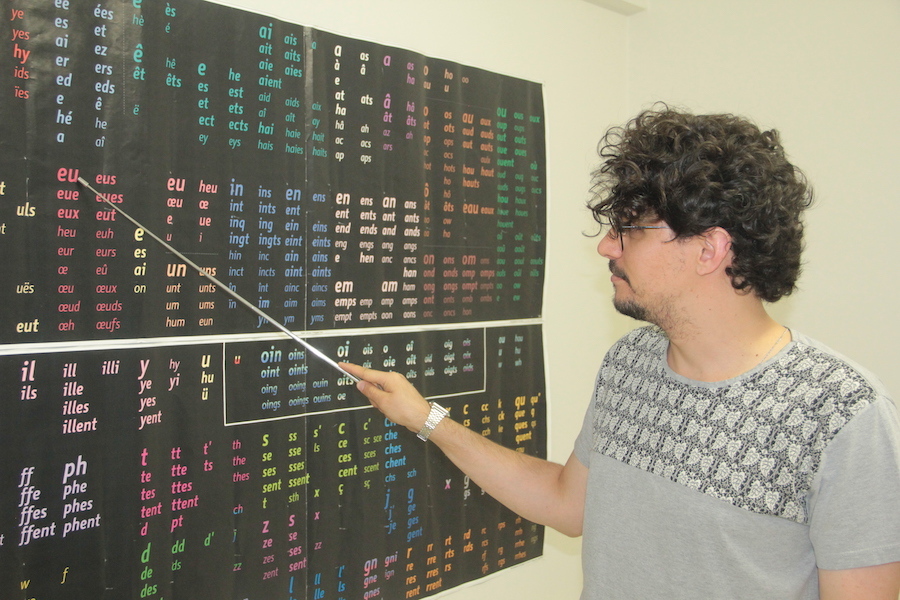
A student working on French pronunciation and spelling

These four steps – awareness, experimentation, practice, use of prior learning as the foundation for learning other skills  – applies to learning anything, whether it be a sport, or music, or acting, or accountancy or, of course a language.  

Watch this video to see the four stages of learning being used in an English class given in Tokyo in 2012 by Don Cherry: