
This film shows how a Silent Way teacher works. We’ve sampled every two hours of a week-long intensive English class that teacher Don Cherry gave in Tokyo in 2016 to give you a unique insight into this way of working.
You’ll see how a Silent Way teacher works and some of the reasons why we work this way, including:
You can watch the film with commentary either in English, French or Japanese.
(more…)
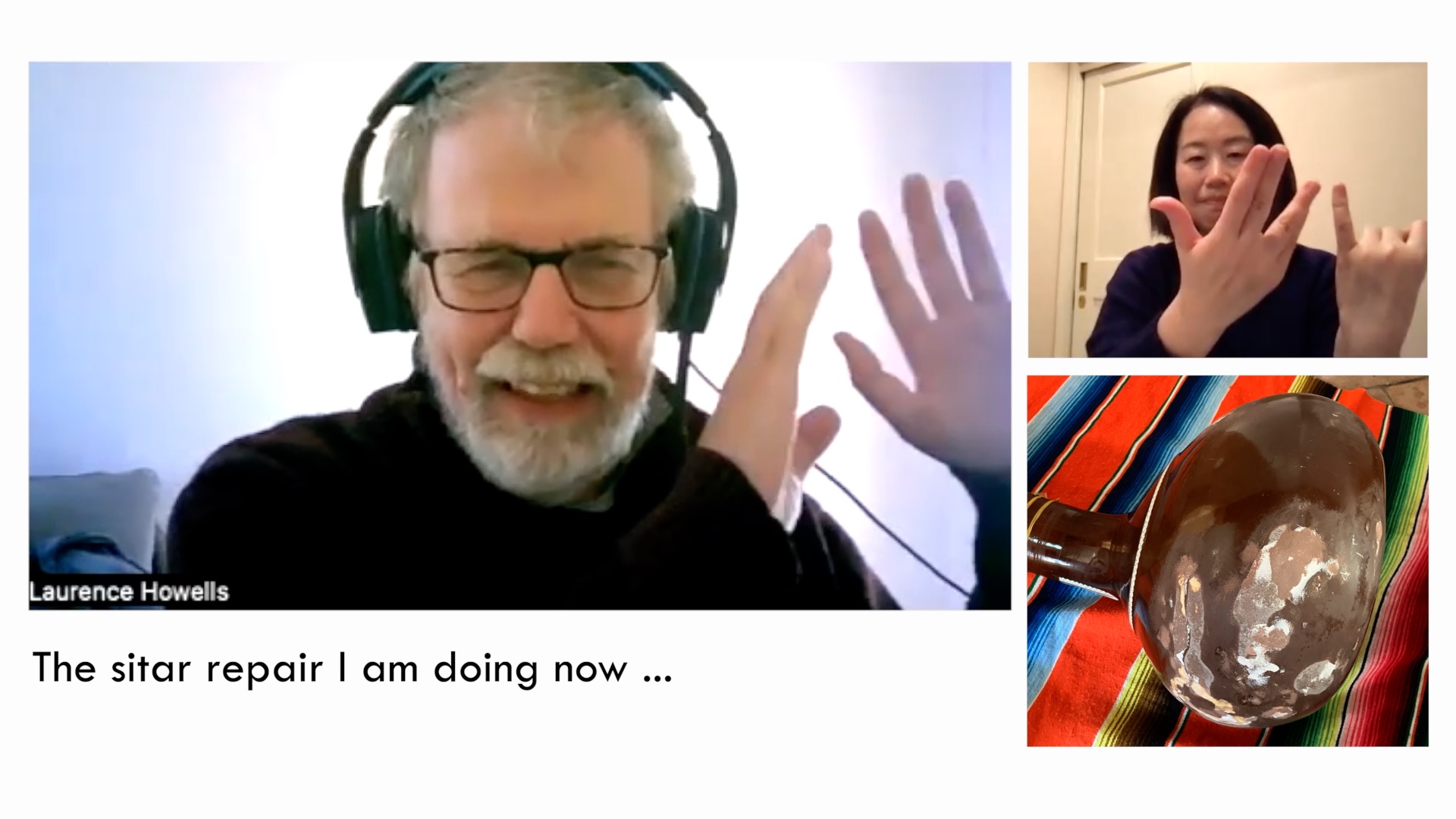
When we teach intermediate or advanced students one-to-one we use a ‘tell me’ class, instead of a Class Conversation. The student is invited to tell the teacher about something. At first, students may need to be prompted with a topic to talk about. Later, students often have something that they want to talk about. And the teacher can encourage them in this by saying something like ‘What would you like to tell me about today?’
(more…)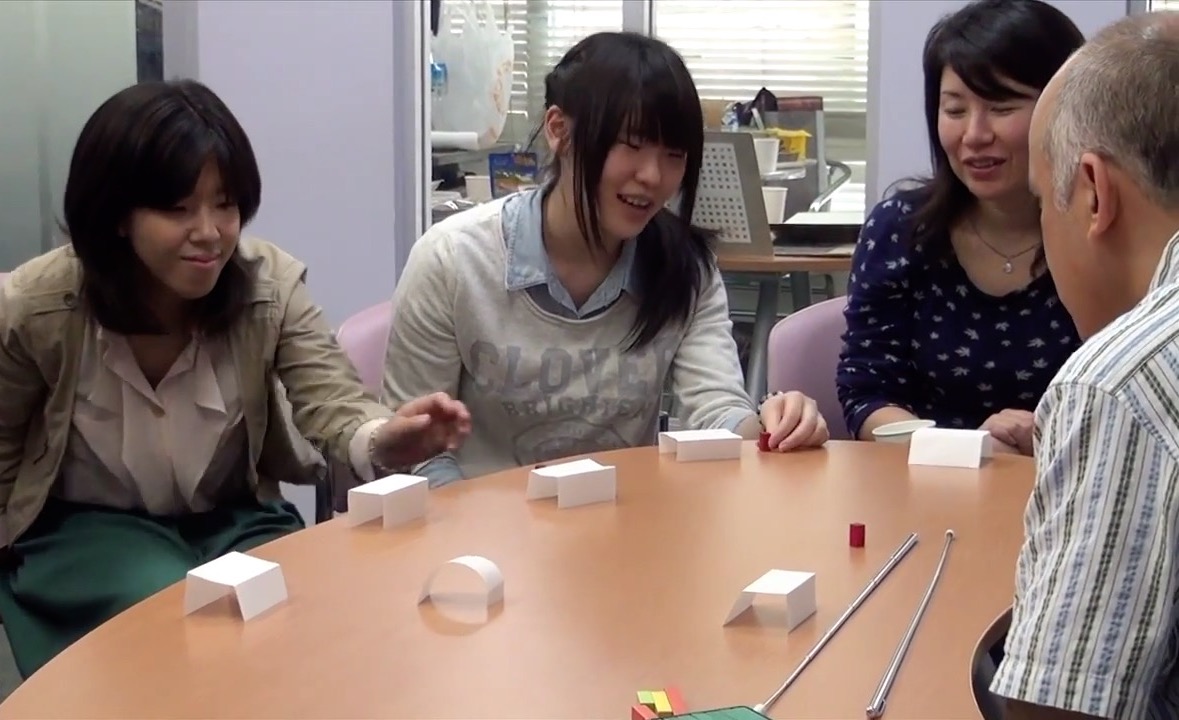
In this video the students experience the differences between ‘I am going to go …’ and ‘I am going …’ and ‘I have gone …’ and ‘I went …’; learning to associate these experiences and these words; and practising how to say their sentences with the right emphasis, rhythm and melody.
(more…)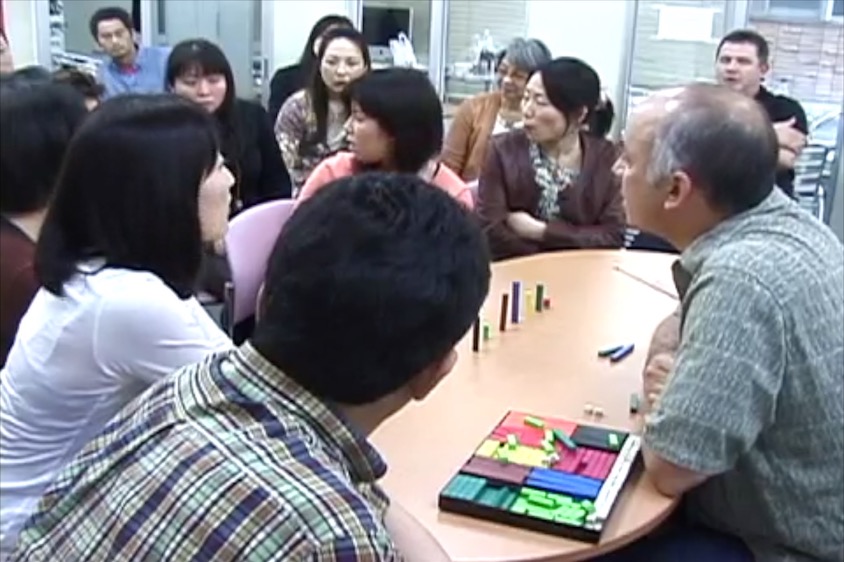
Watch how the teacher worked with the class on a new word – purple – which they needed. Because he has already done a lot of work on the sounds and rhythms of English he can quickly and silently enable them to know how this would should be pronounced in a pronunciation micro-lesson.
(more…)
This film explores some of the work of ‘Classes de français‘ a Silent Way school in Tokyo, Japan and sets out some of the ways that the school teaches using the Silent Way.
(more…)
This film shows how a Silent Way teacher works. We’ve sampled every two hours of a week-long intensive English class that teacher Don Cherry gave in Tokyo in 2016 to give you a unique insight into this way of working.
You’ll see how a Silent Way teacher works and some of the reasons why we work this way, including:
You can watch the film with commentary either in English, French or Japanese.
(more…)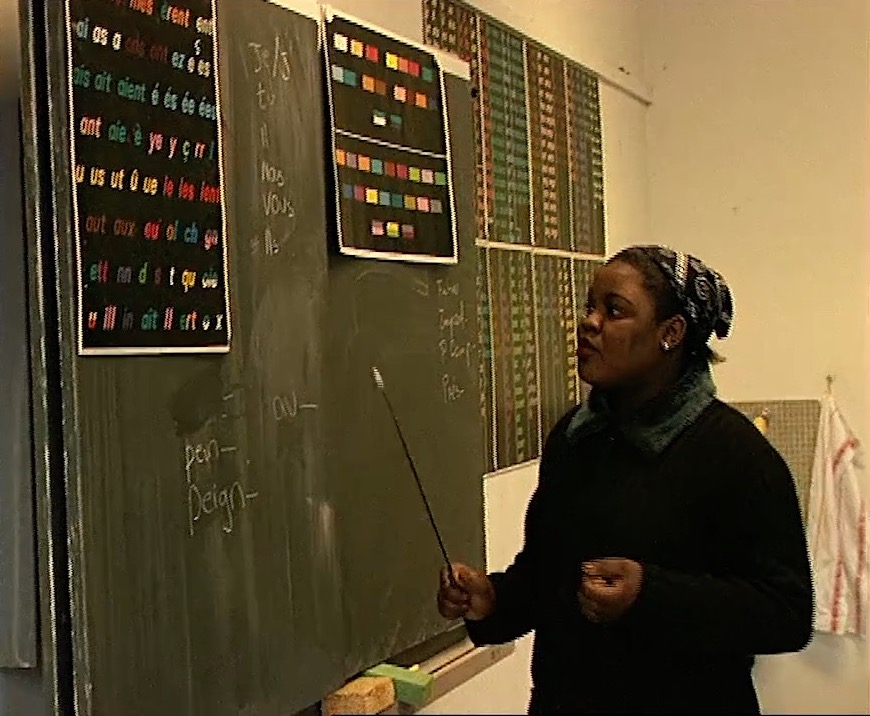
In the Silent Way we use familiarity not memorisation, minimising the need for memorisation calling on students natural power of retention for what they have made familiar. That is why we use wall charts to hold the key elements of the language – pronunciation, functional vocabulary, the relationship between sounds and spellings. This video shows that at work for French verb conjugations.
(more…)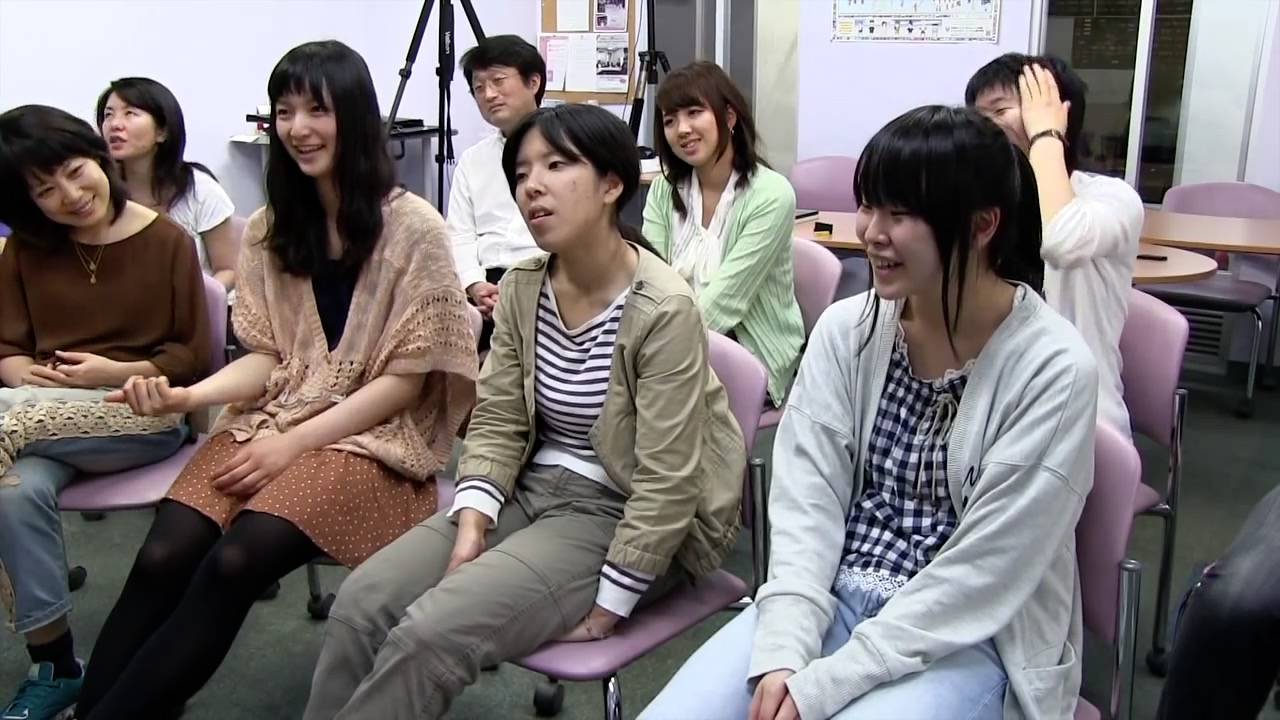
A class is working on the sentence “He put his beer on the table”. The teacher enables the students to link the words together. Notice how the words “He put his” are linked together so that they sound like “He pu tis”, because this is how English-speaking people would say it.
And notice the economy of means the teacher uses to achieve this result, without any words or explanations.
(more…)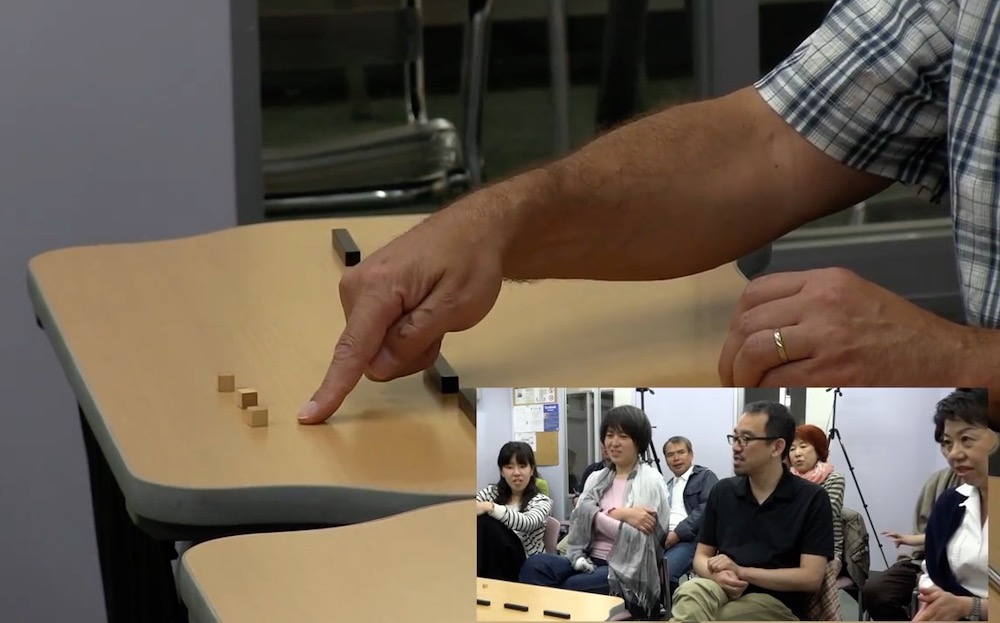
The teacher finds out that the class isn’t certain how many syllables there are in the word ‘January’ and then works with them on sounds, rhythm until they can put the word together so it starts to sound English.
(more…)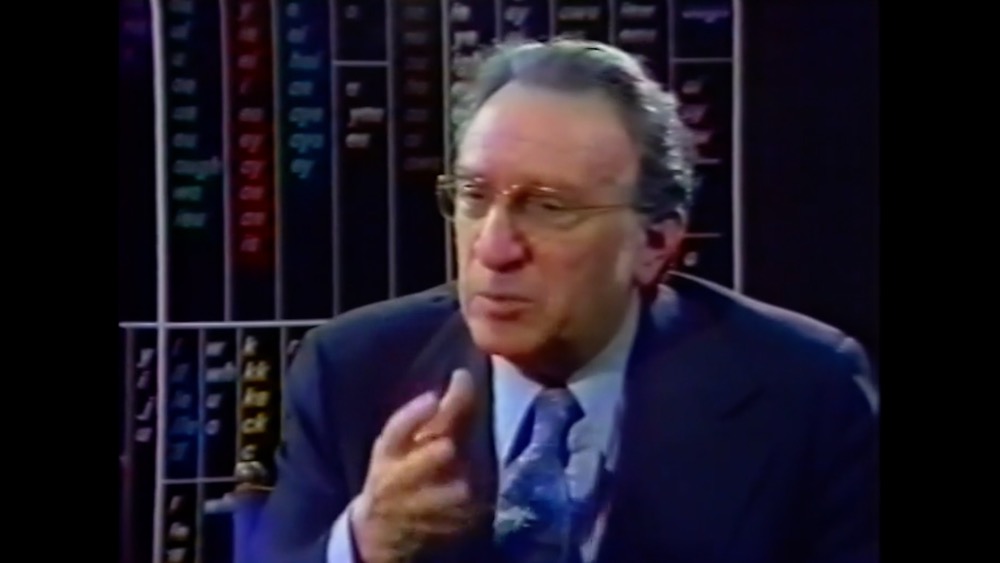
Dr Gattegno talks about the need for teachers to become as sensitive as possible to the ‘linguist in the students’ in this short film: ‘I operate on the invisible‘. This reflects the fact that whatever anyone says in any language ultimately comes from within themselves – an inner urge or need to express something.
(more…)
This series of short films tracks the progress of one student learning Japanese through an online course for beginners provided by Silent Way Tokyo. The main purpose of these films is to show the student’s progress over time, but the films also include the student’s commentary and reflections on the experience.
(more…)
The class is working on the sentence “Take one of the straws out of the cup”. The teacher uses his fingers to help them group the words correctly in the way an English speaker would. English natives expect to hear words in groups like this, with this kind of rhythm so they can extract the meaning from the stream of speech. This is a key technique in the Silent Way approach.
(more…)
A short introductory course in Mandarin was given as part of a workshop for teachers which took place at the end of October 2021 in Ardeche, France. The participants worked on the sounds of Mandarin using a chart which has a number of interesting features. It uses graphics to suggest the type of articulation for the consonants and it includes symbols for the tones. The chart’s arrangement is designed to help the teacher make students aware of the possible structures for syllables in Mandarin.
(more…)
A short piece showcasing the work of Southern Connecticut State University professor Luisa Piemontese as she uses the Silent Way for teaching students foreign languages. Luisa talks about using the Silent Way to teach Spanish to students in the USA.
(more…)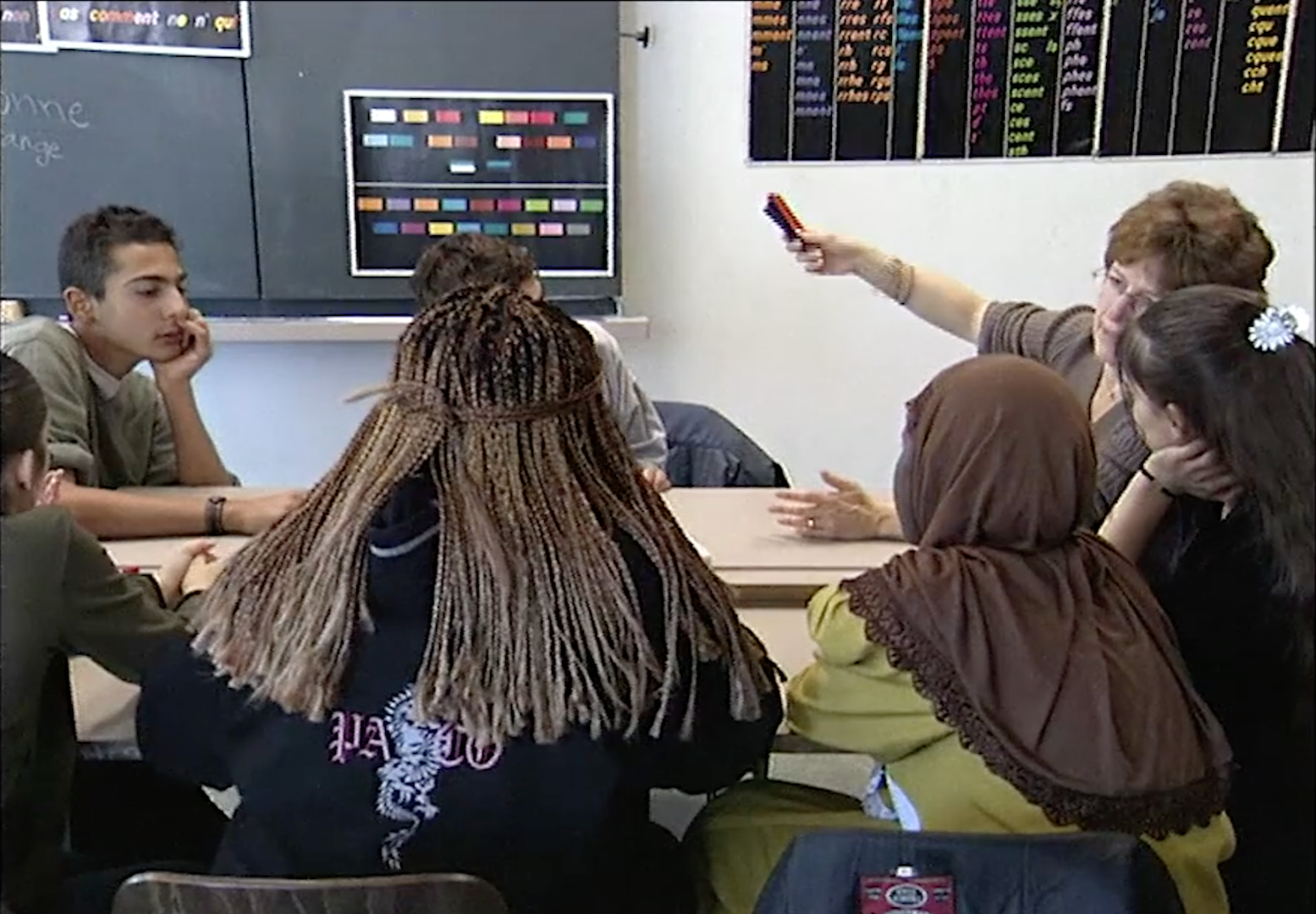
This 2002 film provides an overview of a year’s activity of a class of non-French speaking students learning French, using the pedagogy of Caleb Gattegno and the “Silent Way” approach. Follow the link here to watch the video.
(more…)
Dr Gattegno asks the delegates at a seminar to explore the idea that our native language must be the most foreign of all languages. And yet, as babies we all learnt that language.
(more…)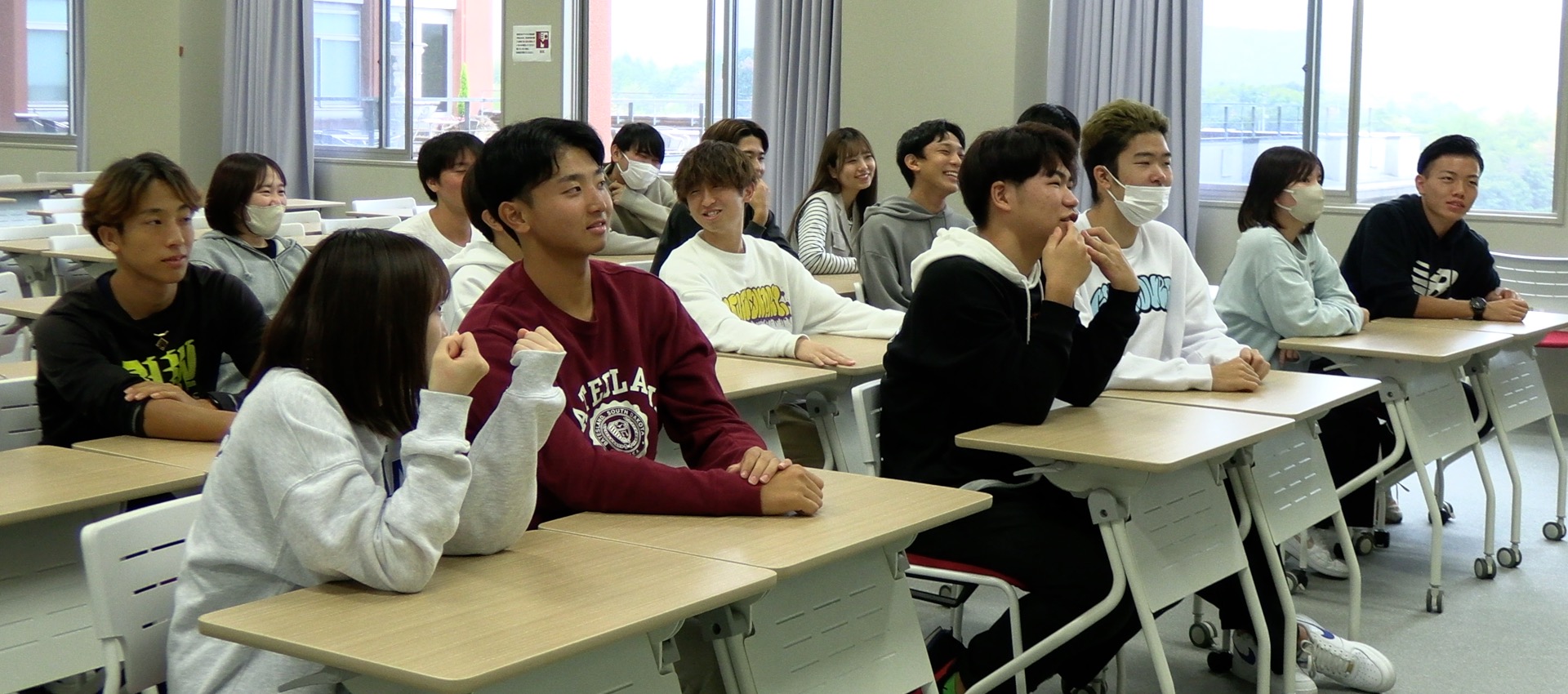
In this project we’ll video six English classes given by teacher Don Cherry at Hiroshima International University. Don has been teaching English in Japan for over 30 years using the Silent Way and is expert at teaching in this kind of environment. We’ll be documenting more of the techniques he uses through this project. Check out our previous project with Don from 2023 here.
Filming starts late October 2025. Assembling the footage, translating the interviews and editing will start in late November once filming is complete and we expect the first videos to be published in January 2026.
We’ll be posting updates on this page as the project progresses, so watch this space!
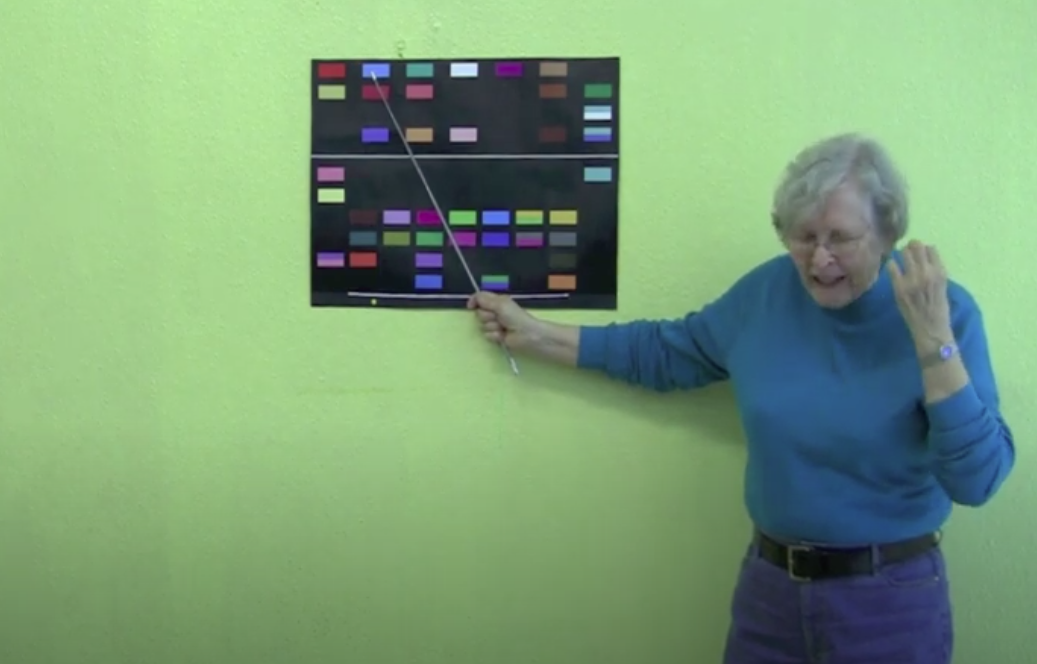
In these three videos Roslyn Young teaches some English students how to pronounce French vowels using the techniques of the Silent Way. The techniques illustrated here – sensitisation to the student’s mouth, experimentation and feedback, the use of a wall chart to unambiguously identify sounds – would apply to teaching the pronunciation of any language though, of course, every language has its own unique sound system.
(more…)

In this video Don Cherry talks about why he teaches silently. The video gives an example of his work with a class of some twenty five 18-year-old Japanese University students, and includes one student’s reaction. The lesson this video was taken from was the first time these particular students had worked with Don.
(more…)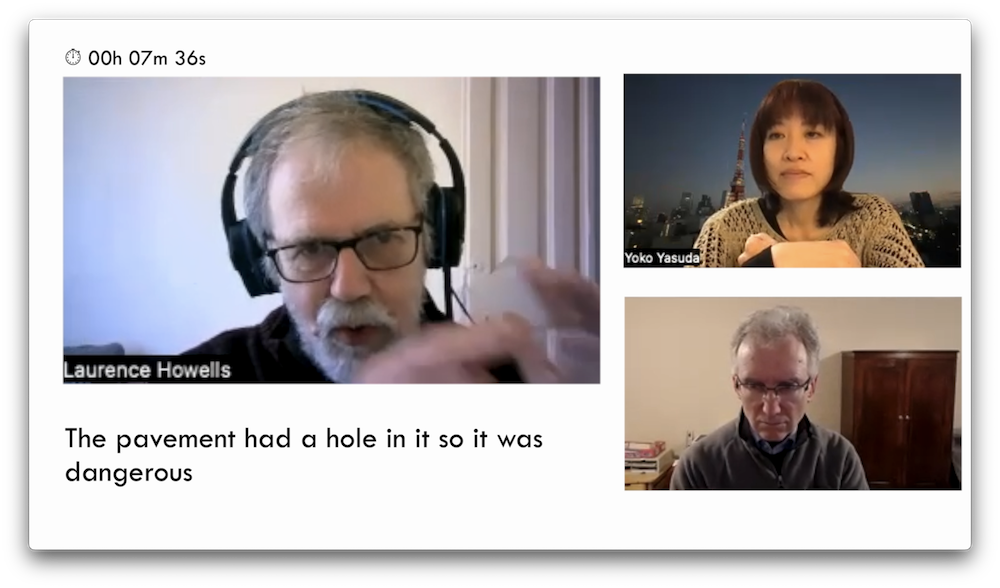
Check out this film to find out more about the Class conversation technique.
The film explains the technique and then summarizes the ‘story’ that emerged from the conversation between two intermediate students of Japanese. The film deliberately doesn’t show the process of rectification that the students worked on sentence by sentence, since the aim of this film is to show how a coherent story is created by the students in this kind of class.
(more…)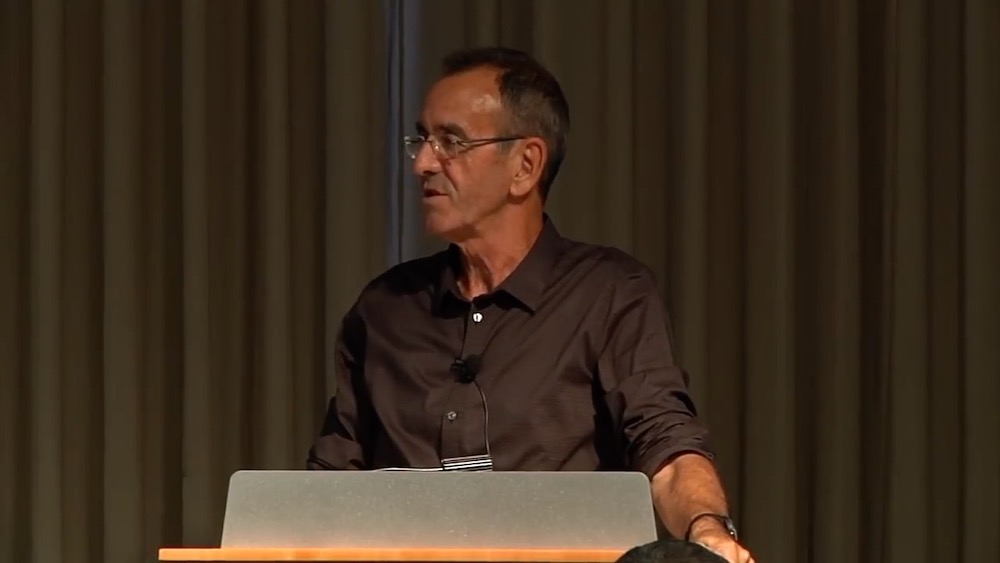
Scott Thornbury speaks about the fact that the most motivating thing in a language classroom is if you can get the people in the room interested in each other and talking to each other. An idea central to the technique of the Class Conversation used in Silent Way classes once students have some of the language.
(more…)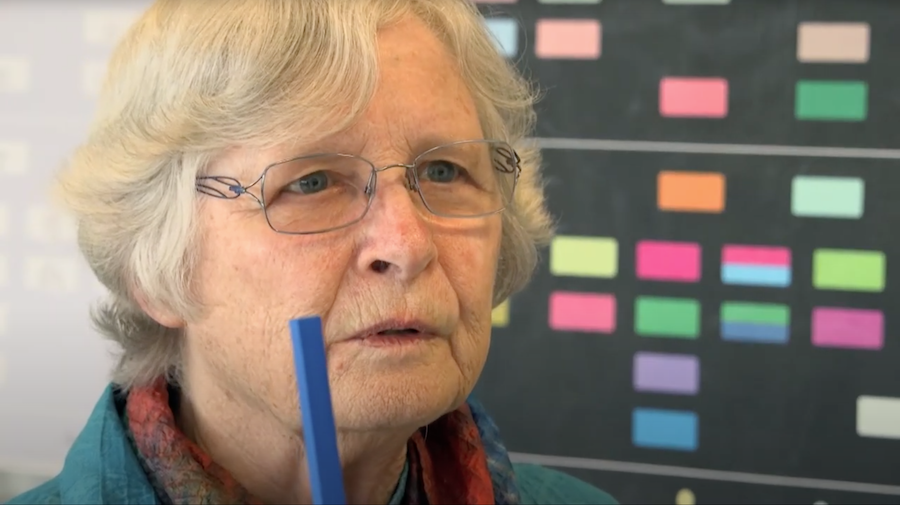
A conversation between Roslyn Young and Piers Messum about Caleb Gattegno’s Silent Way approach to teaching foreign languages. In this series of 15 videos Roslyn and Piers discuss the theory and practice of teaching using the Silent Way.
(more…)
Presentation of the Silent Way educational approach for teaching foreign languages. Produced by Actualis, Paris in 2019.
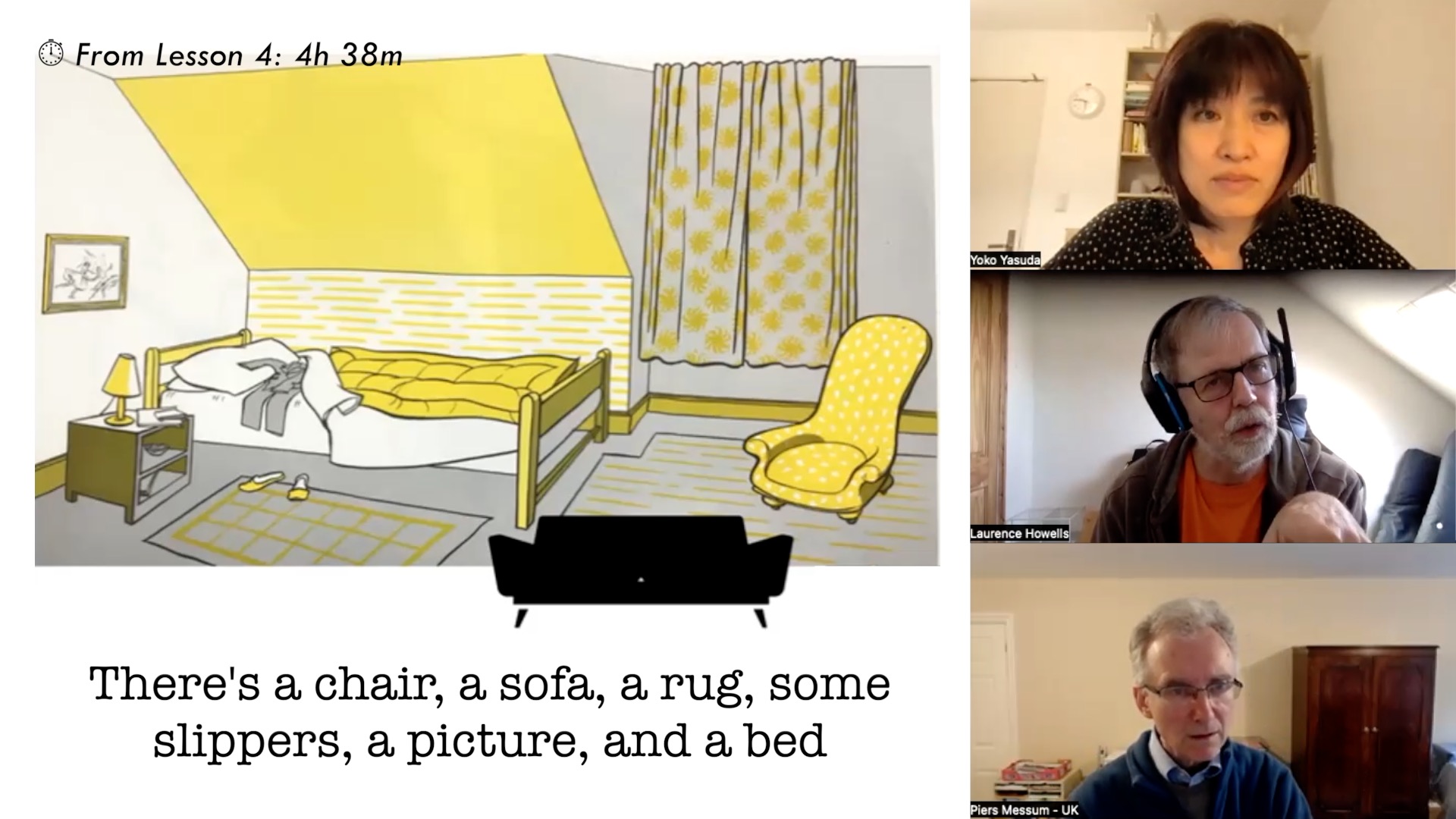
This series of four videos illustrates how a teacher (Yoko Yasuda of Silent Way Tokyo) used an image to help two intermediate students develop their skills in Japanese. The video series includes commentary from Roslyn Young and reflections from one of the students.
(more…)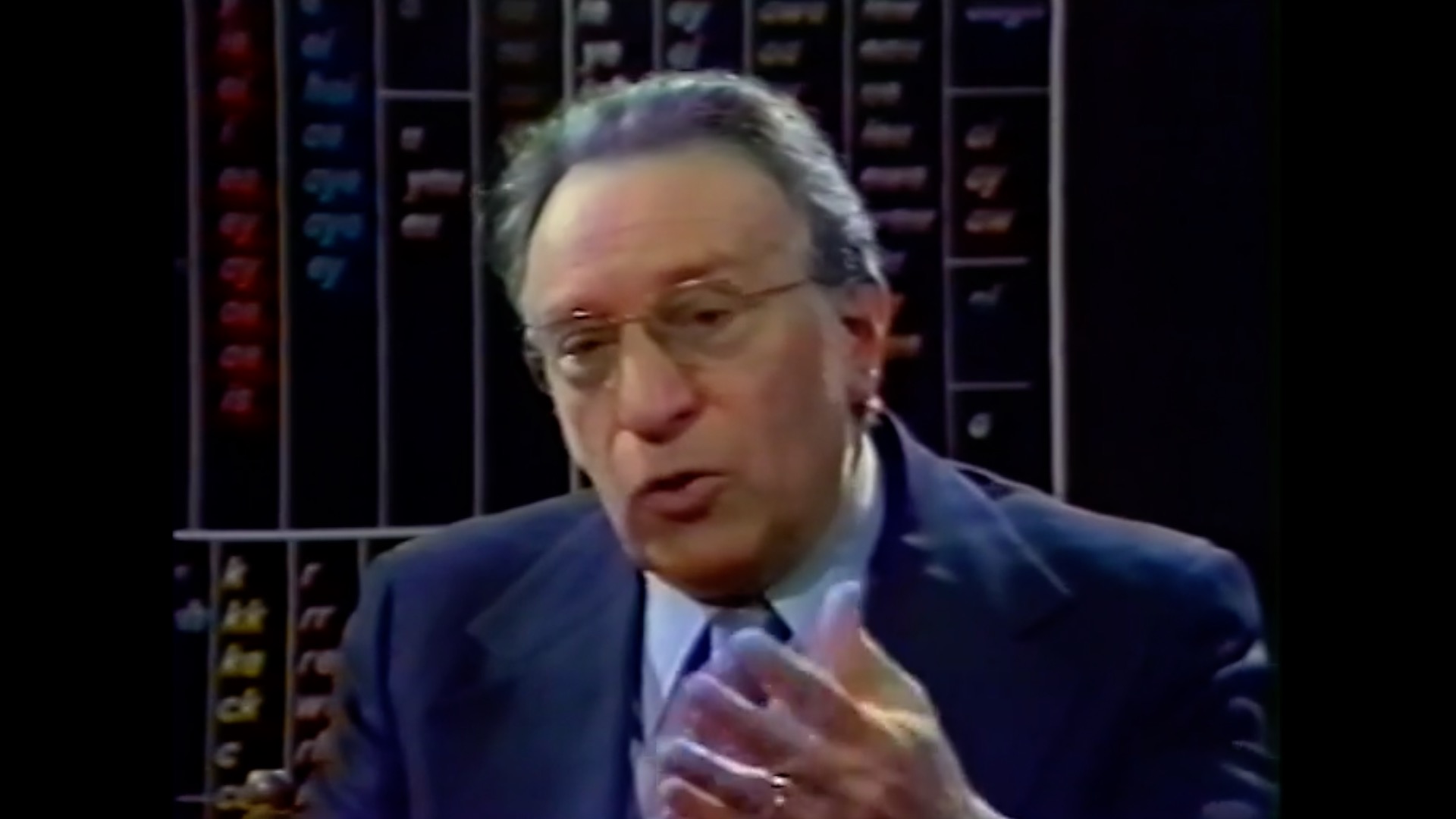
Caleb Gattegno talks about working in the space between what students know how to do and what they don’t. This is the most efficient place to teach.
(more…)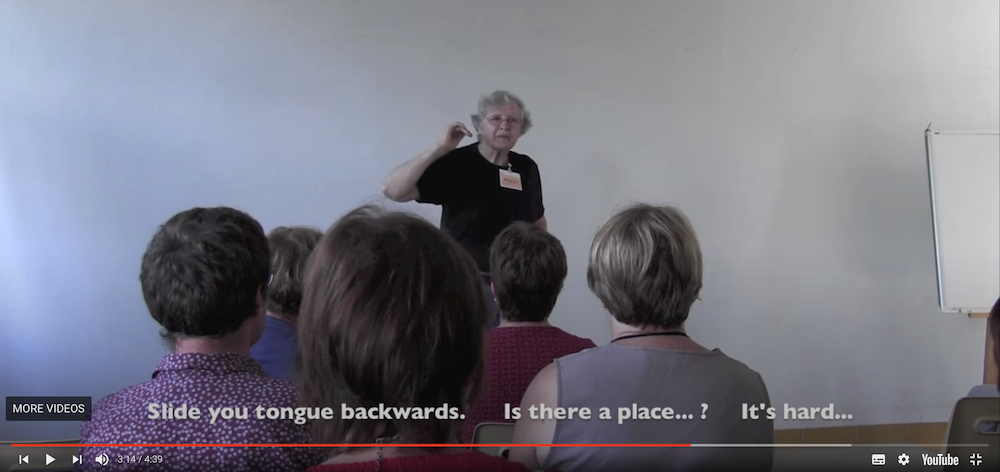
These short videos come from a workshop with French speakers held in Besançon and taught by Roslyn Young. They illustrate how to start teaching English Pronunciation using the articulatory approach.
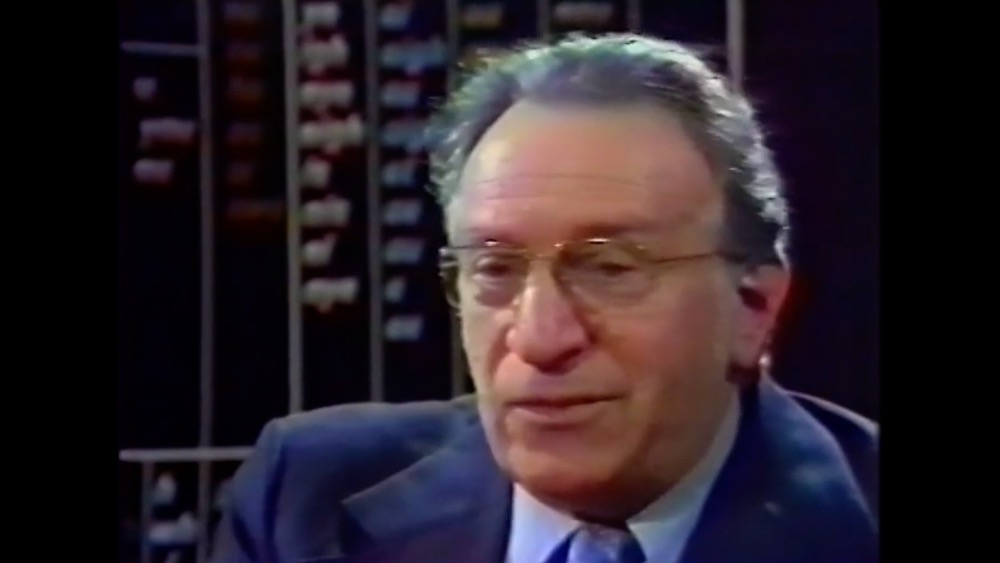
Dr Gattegno explains why counting and the numerals are introduced early in the Silent Way. They give great practice in pronunciation and rhythm and the ability to say long utterances. And for most languages students can quite quickly get to say very large numbers independently – a morale booster.
(more…)