
For us, neither repetition nor rote learning is practice.
Repetition can take place even while the person executing a movement is mentally absent from what he is doing, thinking about something quite different. In the popular imagination, assembly line work is this kind of activity.
We use practice to speak about activities which require the presence of the doer. Skiing a steep piste requires that the skier be present to what he is doing, even if he has already skied down this same piste ten times today. The piste remains the same on each occasion, but the skier is different; he knows the pitfalls he has encountered and has learnt something from his encounters with them.
In spite of the seemingly repetitive nature of the afternoon’s activity, his presence is required at all times, and this is the reason why it is fun to ski all afternoon (but not to tighten nuts onto bolts on an assembly line).
Here’s Roslyn Young talking about how much practice is ‘enough’:
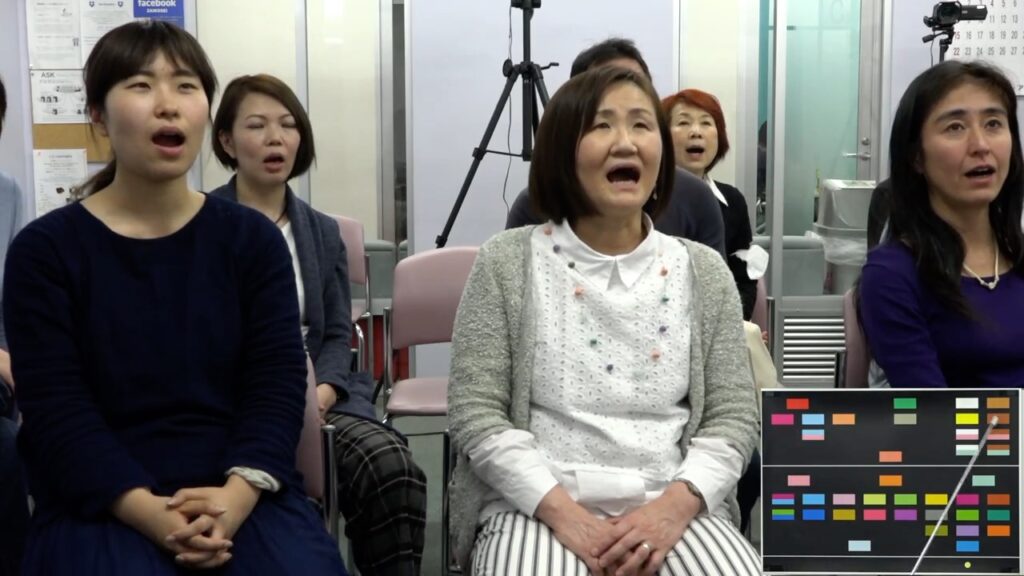
You can see one way in which a teacher can provide this kind of practice in this series of videos, taken from an English class given at Hiroshima International University. The teacher, Don Cherry, has been working with the students to make them aware of how English uses articles, something that is difficult for Japanese speakers, since that language doesn’t have any such feature.
At this point in the lesson the students need to practise and consolidate this learning. This playlist of four videos shows how Don provides the practice they need.
In the first video of the set, Don sets up the situation and teaches the students how to get the ball rolling with ‘We’ll tell you to do what Don does, OK?’. In the subsequent videos, they are forced to use ‘the’ and ‘a’ accurately in their sentences as the situation changes. And Don doesn’t neglect every other aspect of their sentences, so they also get to practise a whole set of other English skills at the same time.
Some things to bear in mind while watching these videos: