
In a Silent Way class the teacher uses her time with the students in a very particular way.
What she does:
To do these things she has to make herself sensitive to what is going on in the students moment by moment. And she has to be willing to move into the background and let their learning take over.
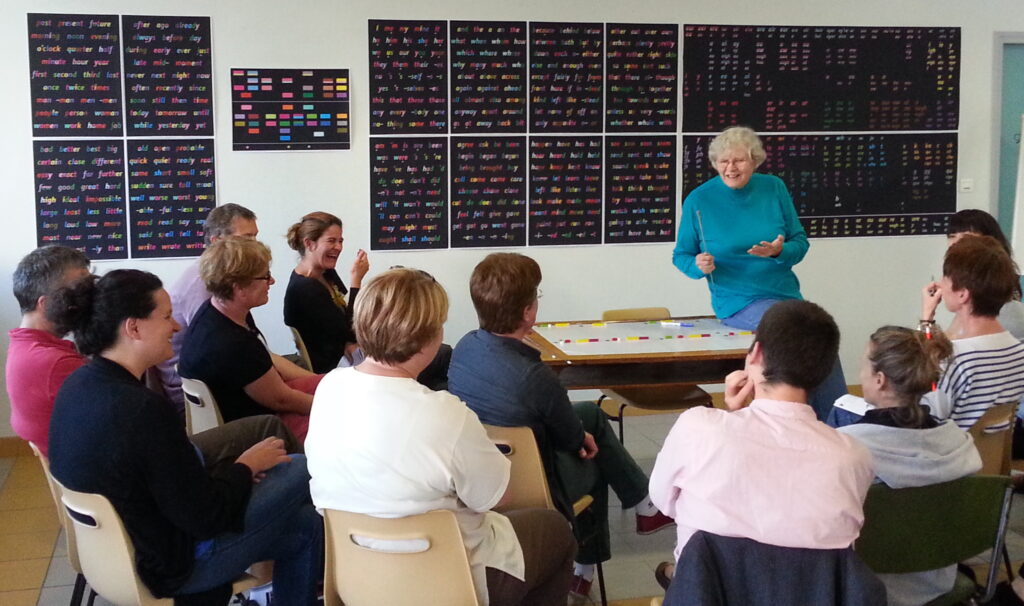
This way of teaching calls upon and activates the powers of the students in the service of their learning: their powers of awareness, will, perception, retention, intelligence – powers they call on every day.
And while the students are learning the language, the teacher is also learning. She is learning how to teach them, guided by what they do. She is constructing the lesson, moment by moment, in response to whatever needs the students reveal when they speak (see also Two-way teaching).
We call this way of working ‘teaching subordinated to learning’ rather than the other way round ie ‘learning subordinated to teaching’. The latter, all too common when teachers see themselves as the source of knowledge and instruction rather than the enabler of students’ learning.