
To speak, one moves a set of muscles in complex ways: pronouncing a language is a motor skill. Not only that, but it is one of the most difficult motor skills to teach, since neither the teacher nor the students can see the movements required for the language being learned.
It has been known for a century now that at least 90% of students are unable to hear a foreign language faithfully; their own language masks the sounds of the new one. If only for this reason, speaking a sound or word for the students to copy is not a good approach.
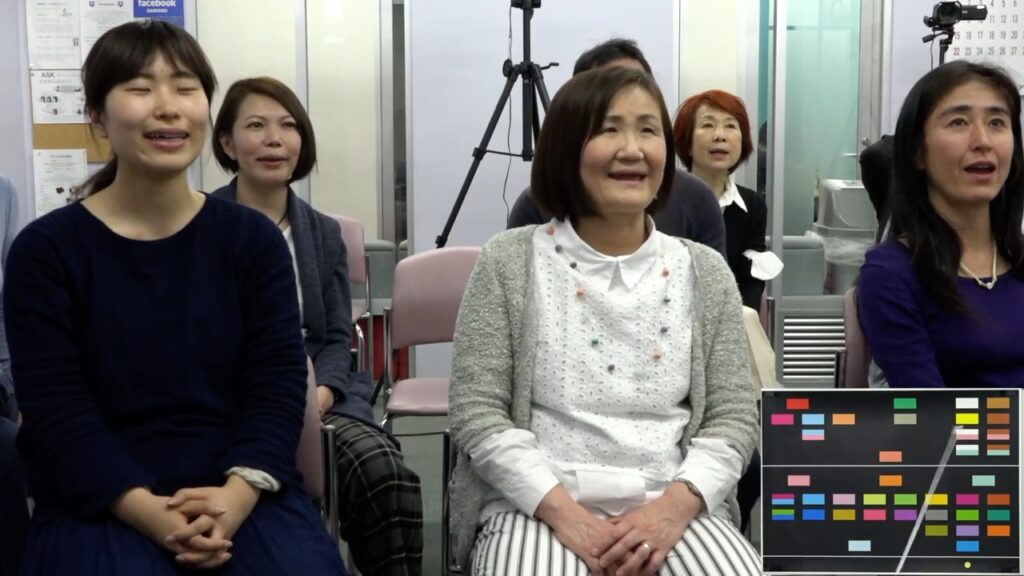
The best way to attain good pronunciation is for the students to be given guided coaching by the teacher. The teacher listens to the sounds produced by the students and guides them in how to modify what they do so that it becomes a sound from the language they are learning. She does this by asking the students to physically move their mouths: to round their lips; to pull their tongue back or move it slightly forward; to have a little more or a little less tension in their lips; or many other physical things that one can do with oneself when making sounds.
She never makes the sound herself. This would immediately be taken as a ‘model’ to be copied, and we know that this doesn’t help most students.
Since pronouncing is a physical activity, it will take time to put into place; the gestures of a sport cannot be learned and made automatic in a few minutes, and pronunciation must be likened to a sport in this regard (see Pronunciation Science for more information). It will require constant attention throughout the duration of the class, but in the form of opportunistic, micro-lessons lasting from ten seconds, for a reminder, to a few minutes if an important adjustment is required.
Pronunciation must be taught from the very beginning of a course, since potentially every sound is required in every sentence spoken. This is why typically, every Silent Way course begins with an hour or two of intensive work on learning to pronounce the new language. If there is a wide gap between the pronouncing of the students’ native language and the way the foreign one they are learning works, then another hour at the start may be necessary.
This video illustrates some of these techniques in a Silent Way English class given in 2012 in Tokyo by Don Cherry: