
The series of films on this page come from an English lesson given at Hiroshima International University in October 2025. The students were studying subjects related to medicine and English is a ‘required’ course for them. The University term in Japan starts in April, so this lesson was from the second semester. This means that the students had worked with the teacher, Don Cherry, for some months.
(more…)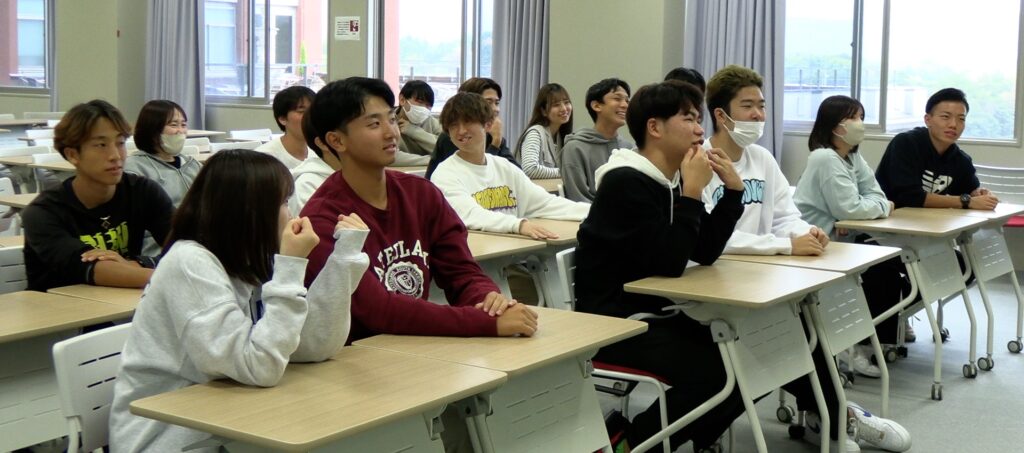
In this project we’ll video six English classes given by teacher Don Cherry at Hiroshima International University. Don has been teaching English in Japan for over 30 years using the Silent Way and is expert at teaching in this kind of environment. We’ll be documenting more of the techniques he uses through this project. Check out our previous project with Don from 2023 here.
Filming starts late October 2025. Assembling the footage, translating the interviews and editing will start in late November once filming is complete and we expect the first videos to be published in January 2026.
We’ll be posting updates on this page as the project progresses, so watch this space!
This project aims to develop the materials and the skills to use them to teach spoken Catalan to beginners using the Silent way. It’s a collaboration between two native speakers of the language and the silentway.online team.
(more…)This series of short videos come from an interview with Roslyn Young who shares her 50 years of experience in the language classroom. Use them as stimulus for your own reflection on your own teaching and learning and think about how to apply the ideas Ros shares in your own work.
This article analyses a particular Class Conversation from a real lesson. The purpose of this analysis is to show how the Class Conversation approach enables intermediate students to improve their speaking skills. The content of the lesson is provided entirely by the students – the teacher’s role is to make sure that each sentence is corrected and then practised. Sometimes the teacher also needs to prompt students to go deeper or to keep the conversation going.
(more…)Practice is necessary to learn a skill, whether physical or mental. For us, neither repetition nor rote learning is practice. We use practice to speak about activities which require the presence of the doer. Repetition can take place even while the person executing a movement is mentally absent from what he is doing, thinking about something quite different.
(more…)This series of four videos illustrates how a teacher (Yoko Yasuda of Silent Way Tokyo) used an image to help two intermediate students develop their skills in Japanese. The video series includes commentary from Roslyn Young and reflections from one of the students.
(more…)These short videos come from a workshop with French speakers held in Besançon and taught by Roslyn Young. They illustrate how to start teaching English Pronunciation using the articulatory approach.
This series of short films tracks the progress of one student learning Japanese through an online course for beginners provided by Silent Way Tokyo. The main purpose of these films is to show the student’s progress over time, but the films also include the student’s commentary and reflections on the experience.
(more…)In these three videos Roslyn Young teaches some English students how to pronounce French vowels using the techniques of the Silent Way. The techniques illustrated here – sensitisation to the student’s mouth, experimentation and feedback, the use of a wall chart to unambiguously identify sounds – would apply to teaching the pronunciation of any language though, of course, every language has its own unique sound system.
(more…)