

A student is working towards the sentence “A black rod and two green ones and a yellow one and a brown one.” You can see the “Aha!” moment at 2 min 56 secs when he becomes aware of the significance of ‘ones’. And afterwards, he can do something he could’t do before … albeit it probably needs practice.
(more…)
Presentation of the Silent Way educational approach for teaching foreign languages. Produced by Actualis, Paris in 2019.
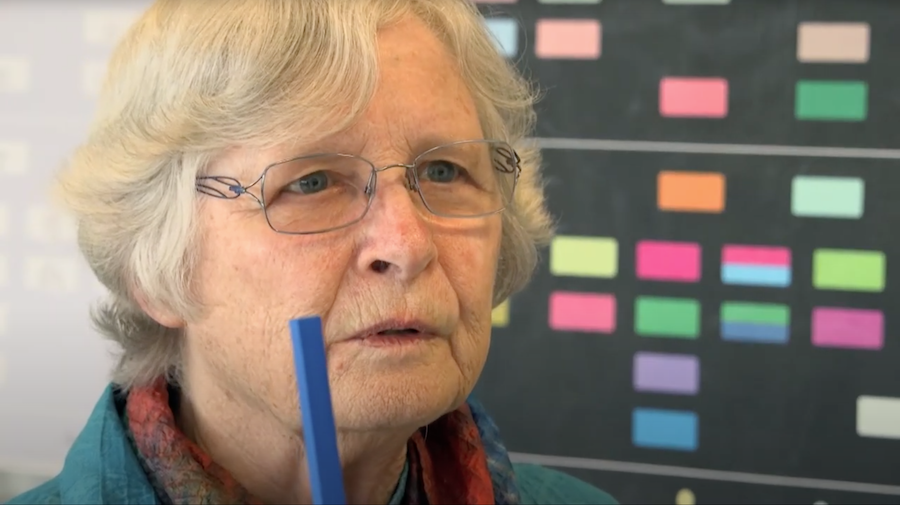
A conversation between Roslyn Young and Piers Messum about Caleb Gattegno’s Silent Way approach to teaching foreign languages. In this series of 15 videos Roslyn and Piers discuss the theory and practice of teaching using the Silent Way.
(more…)
Native speakers know what ‘sounds right’ and what ‘sounds wrong’ in their language without thought and without ‘rules’. How do they acquire this certainty? Our students have to gradually build their own ‘mental models’ of the language from scratch, with all its idiosyncrasies, arbitrariness and difference from their own native language.
(more…)
Teachers have to practise being a teacher as much as students have to practise a language. We have to subordinate everything that we do to the students’ learning. It’s a terrible temptation for teachers to talk and explain and lecture. But this talk doesn’t really help people learn to speak a language.
(more…)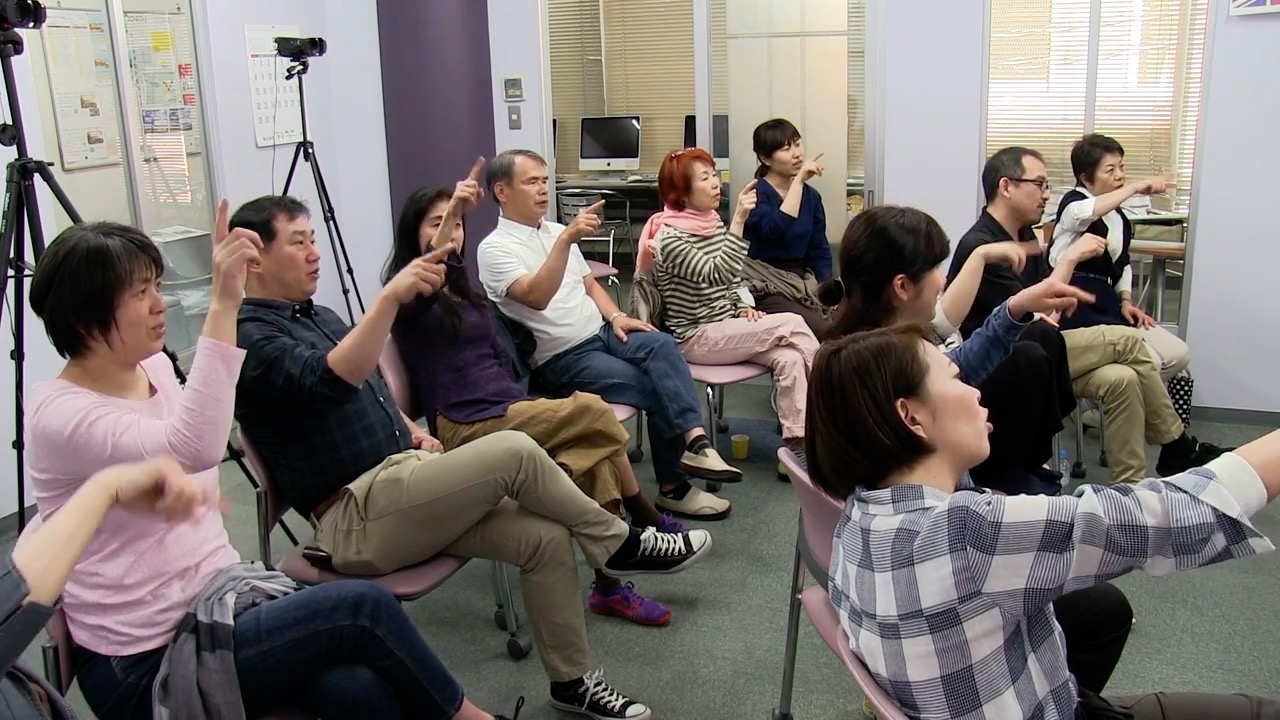
Learning starts with someone becoming aware that there is something to learn, or change, or improve: that there is a difference between their performance and what they are aspiring to, or could aspire to.
It is these tiny moments of awareness that kickstart the process of learning. Without these moments of awareness there is no reason or drive for anyone to do the work required. It is the teacher’s job to provoke these awarenesses in his/her students: they are the necessary requirement for learning to take place. Once students have noticed that there is something to learn, then the teacher’s job becomes slightly different: to encourage and guide such experimentation and then provide precise feedback.
(more…)
Today, I was working with a student who, in response to the question, “What are you doing?” from another student, said what sounded like “No, I am learning English.” A ‘teachable moment’ to provoke the awareness that there was something for him to learn about the pronunciation of the word “now”.
(more…)