

Cuisenaire rods – small wood or plastic blocks of various colours and lengths – are very useful for teaching students how the language expresses relationships of time, space, personal relationships; and to get them to performing actions, giving instructions and making requests.
Because they are easily manipulable, an infinite variety of situations can be created.
(more…)
A simple wall picture forms a focal point that gathers the class’ attention. The teacher and the students can point to items in the picture and practise the relevant vocabulary and create sentences about the situation they see in the picture once they have a secure foothold in pronunciation and the functional vocabulary.
(more…)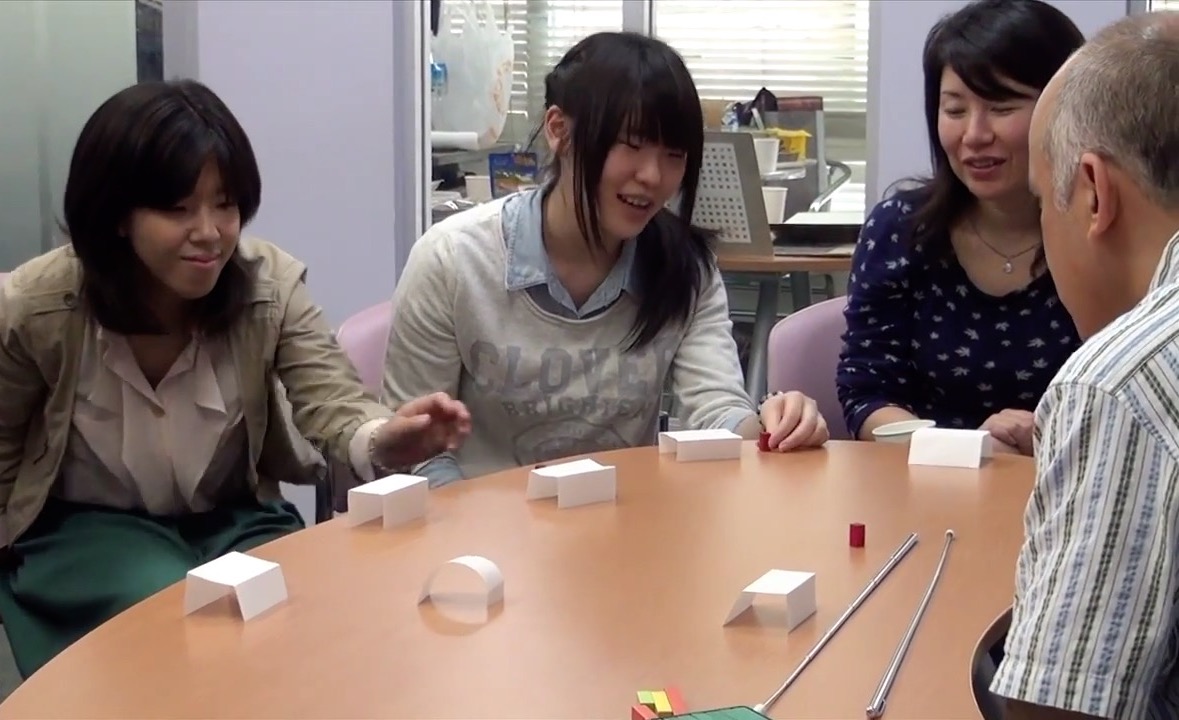
If we are to speak a foreign language well, we need to learn what ‘inward experiences’ speakers of a foreign language associate with what language – words or grammar. Different linguistic forms reflect different inner ‘states’ or ‘climates’ depending on what the speaker knows or thinks or feels about the situation they are talking about.
(more…)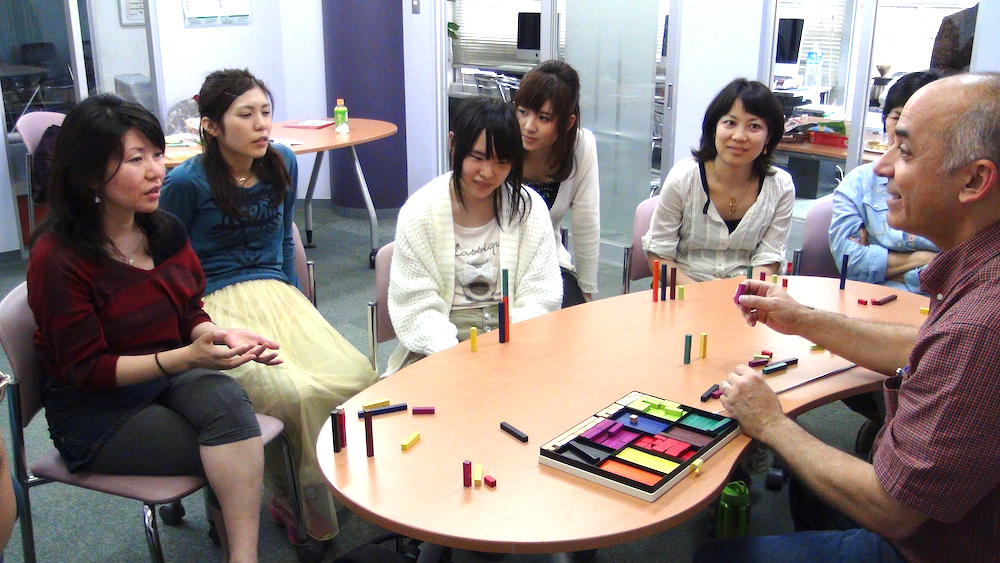
The grammar of a language – how the words fit together, how the language expresses relationships of time, space, personal relationships etc – is not a matter of rules. Native-speakers simply know ‘what sounds right’. And there is no particular reason why one language uses one way of expressing these things and another a different way.
(more…)