
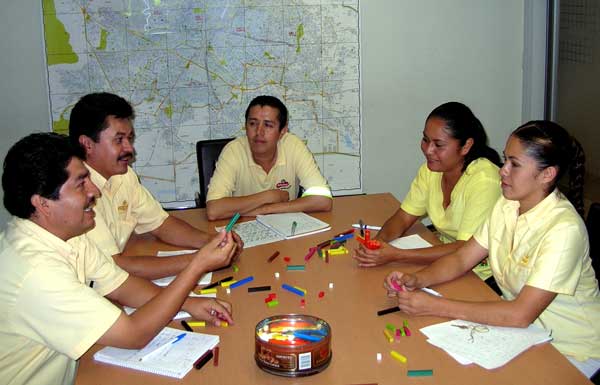
Once we understand what someone requires to do to learn a skill – trial & error, and practise – then what the teacher should do becomes very different. For good teaching there needs to be a fast-acting, double feedback loop in the classroom: the students learn about the language ; the teacher learns from the students.
(more…)
If we are genuinely working at the edge of students’ knowhow, all the time – in the margin between what they can do pretty competently and what they really aren’t ready for yet – then we can’t possibly plan our lesson in any detail in advance. We only know where that margin is, in the moment, by noticing what they do well and what their errors are. So we need moment by moment planning.
(more…)
In the Silent Way of teaching the teacher keeps the students present to the task of learning the language; makes them aware of things that they need to learn; ensures that they correct their pronunciation and grammar; and keeps them moving, sentence by sentence, from the things they can do towards what they can’t yet do.
While the students learn the language, the teacher also learns – at every step of the way – how to teach guided by the students’ potential for learning, and, by the actual learning of each individual student.
We call this way of working ‘teaching subordinated to learning’ rather than the other way round ie ‘learning subordinated to teaching’. The latter, all too common when teachers see themselves as the source of knowledge and instruction rather than the enabler of students’ learning.
(more…)
Teachers have to practise being a teacher as much as students have to practise a language. We have to subordinate everything that we do to the students’ learning. It’s a terrible temptation for teachers to talk and explain and lecture. But this talk doesn’t really help people learn to speak a language.
(more…)