
Silence puts the teacher and their students in their proper roles—they are working on the language, we are coaching them.
If we stay silent then the students have to turn their attention inward: to their muscles when they are working on pronunciation; and to their mental model of the language when they are working on words and grammar.
Silence also guards against teacher explanations and lectures, makes sure that the students do most of the talking: they are the ones who need to practice the language.
For pronunciation, their job is to experiment with how they use their vocal equipment—lips, tongue, jaw, nose, vocal chords and breath—at first to sound different, and then to home in on sounding more native-like. Our job is to encourage that experimentation and then to give feedback on where they need to improve their pronunciation, rhythm, and melody. This can all be done with mime and gesture.
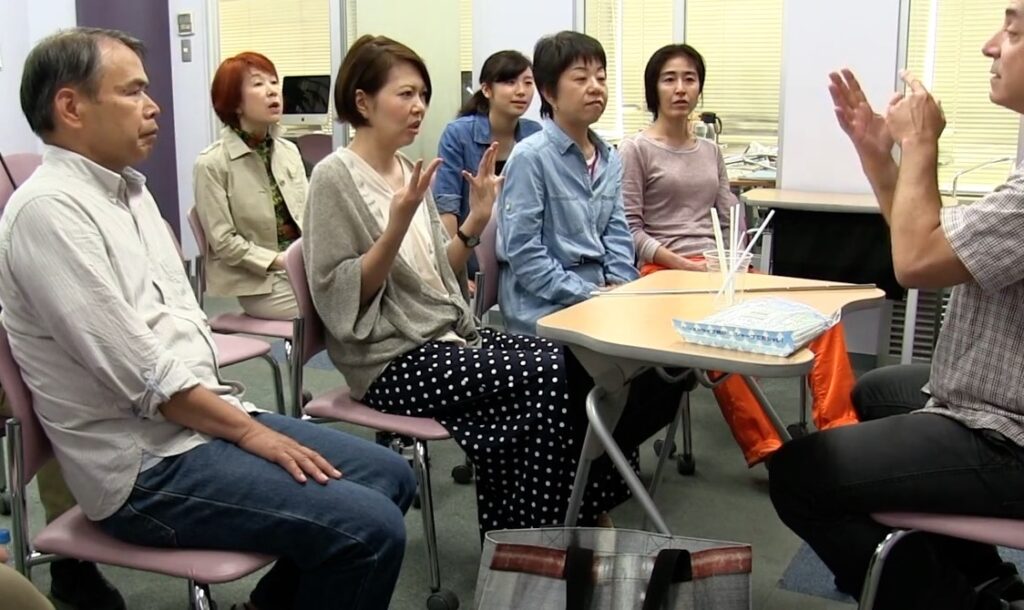
For words and grammar, if we stay silent or largely silent, they have to correct their own sentences, rather than just copying us. This is work they have to do, if they are to develop their own mental model of the language and their own criteria for correctness and accuracy. Our job is to guide them in this work with precise feedback.