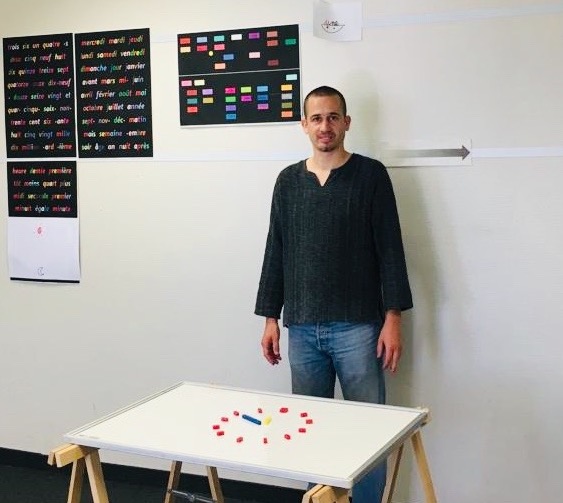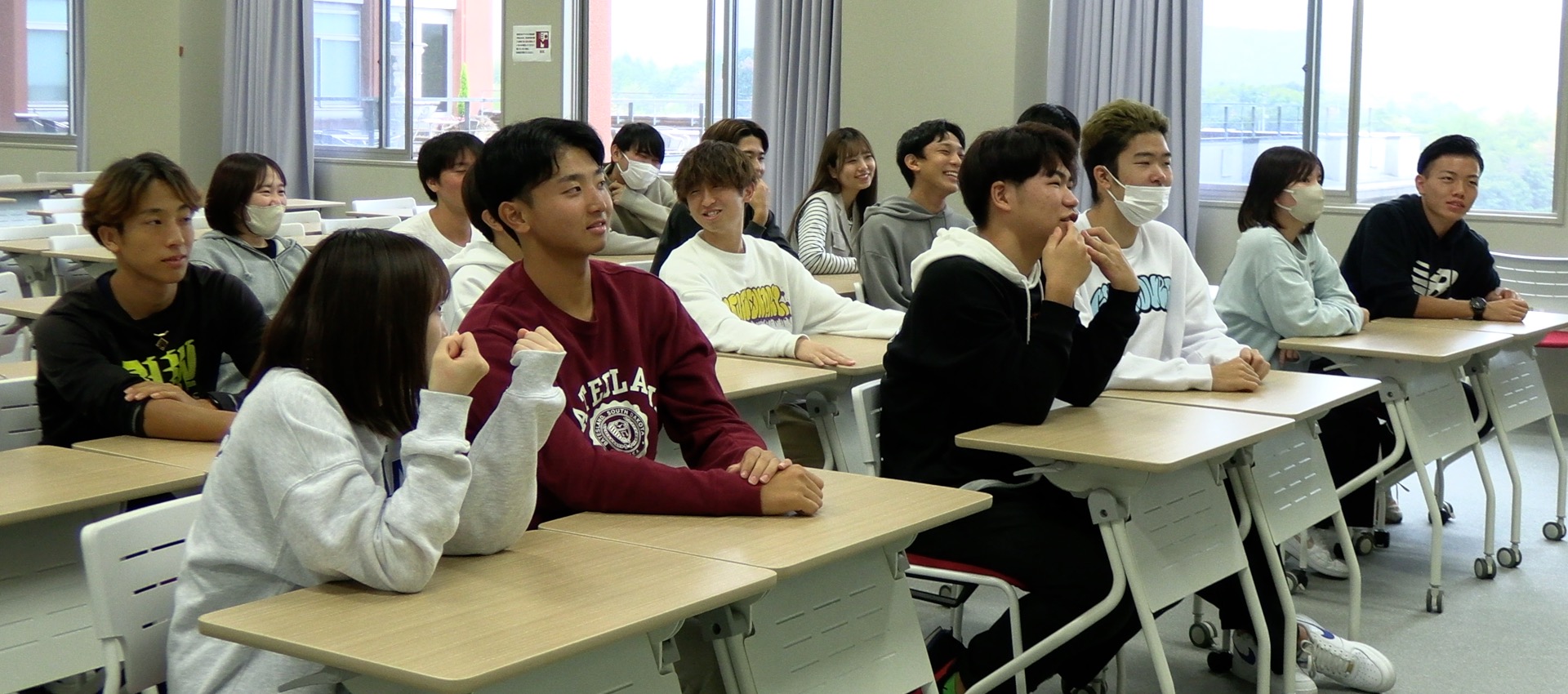

Don Cherry has been teaching English in Japan for over 30 years using the Silent Way. This film is part of a project to document some of the techniques (both language building and classroom management) that he uses to teach his students at Hiroshima International University.
All the students were 18-year-old Japanese students, and on health related courses like pharmacy or physiotherapy etc. There were around 30 students in each of the classes we filmed. English is a required course as part of their university studies. All the students had already had at least 6 years of learning English at school. Filmed during October 2023 at Hiroshima International University.
In this lesson the students had to instruct Don to take the steps to play a CD in the CD player. The lesson builds from the very simplest elements, step-by-step until they have to give the full set of instructions required. The lesson also included work on pronunciation, rhythm, word order, prepositions etc – in other words many of the things that make English ‘English’. The class was one of Don’s regular classes and had worked with him over about 6 months, having had 18 or 19 weekly 90 minute lessons.
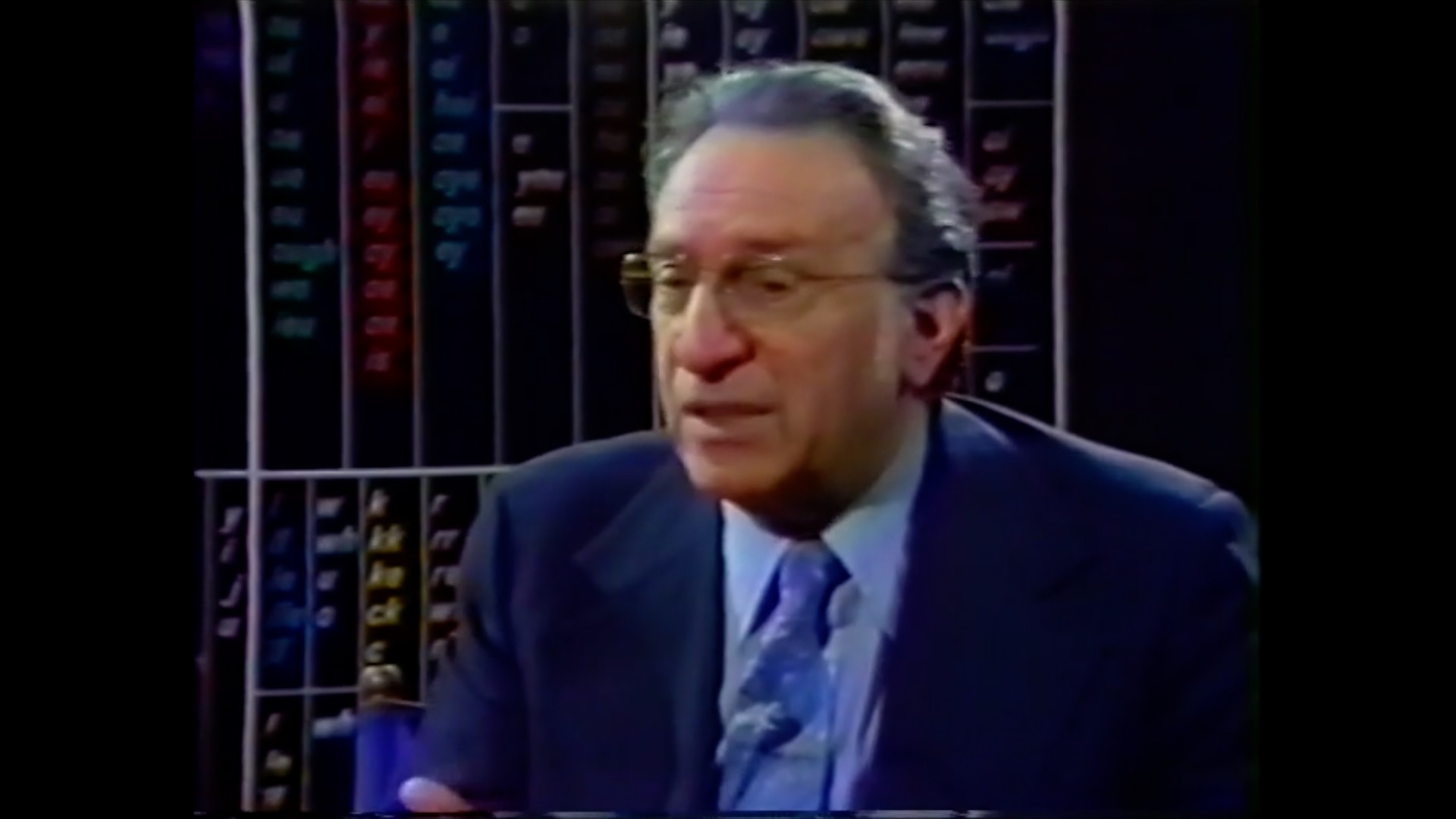
aleb Gattegno talks about the inner ‘movements’ that underlie the grammar of a language and that the grammar of a language has really become part of a student when changes in the situation causes a change in the words he uses.
(more…)
A student is working towards the sentence “A black rod and two green ones and a yellow one and a brown one.” You can see the “Aha!” moment at 2 min 56 secs when he becomes aware of the significance of ‘ones’. And afterwards, he can do something he could’t do before … albeit it probably needs practice.
(more…)
The Silent Way tools give a comprehensive view of the sounds of the language, its grammar through the function words, and the relationship between sounds and spellings. This means that these tools can be used to help the students learn how to say anything that they want to express, or to describe any situation that the teacher or the students or real life presents.
All these tools, displayed in the walls of the classroom, and referred to continually by the teacher and students using pointers, means that students get familiar with how to use all the sounds of the language and all of its grammar to express anything they want and need to.
(more…)
Cuisenaire rods – small wood or plastic blocks of various colours and lengths – are very useful for teaching students how the language expresses relationships of time, space, personal relationships; and to get them to performing actions, giving instructions and making requests.
Because they are easily manipulable, an infinite variety of situations can be created.
(more…)
A simple wall picture forms a focal point that gathers the class’ attention. The teacher and the students can point to items in the picture and practise the relevant vocabulary and create sentences about the situation they see in the picture once they have a secure foothold in pronunciation and the functional vocabulary.
(more…)
The Silent Way Word charts present the function words of the language: the prepositions, pronouns, conjunctions and certain adverbs and adjectives and what is necessary for expressing verb forms. These roughly 400 words allow the speaker to express their thoughts, to describe human relations and to situate what he is talking about in space and in time.
(more…)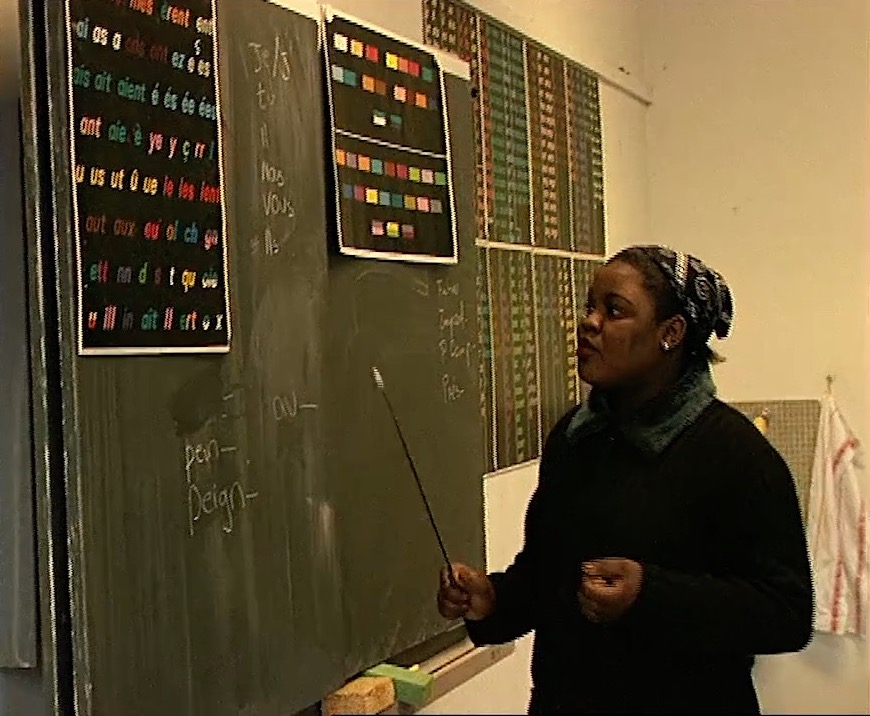
In the Silent Way we use familiarity not memorisation, minimising the need for memorisation calling on students natural power of retention for what they have made familiar. That is why we use wall charts to hold the key elements of the language – pronunciation, functional vocabulary, the relationship between sounds and spellings. This video shows that at work for French verb conjugations.
(more…)
What things will students find most difficult to learn by themselves? And what things do they need more of our help to learn? For example, for most people good pronunciation is almost impossible to acquire without skilled help. So we should prioritise this from day one of a course.
(more…)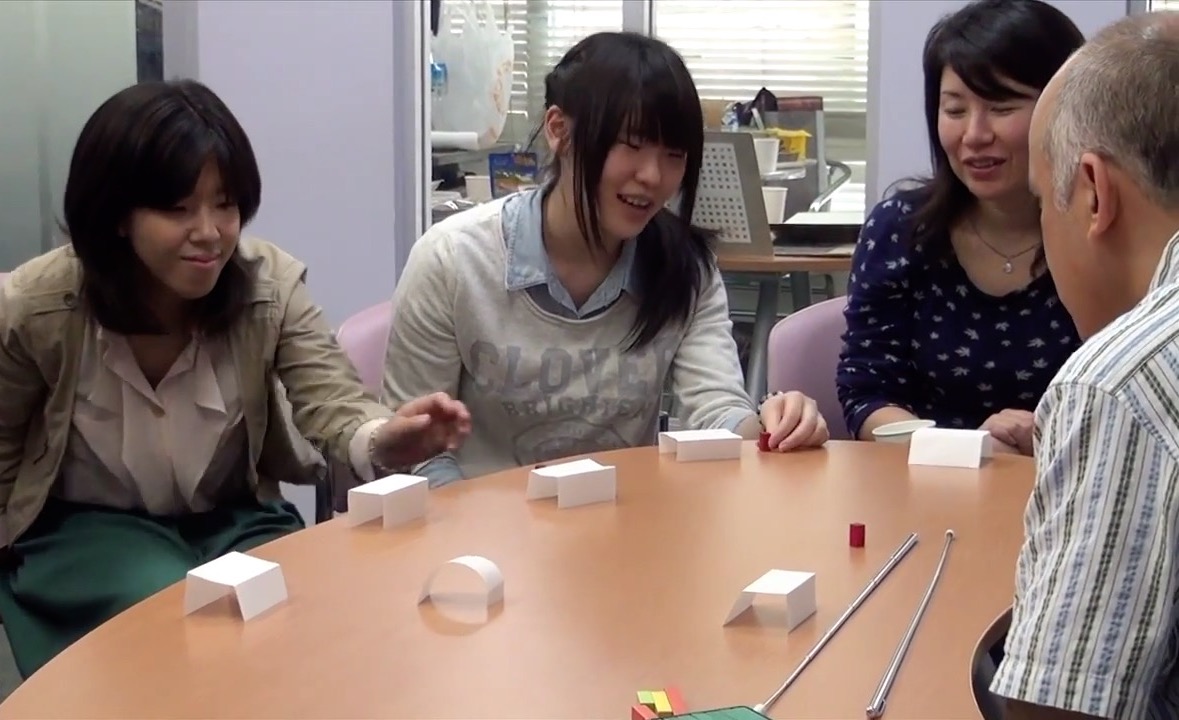
In this video the students experience the differences between ‘I am going to go …’ and ‘I am going …’ and ‘I have gone …’ and ‘I went …’; learning to associate these experiences and these words; and practising how to say their sentences with the right emphasis, rhythm and melody.
(more…)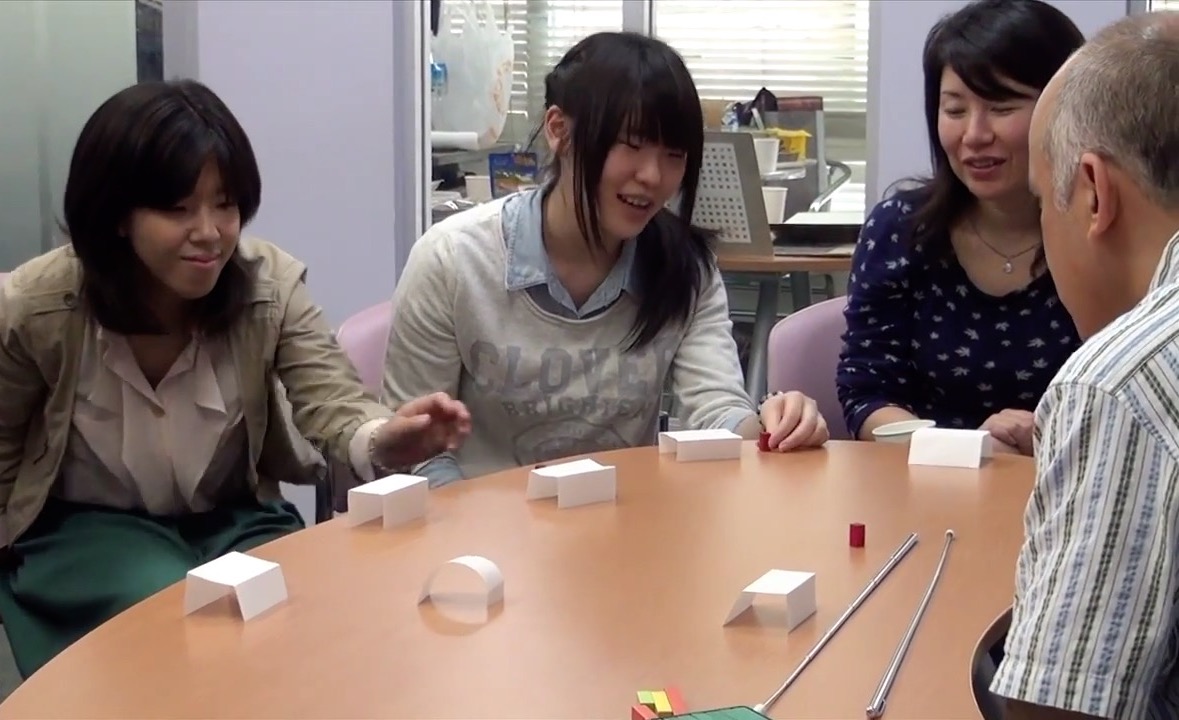
If we are to speak a foreign language well, we need to learn what ‘inward experiences’ speakers of a foreign language associate with what language – words or grammar. Different linguistic forms reflect different inner ‘states’ or ‘climates’ depending on what the speaker knows or thinks or feels about the situation they are talking about.
(more…)
No one is aware of the foundations on which their native language is built, but these deep habits are built on these foundations. And these things all work in combination to make the language easy to speak for natives. So as teachers we need to uncover the foundations of the language, and then find ways of teaching them.
(more…)
‘What a native speaker would do’ sets the standard towards which our teaching should aim. We aspire that our students, over time, should be able to behave as native speakers would in every aspect of the foreign language —pronunciation, rhythm, grammar, intonation, vocabulary etc.
(more…)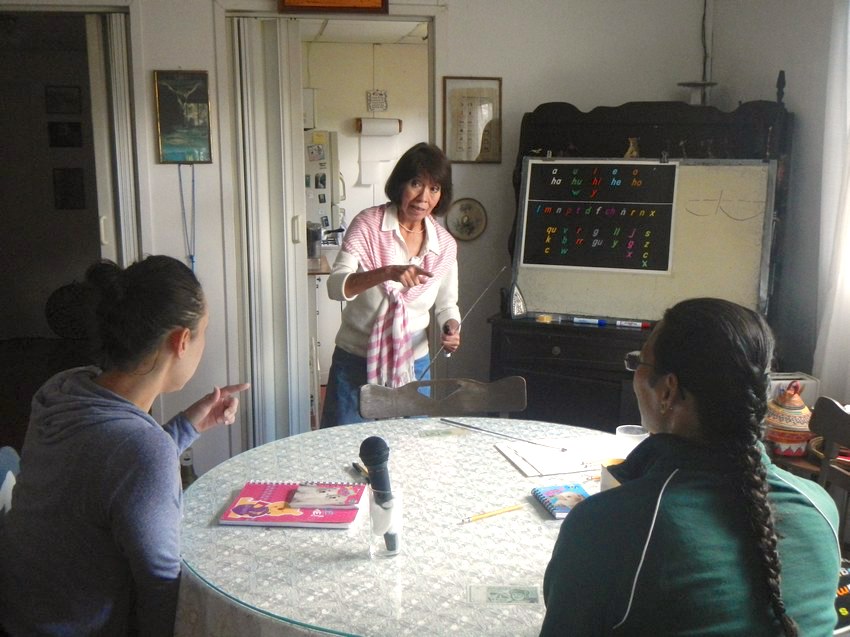
We focus on the parts of the language which are difficult for students to learn for themselves: its pronunciation and the use of its functional vocabulary to express temporal, spatial and personal relationships. Gattegno called these the ‘spirit of the language’. Once you have the ‘spirit of the language’, then the rest comes easily through use.
(more…)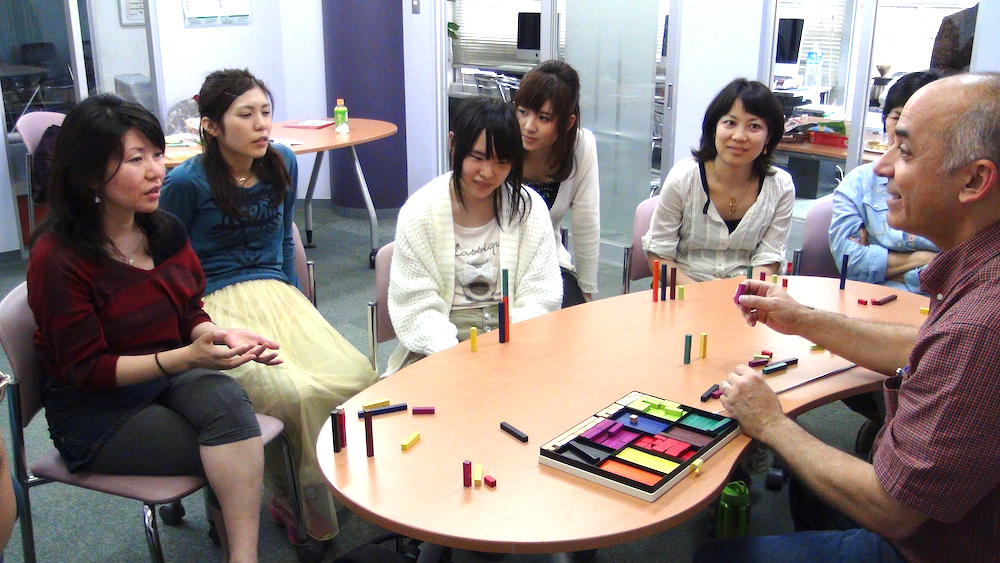
The grammar of a language – how the words fit together, how the language expresses relationships of time, space, personal relationships etc – is not a matter of rules. Native-speakers simply know ‘what sounds right’. And there is no particular reason why one language uses one way of expressing these things and another a different way.
(more…)
The function ‘words’ are the items which generate the grammar of a language. In English they are in fact mostly words whereas in many languages they are more often things like endings or other parts of words. They are what carries meanings for things like spatial, temporal, numerical and personal relationships.
(more…)
‘What a native speaker would do’ sets the standard towards which our teaching should aim. We aspire that our students, over time, should be able to behave as native speakers would in every aspect of the foreign language —pronunciation, rhythm, grammar, intonation, vocabulary etc.
In fact, with the exception of pronunciation, students can quite quickly become as good as native speakers in many aspects of a language eg working with numbers, or telling the time, or describing situations with Cuisenaire rods.
Pronunciation is slightly different in that, just like any sport, it takes time and practice for us to accustom ourselves to use our muscles in different ways. So, to achieve close to native-like pronunciation will take a little longer than other aspects. And this is therefore the reason why pronunciation should be worked on right from the beginning of a course.
In conclusion, ‘what natives do’ should be the standard to which we aspire for all aspects of our language teaching – anything else is selling our students short.