
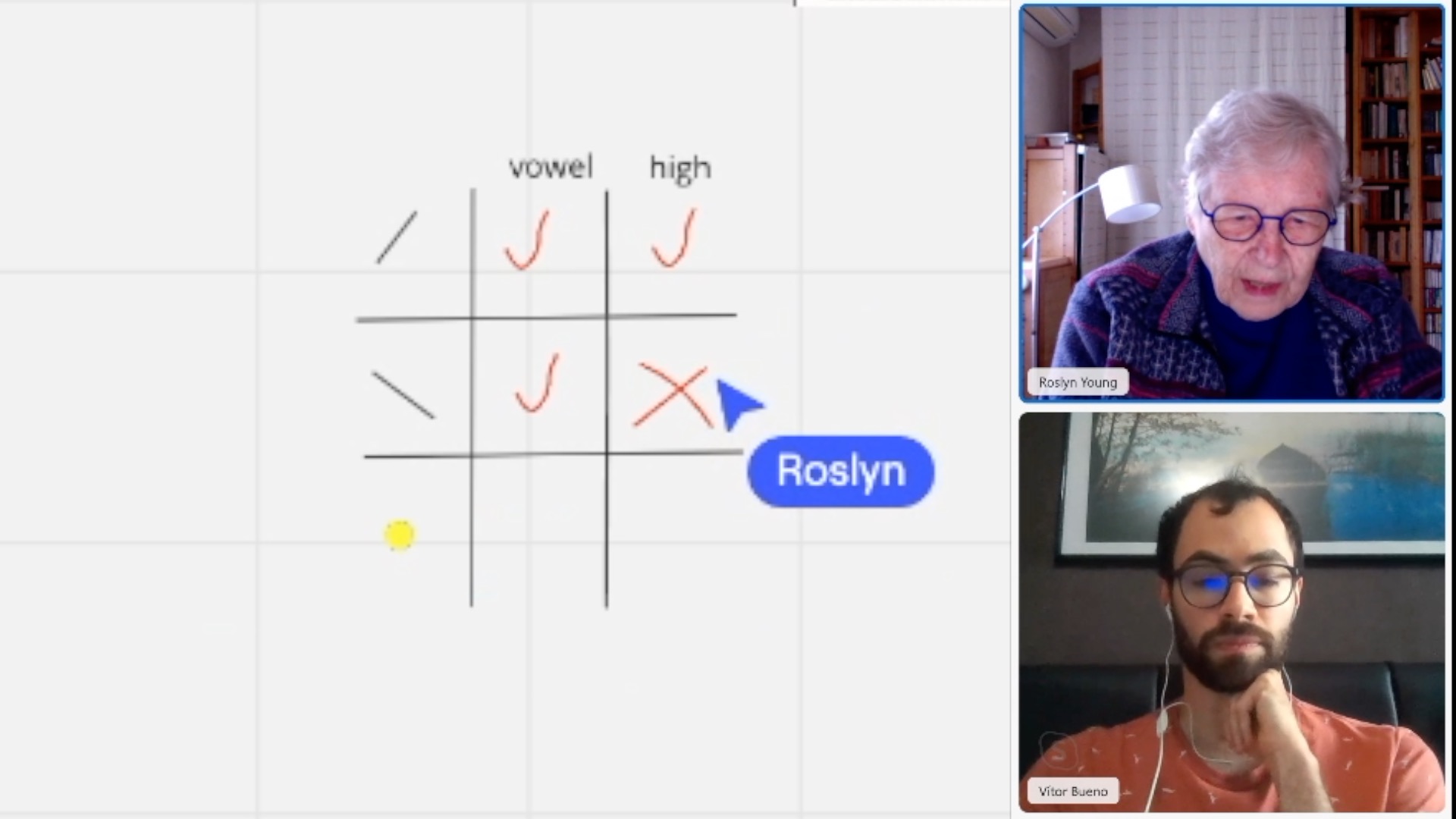
The key to English pronunciation is mastering the small, indistinct, low energy sounds that are so common in normal speech. These sounds transform how students’ English sounds and they are the key to understanding normal speech. This article introduces a video showing some of the tools and techniques we use to teach these sounds.
(more…)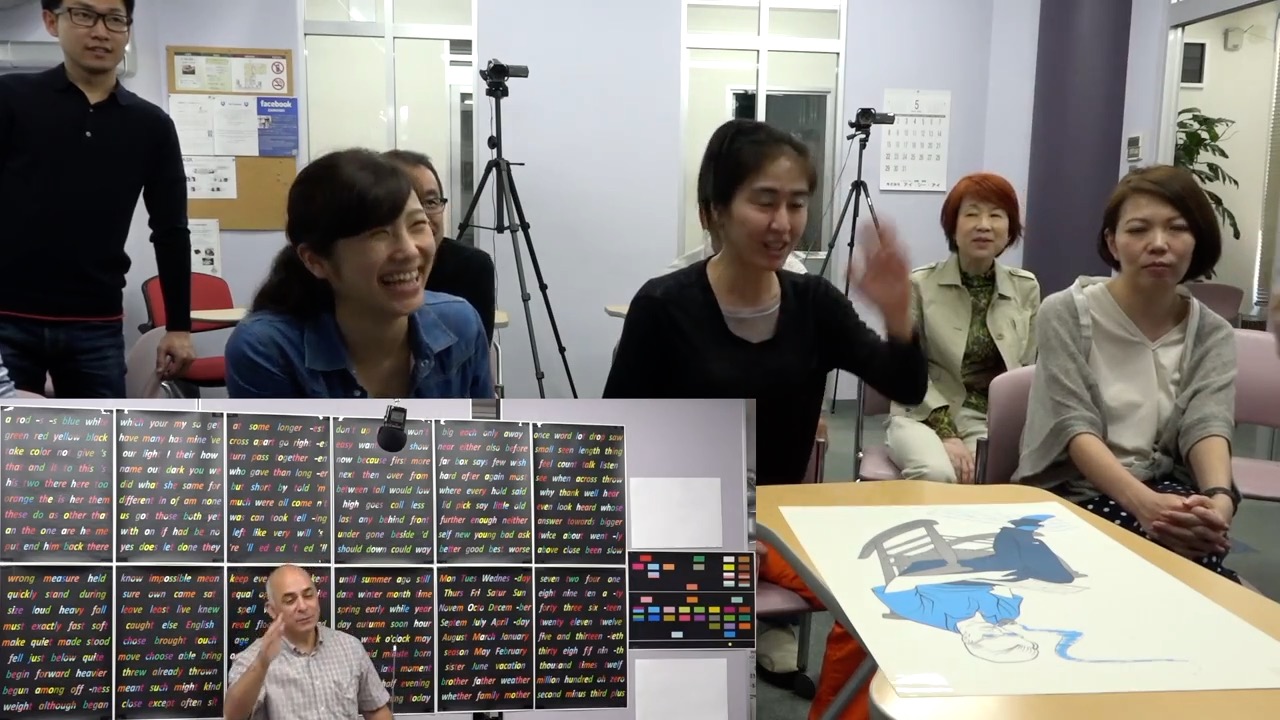
The class is working on the sentence “What are these called in English?” notice how the teacher helps them to say this sentence with an English melody, with just a gesture of his hand. The melody is as much a part of sounding English as are individual sounds, stress, words and grammar.
(more…)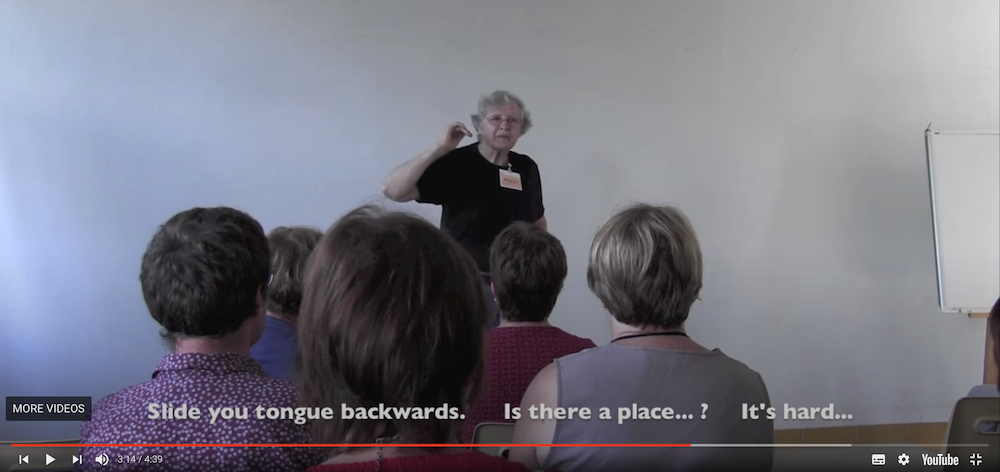
These short videos come from a workshop with French speakers held in Besançon and taught by Roslyn Young. They illustrate how to start teaching English Pronunciation using the articulatory approach.

This film shows how a Silent Way teacher works. We’ve sampled every two hours of a week-long intensive English class that teacher Don Cherry gave in Tokyo in 2016 to give you a unique insight into this way of working.
You’ll see how a Silent Way teacher works and some of the reasons why we work this way, including:
You can watch the film with commentary either in English, French or Japanese.
(more…)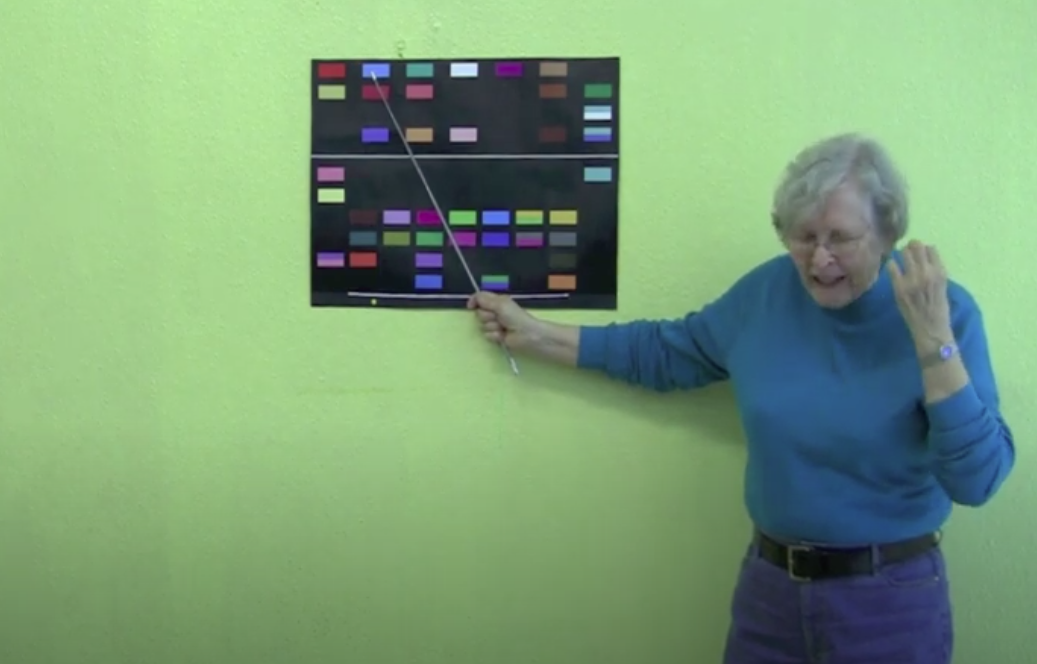
In these three videos Roslyn Young teaches some English students how to pronounce French vowels using the techniques of the Silent Way. The techniques illustrated here – sensitisation to the student’s mouth, experimentation and feedback, the use of a wall chart to unambiguously identify sounds – would apply to teaching the pronunciation of any language though, of course, every language has its own unique sound system.
(more…)
Pronouncing a language is a motor skill. And it is one of the most difficult motor skills to teach–neither the teacher nor students can see the movements required. Mostly, trying to copy what the teacher says doesn’t work very well. Much better is for the students to experiment with guided coaching from the teacher.
(more…)
The Silent Way tools give a comprehensive view of the sounds of the language, its grammar through the function words, and the relationship between sounds and spellings. This means that these tools can be used to help the students learn how to say anything that they want to express, or to describe any situation that the teacher or the students or real life presents.
All these tools, displayed in the walls of the classroom, and referred to continually by the teacher and students using pointers, means that students get familiar with how to use all the sounds of the language and all of its grammar to express anything they want and need to.
(more…)
Every language has its own repertoire of sounds. If students are to learn good pronunciation they need to know how to produce the full set of sounds that that language uses. And since students will potentially encounter any of these sounds in any word or sentence they come across, working on all these sounds early on in a course is a good idea. Doing this work early reduces the risk of students building bad habits of pronunciation.
(more…)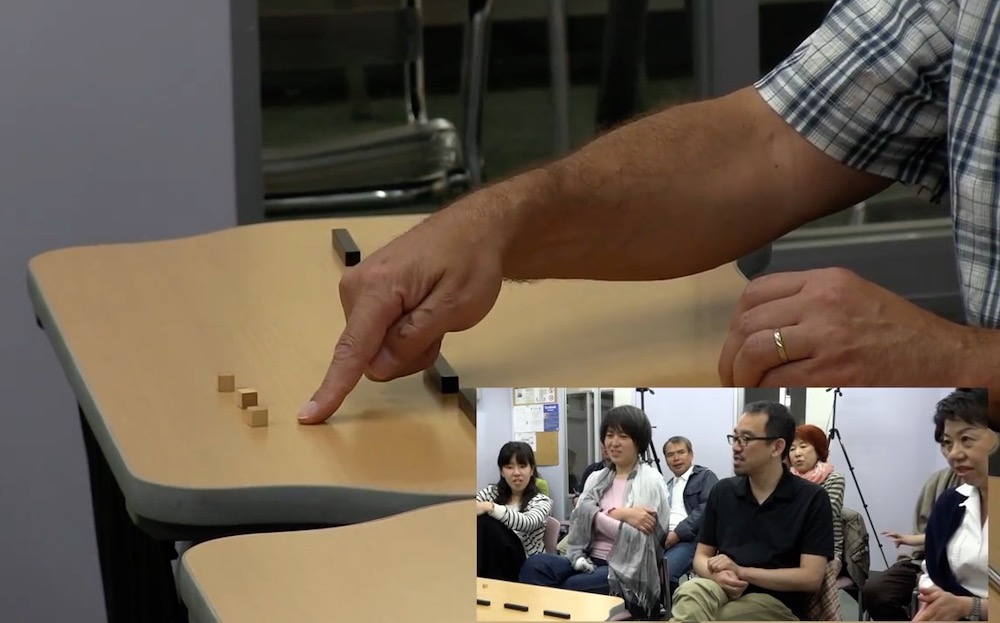
The teacher finds out that the class isn’t certain how many syllables there are in the word ‘January’ and then works with them on sounds, rhythm until they can put the word together so it starts to sound English.
(more…)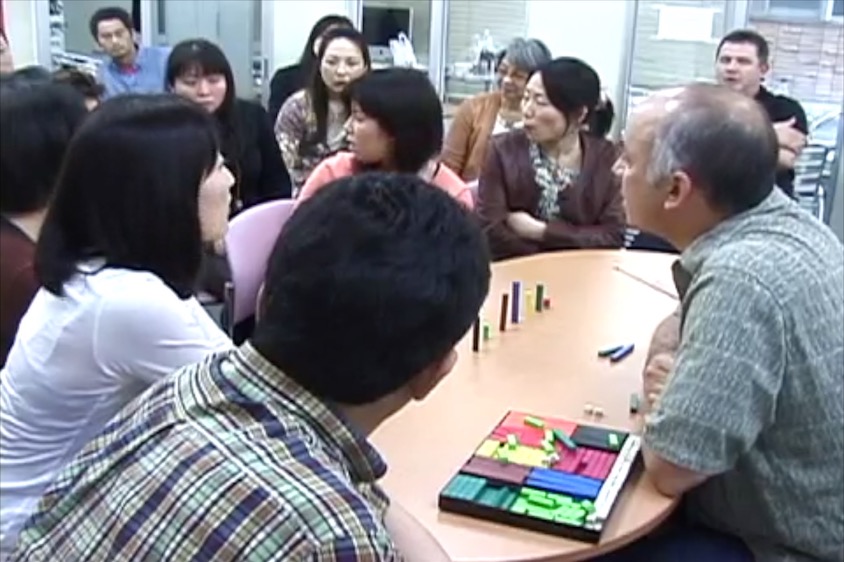
Watch how the teacher worked with the class on a new word – purple – which they needed. Because he has already done a lot of work on the sounds and rhythms of English he can quickly and silently enable them to know how this would should be pronounced in a pronunciation micro-lesson.
(more…)
The class is working on the sentence “Take one of the straws out of the cup”. The teacher uses his fingers to help them group the words correctly in the way an English speaker would. English natives expect to hear words in groups like this, with this kind of rhythm so they can extract the meaning from the stream of speech. This is a key technique in the Silent Way approach.
(more…)
What things will students find most difficult to learn by themselves? And what things do they need more of our help to learn? For example, for most people good pronunciation is almost impossible to acquire without skilled help. So we should prioritise this from day one of a course.
(more…)
No one is aware of the foundations on which their native language is built, but these deep habits are built on these foundations. And these things all work in combination to make the language easy to speak for natives. So as teachers we need to uncover the foundations of the language, and then find ways of teaching them.
(more…)
The first step to sounding native is sounding different. Once we make different sounds then we can pay attention to what we did different with our muscles and repeat the experience. This way we start to escape the grip of our native speech. It’s then a matter of trial and error, feedback and practice to home in on exactly what natives do.
(more…)
‘What a native speaker would do’ sets the standard towards which our teaching should aim. We aspire that our students, over time, should be able to behave as native speakers would in every aspect of the foreign language —pronunciation, rhythm, grammar, intonation, vocabulary etc.
(more…)
We focus on the parts of the language which are difficult for students to learn for themselves: its pronunciation and the use of its functional vocabulary to express temporal, spatial and personal relationships. Gattegno called these the ‘spirit of the language’. Once you have the ‘spirit of the language’, then the rest comes easily through use.
(more…)
Pronunciation can’t be mastered straight away. Students have to practise over a period to be able to use their muscles in new ways, and they need continuous feedback and guidance so that they gradually sound more and more native. Any part of any lesson can become a pronunciation micro-lesson: we work on pronunciation whenever it is needed.
(more…)
For foreign language beginners we start with pronunciation because the students need this skill for everything they will ever say, and because it is one of the most difficult things for them to learn on their own. We then quickly start working with Cuisenaire rods, gradually introducing new language to describe the situations we make for students.
(more…)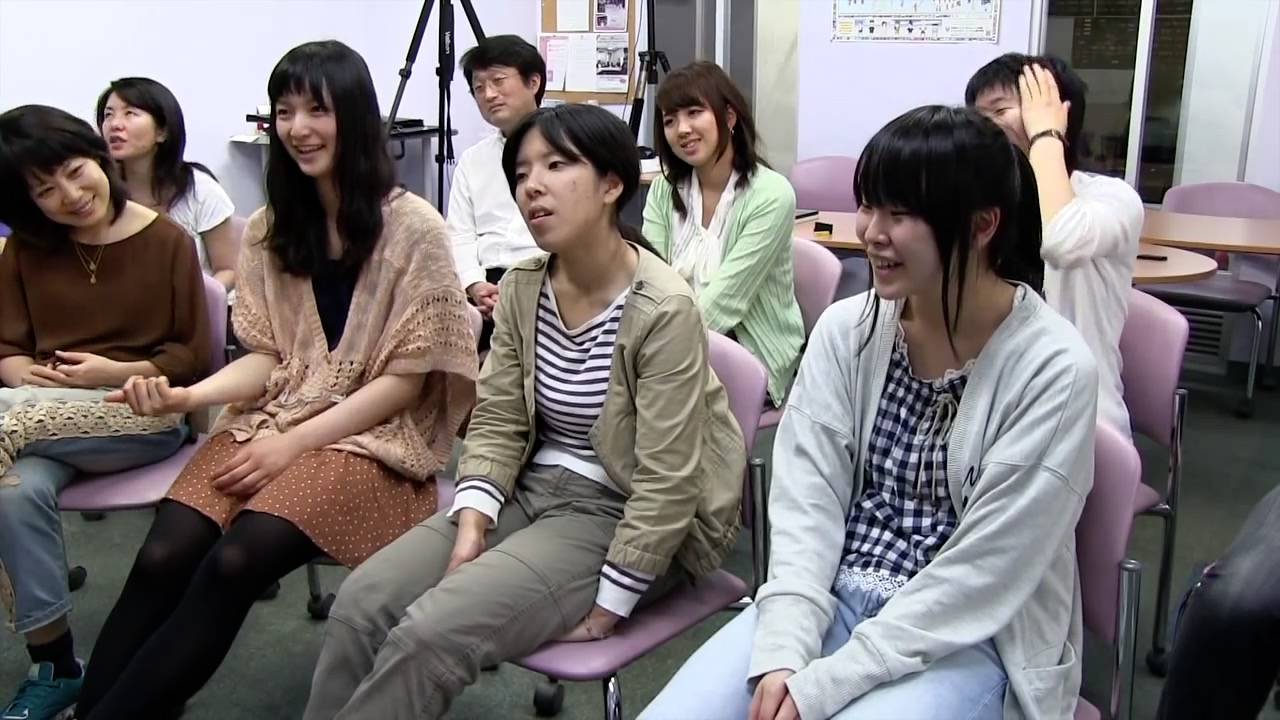
A class is working on the sentence “He put his beer on the table”. The teacher enables the students to link the words together. Notice how the words “He put his” are linked together so that they sound like “He pu tis”, because this is how English-speaking people would say it.
And notice the economy of means the teacher uses to achieve this result, without any words or explanations.
(more…)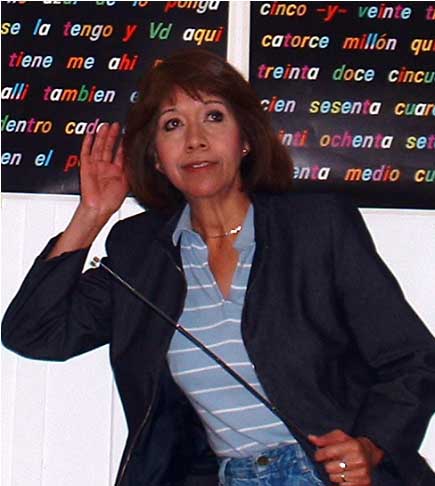
If you use your muscles like a French person, you will sound French. If you use your muscles like a Japanese, you will sound a Japanese. In fact, pronunciation is about training in posture and movement. But we can train the muscles of our mouths and breathing to move in different ways.
(more…)
Each language has its own standard position and state for the lips and the tongue; different languages use the breath differently; and, for some languages the general level of tension in the muscles of the face is high, whilst for others it is more relaxed. (called its ‘Articulatory Setting’)
When we try to speak another language, we cannot do it well without adopting a new setting, and growing a new set of habits
(more…)
Unfortunately, we cannot rely on our ear when we start listening to a foreign language. The way we listen to speech is so well-attuned to our native language, and functions so automatically, that it is difficult for us to pick up the new foreign sounds we hear or to distinguish between similar sounds that native speakers of that language perceive as completely different.
(more…)
‘What a native speaker would do’ sets the standard towards which our teaching should aim. We aspire that our students, over time, should be able to behave as native speakers would in every aspect of the foreign language —pronunciation, rhythm, grammar, intonation, vocabulary etc.
In fact, with the exception of pronunciation, students can quite quickly become as good as native speakers in many aspects of a language eg working with numbers, or telling the time, or describing situations with Cuisenaire rods.
Pronunciation is slightly different in that, just like any sport, it takes time and practice for us to accustom ourselves to use our muscles in different ways. So, to achieve close to native-like pronunciation will take a little longer than other aspects. And this is therefore the reason why pronunciation should be worked on right from the beginning of a course.
In conclusion, ‘what natives do’ should be the standard to which we aspire for all aspects of our language teaching – anything else is selling our students short.