

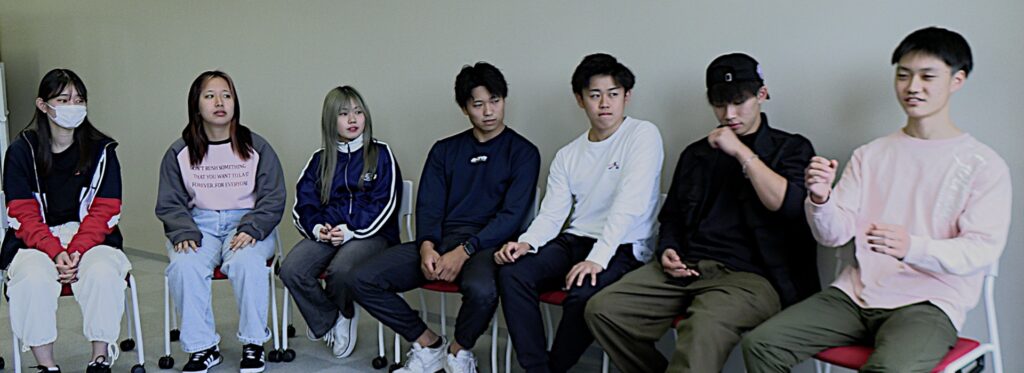
In this video Don Cherry talks about why he teaches silently. The video gives an example of his work with a class of some twenty five 18-year-old Japanese University students, and includes one student’s reaction. The lesson this video was taken from was the first time these particular students had worked with Don.
(more…)
This film shows how a Silent Way teacher works. We’ve sampled every two hours of a week-long intensive English class that teacher Don Cherry gave in Tokyo in 2016 to give you a unique insight into this way of working.
You’ll see how a Silent Way teacher works and some of the reasons why we work this way, including:
You can watch the film with commentary either in English, French or Japanese.
(more…)
Presentation of the Silent Way educational approach for teaching foreign languages. Produced by Actualis, Paris in 2019.

Pronouncing a language is a motor skill. And it is one of the most difficult motor skills to teach–neither the teacher nor students can see the movements required. Mostly, trying to copy what the teacher says doesn’t work very well. Much better is for the students to experiment with guided coaching from the teacher.
(more…)
If the teacher is silent (though she is not mute), she neither models pronunciation, nor tells the student what to say. Rather, she coaches them toward the correct use of the language. Silence means the teacher can easily keep the students at the frontier between what they have mastered and what they don’t yet know. Silence puts the teacher and their students in their proper roles—they are working on the language, we are coaching them.
(more…)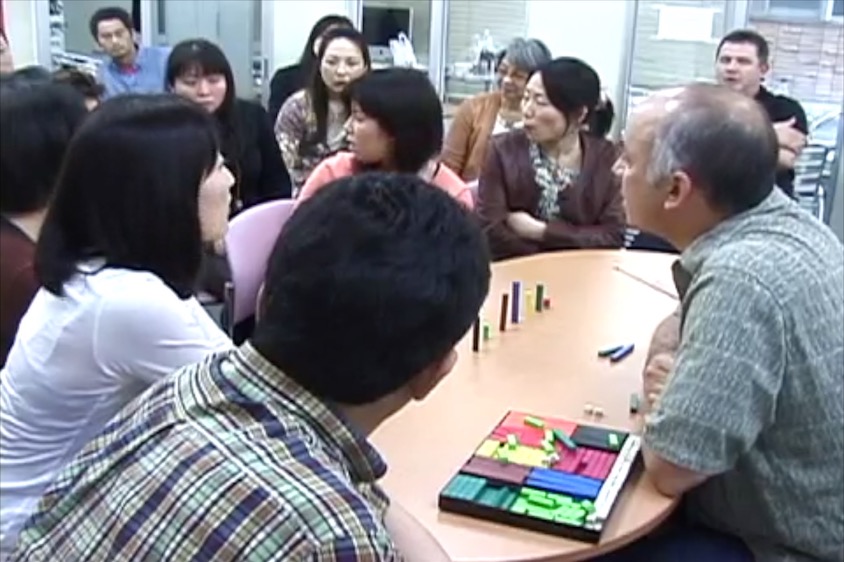
Watch how the teacher worked with the class on a new word – purple – which they needed. Because he has already done a lot of work on the sounds and rhythms of English he can quickly and silently enable them to know how this would should be pronounced in a pronunciation micro-lesson.
(more…)
Pronunciation can’t be mastered straight away. Students have to practise over a period to be able to use their muscles in new ways, and they need continuous feedback and guidance so that they gradually sound more and more native. Any part of any lesson can become a pronunciation micro-lesson: we work on pronunciation whenever it is needed.
(more…)
If we teach silently then the students are the ones responsible for doing the work. Silence frees the teacher to better observe the students. And if the teacher stays silent then the students can’t try to copy the short-lived memory of a sequence of sounds without really working to ‘own’ the unfamiliar actions required. But silence doesn’t mean the teacher says absolutely nothing.
(more…)
Silence puts the teacher and their students in their proper roles—they are working on the language, we are coaching them.
If we stay silent then the students have to turn their attention inward: to their muscles when they are working on pronunciation; and to their mental model of the language when they are working on words and grammar.
Silence also guards against teacher explanations and lectures, makes sure that the students do most of the talking: they are the ones who need to practice the language.
(more…)