

For intermediate students we use Class Conversations or ‘Tell me’ classes to help them improve their skills. The learning in these classes lies in the work that is done by the student on each sentence. Sometimes this work is very quick; sometimes it takes a bit longer.
Read this article to see video of the process of a student working on a language from intial idea of what he wanted to say, to final version said correctly and well.
(more…)
There are negative consequences for our students if we accept their errors in the belief that communication should take precedence over accuracy. Without feedback on errors, on the grounds that they have communicated despite these errors, then many students assume that what they said was correct and start to make these errors habitual.
(more…)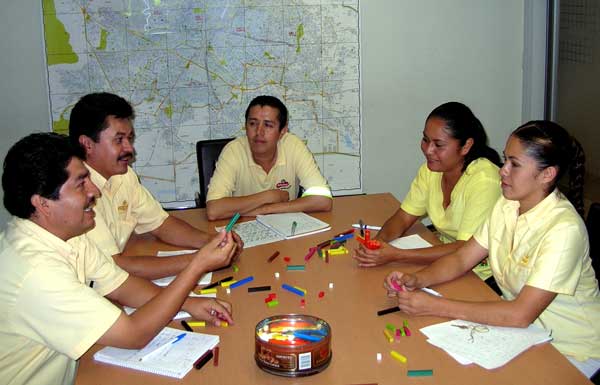
Once we understand what someone requires to do to learn a skill – trial & error, and practise – then what the teacher should do becomes very different. For good teaching there needs to be a fast-acting, double feedback loop in the classroom: the students learn about the language ; the teacher learns from the students.
(more…)
Gesture and pointing are central to our teaching because they permit us to provide new language and to correct students’ attempts, silently and efficiently. So much of our running the class and getting students to talk and giving feedback is better done non-verbally by pointing, gesture, facial expression and mime.
(more…)
If we teach silently then the students are the ones responsible for doing the work. Silence frees the teacher to better observe the students. And if the teacher stays silent then the students can’t try to copy the short-lived memory of a sequence of sounds without really working to ‘own’ the unfamiliar actions required. But silence doesn’t mean the teacher says absolutely nothing.
(more…)
When is the best time to give feedback to students? It’s now, while whatever the impetus was for the student to make their sentence in the first place is still in everyone’s mind, and the taste of the sentence is still in their mouth and the sound they made is still ringing in everyone’s ears. If we wait, then no one will recall exactly what was said, nor what pronunciation mistake was made, nor what the context was for the sentence. Furthermore, once the moment has passed, no one will care any more.
(more…)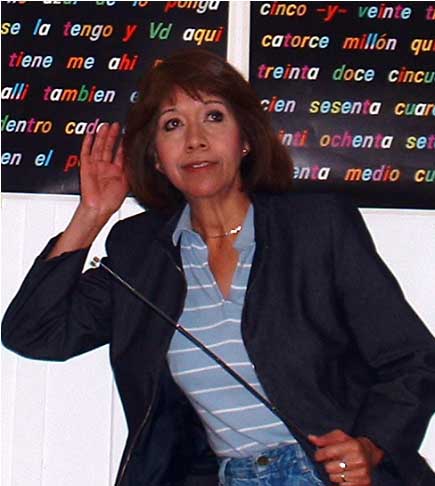
If you use your muscles like a French person, you will sound French. If you use your muscles like a Japanese, you will sound a Japanese. In fact, pronunciation is about training in posture and movement. But we can train the muscles of our mouths and breathing to move in different ways.
(more…)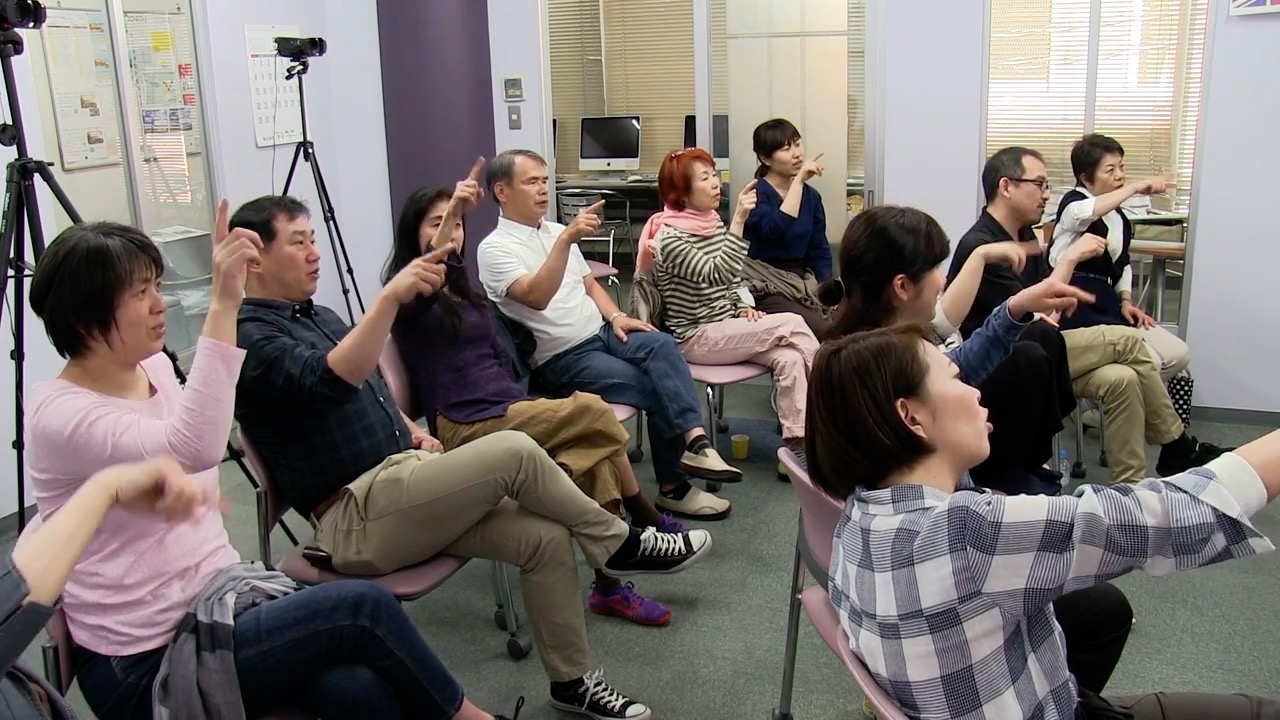
Learning starts with someone becoming aware that there is something to learn, or change, or improve: that there is a difference between their performance and what they are aspiring to, or could aspire to.
It is these tiny moments of awareness that kickstart the process of learning. Without these moments of awareness there is no reason or drive for anyone to do the work required. It is the teacher’s job to provoke these awarenesses in his/her students: they are the necessary requirement for learning to take place. Once students have noticed that there is something to learn, then the teacher’s job becomes slightly different: to encourage and guide such experimentation and then provide precise feedback.
(more…)