
These pages will provide an analysis of a six-day intensive English course given in Tokyo, by Don Cherry, in 2012. We've provided a description of how the course developed, links to videos examining key moments and commentary on some of the underpinning rationale for the way the teacher worked
With thanks to Don Cherry for providing us with this invaluable material. To see more of his video visit his YouTube channel Don E. Cherry.
Don knows that to speak English fluently, something quite different from what students do at school is required: practice on the simple things. You can see an example of this in the film Consolidating what has been worked on (2m 33s)
In his teaching, Don doesn’t accept the students’ sentences until they are correct and as well-pronounced as possible. As you’ll see in the film Immediate feedback (2m 14s) his feedback is immediate, and efficient. And his way of working doesn’t discourage students.
Mistakes can be put on a spectrum running from ‘not knowing what to say’ to ‘just a slip of the tongue’. In the film ‘An orange one’ (2m 38s) you’ll see a student whose mistake was slightly more than a slip of the tongue and how the student immediately recognised the correct sentence when her colleague said it correctly, and was then able to use it herself.
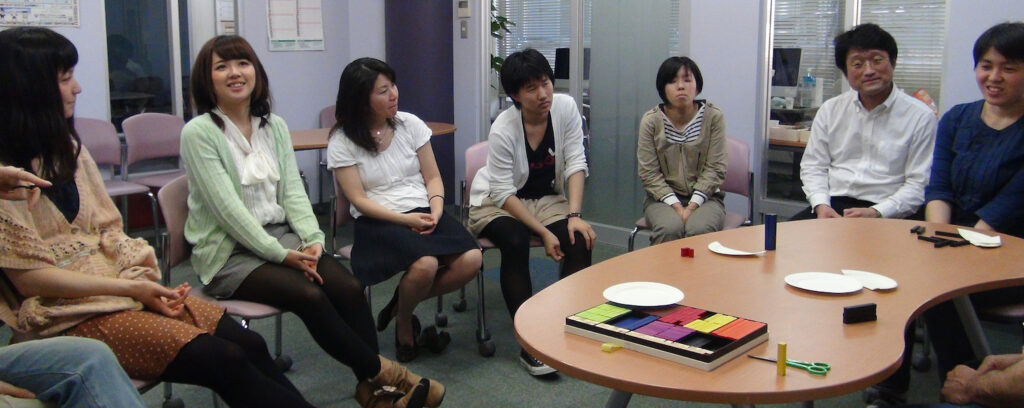
In the film ‘Two orange ones’ (1m 37s) Don used the word charts very efficiently to improve students’ pronunciation. You’ll see how rapid the process was; how he didn’t need to give any explanation; how he didn’t say the phrase himself; and how just a rapid sliding motion of his pointer on the chart was sufficient.
Then, as you can see in the film Where does ‘and’ go in a sentence? (1m 48s), Don used his hands to show the students how to chunk a sentence and then got them to practise it so that they could say it more fluently.
English intonation patterns are essential if one wants to sound English. In the film Working on intonation (2m 03s) Don worked with the students on the intonation pattern of a sentence, isolated from its words, by using whistling and gesture and then he got them to practise,
In the film Everybody is working (1m 43s) you’ll see one student working on a sentence making comparisons using words like ‘longer’ and ‘shorter’. Whilst she is working all the other students were too.
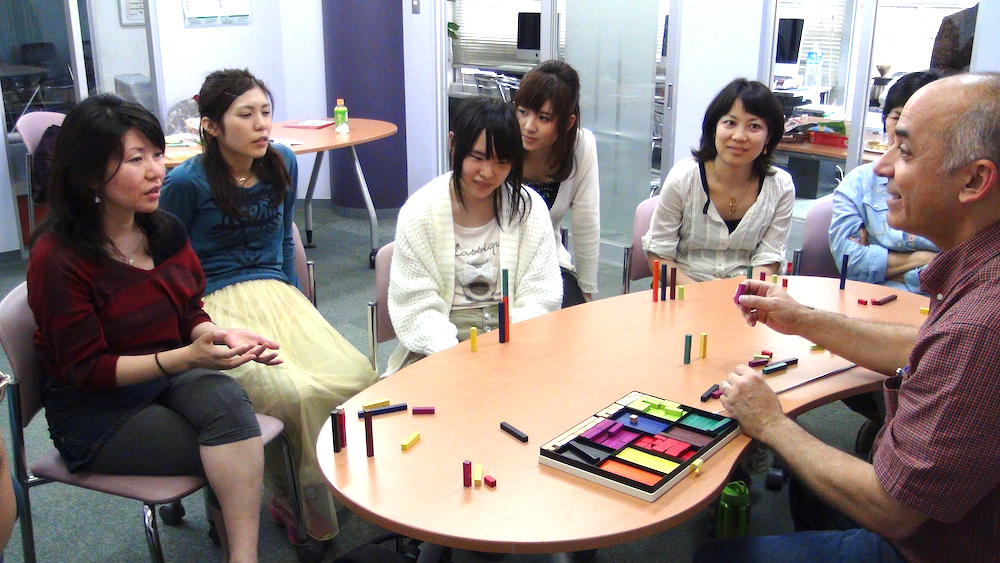
In the film Pronunciation is a physical skill (2m 30s) you’ll see the students practising the physical skills of pronunciation in just the same way that an athlete or dancer or musician would. And once the students had practised saying the sentence, Don made sure that they actually held their Cuisenaire rods so that they made a visceral connection between the reality and the sentence they were saying. And in the film How little does a teacher need to do? (1m 23s) you’ll see Don working very efficiently to enable a student to correct what she had said. And this theme of efficient correction continued in the film Comparisons: feedback and practice (2m 01s) with Don making sure that the smallest mistakes were corrected.
This session finished with Don introducing a situation which called for the students to use the phrase ‘but if …’ as you can see in the film But if … (4m 08s).
Check out the following articles for some of the background to what you will see in these videos.
The grammar of a language – how the words fit together, how the language expresses relationships of time, space, personal relationships etc – is not a matter of rules. Native-speakers simply know ‘what sounds right’. And there is no particular reason why one language uses one way of expressing these things and another a different […]
Read full article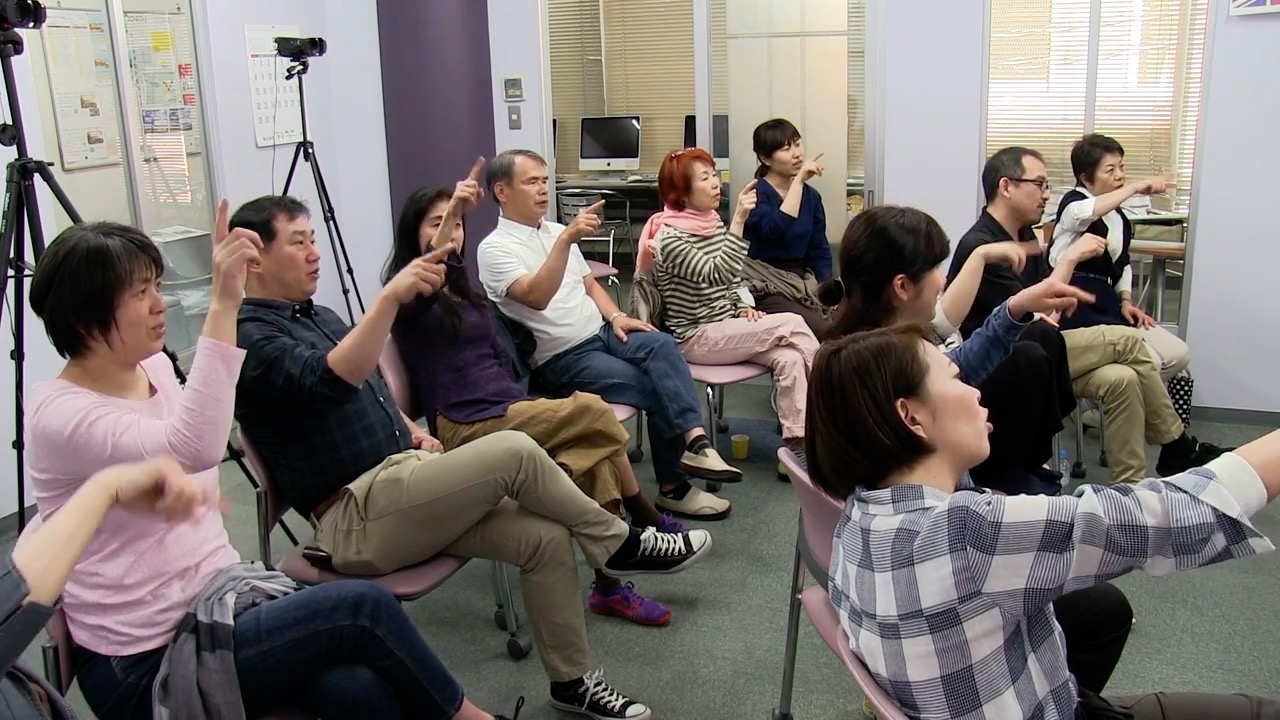
Speaking a language is a skill just like wood turning or playing a sport or taking photographs and can’t be mastered by being told about them. Teaching language as an academic subject is misguided and inefficient. Students need experience of using the language and feedback and guidance about the most fruitful ways to improve.
Read full article