
Silence puts the teacher and their students in their proper roles—they are working on the language, we are coaching them.
If we stay silent then the students have to turn their attention inward: to their muscles when they are working on pronunciation; and to their mental model of the language when they are working on words and grammar.
Silence also guards against teacher explanations and lectures, makes sure that the students do most of the talking: they are the ones who need to practice the language.
(more…)
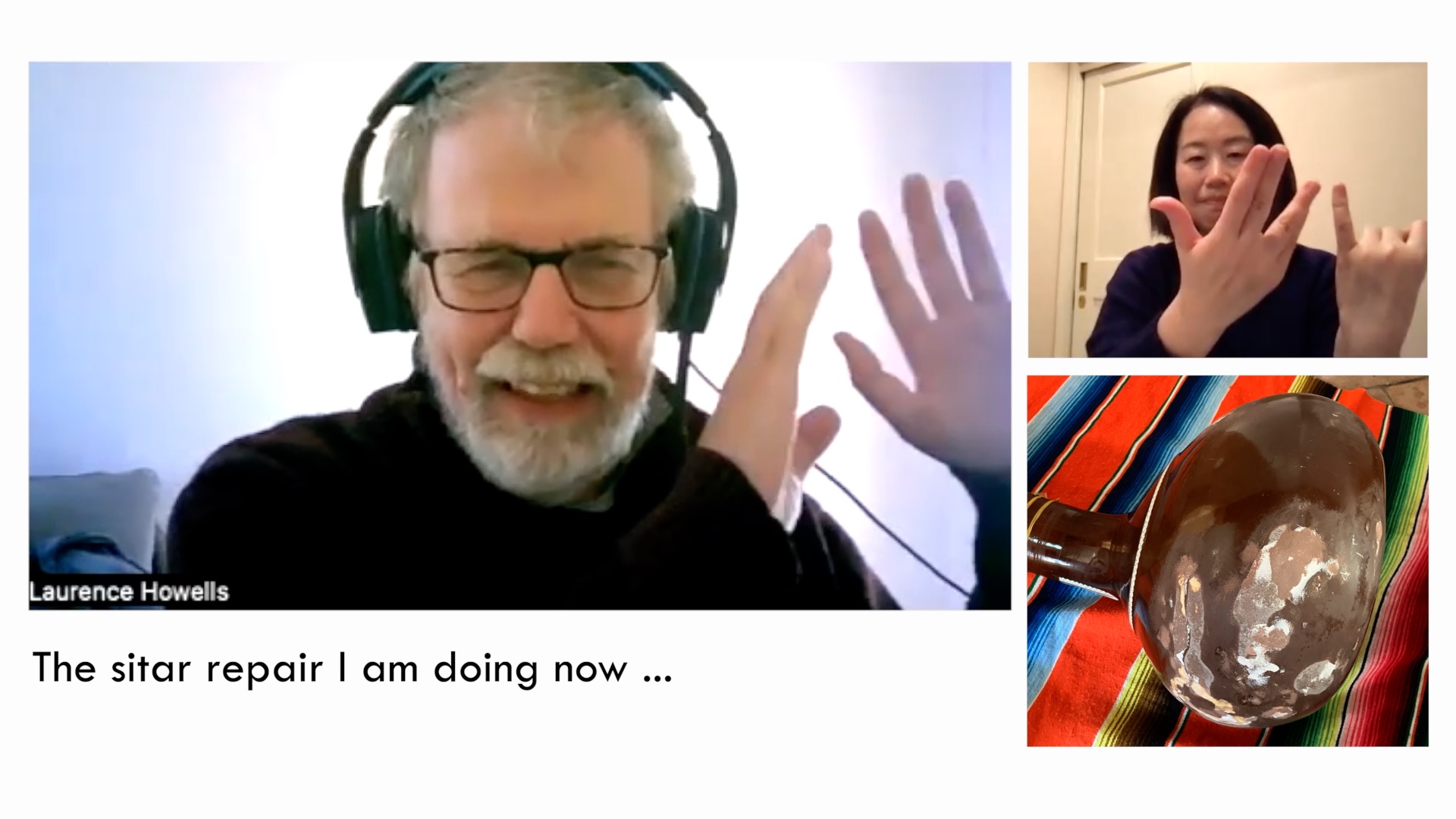
When we teach intermediate or advanced students one-to-one we use a ‘tell me’ class, instead of a Class Conversation. The student is invited to tell the teacher about something. At first, students may need to be prompted with a topic to talk about. Later, students often have something that they want to talk about. And the teacher can encourage them in this by saying something like ‘What would you like to tell me about today?’
(more…)
Pronunciation can’t be mastered straight away. Students have to practise over a period to be able to use their muscles in new ways, and they need continuous feedback and guidance so that they gradually sound more and more native. Any part of any lesson can become a pronunciation micro-lesson: we work on pronunciation whenever it is needed.
(more…)
Gesture and pointing are central to our teaching because they permit us to provide new language and to correct students’ attempts, silently and efficiently. So much of our running the class and getting students to talk and giving feedback is better done non-verbally by pointing, gesture, facial expression and mime.
(more…)
Pronouncing a language is a motor skill. And it is one of the most difficult motor skills to teach–neither the teacher nor students can see the movements required. Mostly, trying to copy what the teacher says doesn’t work very well. Much better is for the students to experiment with guided coaching from the teacher.
(more…)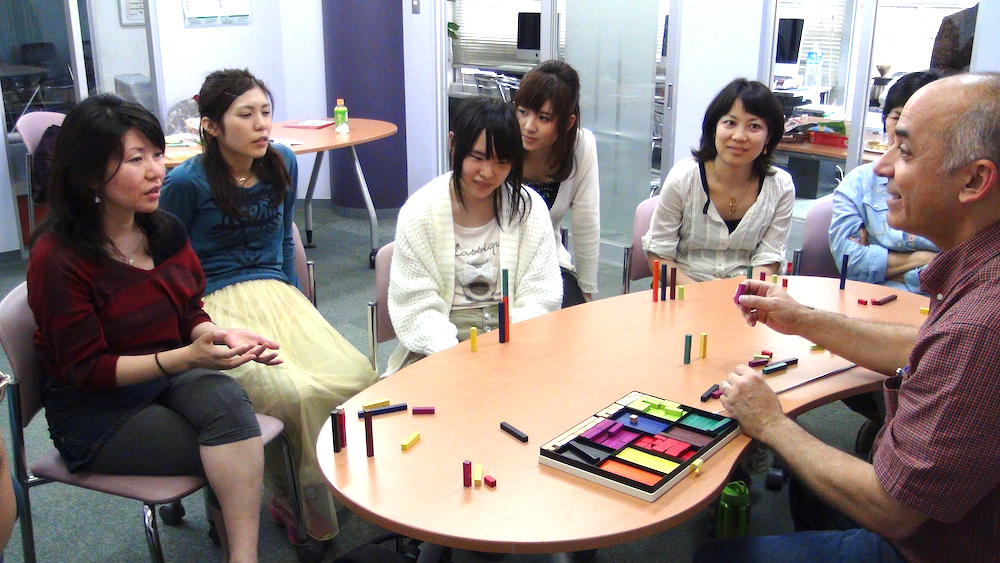
The grammar of a language – how the words fit together, how the language expresses relationships of time, space, personal relationships etc – is not a matter of rules. Native-speakers simply know ‘what sounds right’. And there is no particular reason why one language uses one way of expressing these things and another a different way.
(more…)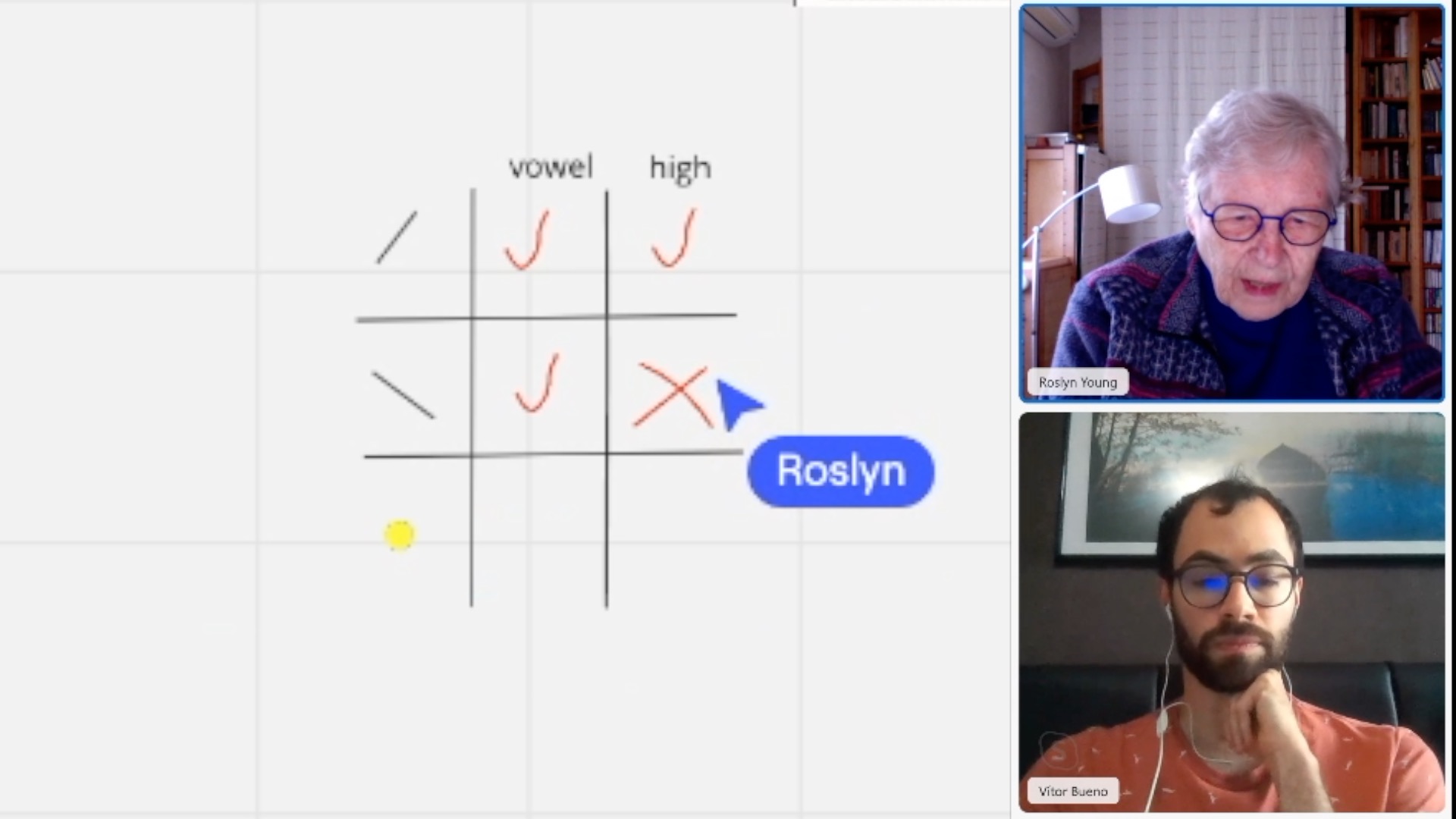
The key to English pronunciation is mastering the small, indistinct, low energy sounds that are so common in normal speech. These sounds transform how students’ English sounds and they are the key to understanding normal speech. This article introduces a video showing some of the tools and techniques we use to teach these sounds.
(more…)
If we teach silently then the students are the ones responsible for doing the work. Silence frees the teacher to better observe the students. And if the teacher stays silent then the students can’t try to copy the short-lived memory of a sequence of sounds without really working to ‘own’ the unfamiliar actions required. But silence doesn’t mean the teacher says absolutely nothing.
(more…)
Since language is for people to express themselves, once students have some of the language we mostly use class conversations to teach languages: someone starts off the conversation with something they want to say; and then others respond. In between these exchanges, the teacher gets the students to correct themselves. And then the class picks up the conversation again.
(more…)
For intermediate students we use Class Conversations or ‘Tell me’ classes to help them improve their skills. The learning in these classes lies in the work that is done by the student on each sentence. Sometimes this work is very quick; sometimes it takes a bit longer.
Read this article to see video of the process of a student working on a language from intial idea of what he wanted to say, to final version said correctly and well.
(more…)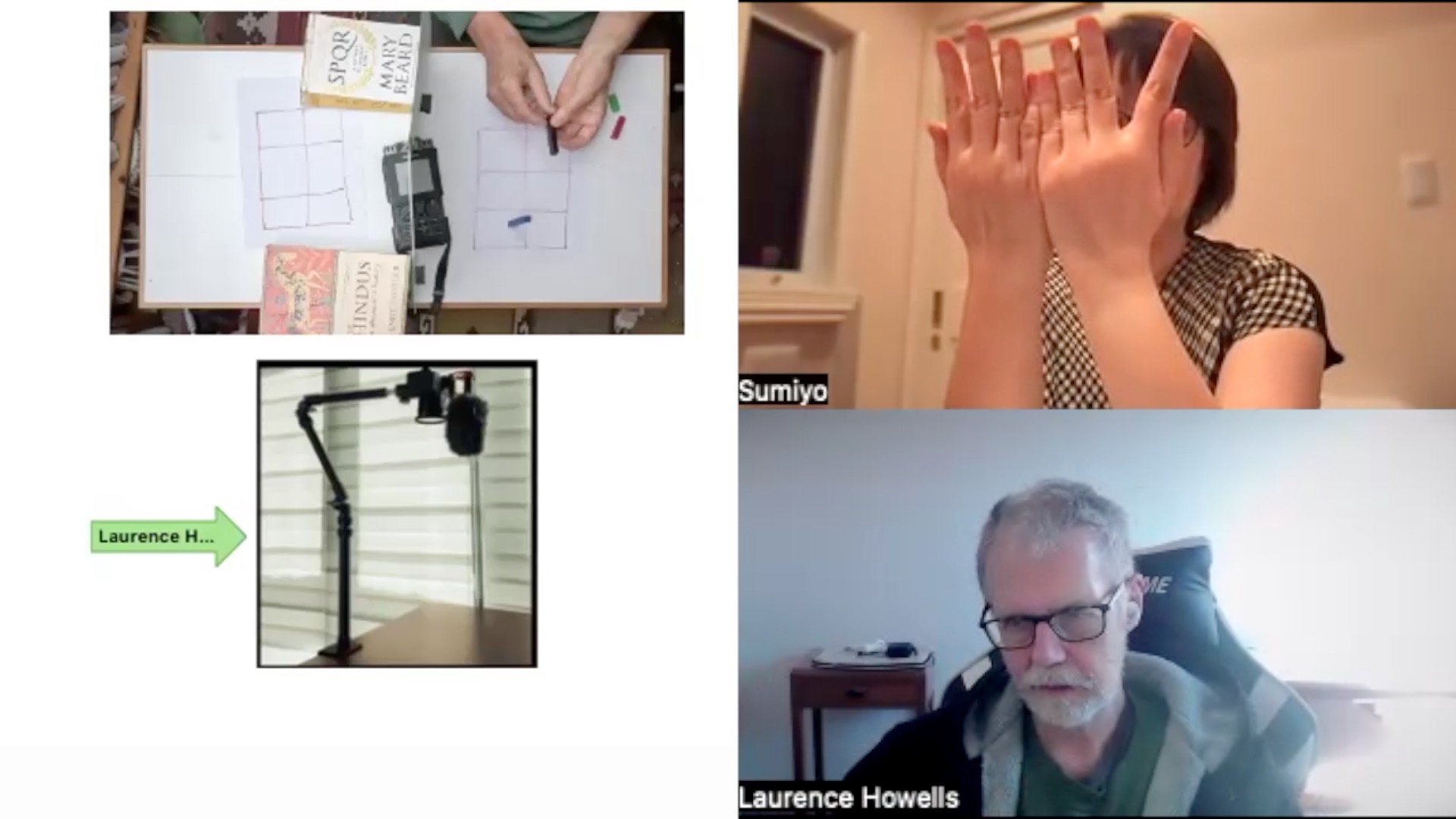
Your fingers are an invaluable tool you can use to help improve students’ speaking.
You can use them to help students correct their grammar, word order, word choice, pronunciation, connected speech, word groupings etc. In fact every aspect of speaking a foreign language.
(more…)
For foreign language beginners we start with pronunciation because the students need this skill for everything they will ever say, and because it is one of the most difficult things for them to learn on their own. We then quickly start working with Cuisenaire rods, gradually introducing new language to describe the situations we make for students.
(more…)
The number system is a great way to practise a lot of language skills with a tiny vocabulary and with no doubt about meaning. For example, in French, you only need 22 words to get to 99 and just two more to get to 999,999. So practising numbers is a great example of ‘much language with little vocabulary’.
(more…)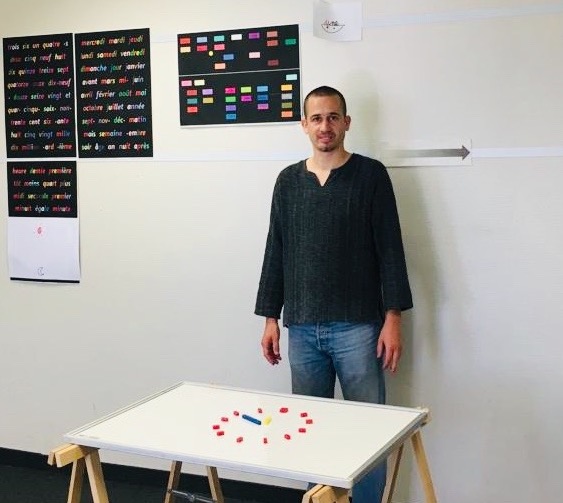
These are the perfect tools to start the class learning about time, and how the foreign language expresses different shades of meaning through tenses and its other arbitrary conventions. But beware! Keep it real!
(more…)
Learning to write and read in any language requires us to associate graphic symbols with the sequences of sounds used in speech. And, whilst some languages have more difficult writing systems than others, the skills involved in reading and writing are essentially the same no matter what language we are learning.
(more…)
A student says a sentence. There’s something to be worked on: a word is missing, there’s one too many words, or they are in the wrong order; the verb tense is wrong, or there’s a possible contraction; there’s a pronunciation problem. You can use your fingers as a tool to help the student work on his mistake. We call this ‘finger correction’.
(more…)